.png)
By Murray Hunter
THE idea behind Malaysia’s National Monument came from the first prime minister, Tunku Abdul Rahman, who was reportedly inspired by the US Marine Corps War Memorial (Iwo Jima Memorial) during his visit to the United States back in 1960.
Tunku saw the bronze sculpture by Austrian-born American sculptor Felix de Weldon, which depicted the flag-raising on Iwo Jima and decided that Malaysia needed a comparable national monument to honour its fallen heroes.
Tunku then personally approached de Weldon to design it as a gesture of goodwill.
Tugu Negara was commissioned in 1963 and features seven large bronze figures of soldiers, with one raising the Malaysian flag.
The monument commemorates around 11,000 people who died in conflicts during the country’s struggles for freedom, primarily against the Japanese occupation in World War II and during the Malayan Emergency (1948–1960).
The monument stands about 15 meters tall within the Perdana Botanical Gardens near Parliament House.
Tugu Negara was completed and officially unveiled on 8 February 1966 to a new nation by the Yang di-Pertuan Agong.
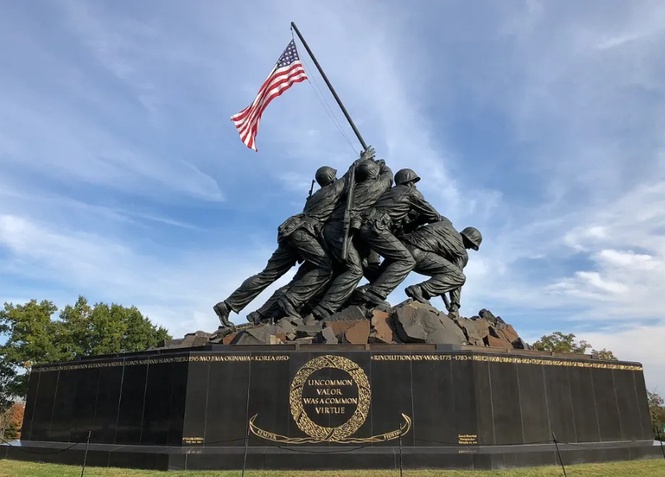
However, Tugu Negara doesn’t actually symbolise any real event in Malaysia’s history; it is more an adapted replica of the Iwo Jima Monument, which has its own story.
The Iwo Jima Monument is actually a bronze depiction of US Marines raising the US flag on Mount Suribachi on February 23, 1945, when Iwo Jima was liberated by US forces.
However, the famous photo that the monument was produced to resemble was a staged event.
The day before, US Marines raised a much smaller flag, but when a Marine photographer, Joe Rosenthal, arrived later in the day, a much larger flag was raised by a group of Marines, which became the famous photo depicting the liberation of Iwo Jima by US forces.
Marine Sgt. Bill Genaust simultaneously filmed the flag raising in a colour motion picture from nearly the same angle.
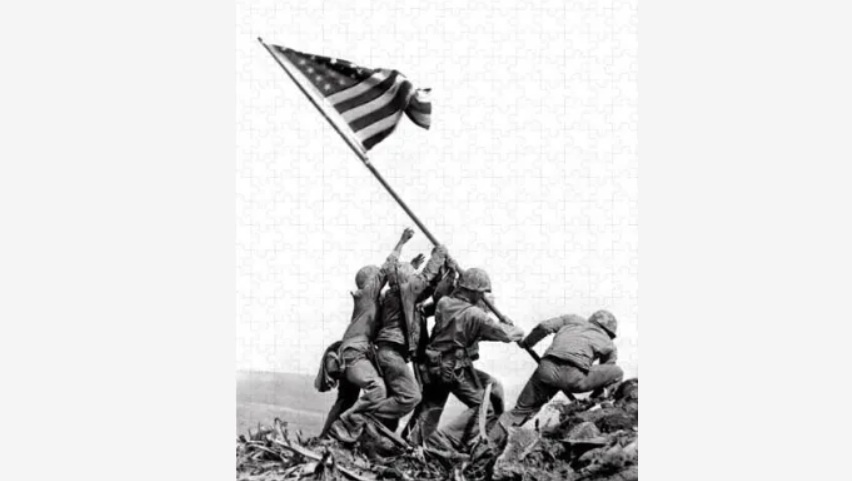
That scene and the events following became very controversial.
Some of the men in the photo were initially misidentified as Navy corpsman John Bradley, and Marine Rene Gagnon was later determined not to have been among the six in the second raising; others, including Harold Schultz and Harold Keller, were correctly identified decades later.
The 2006 film Flags of Our Fathers, directed by Clint Eastwood and based on the book by James Bradley, son of one of the men long associated with the photo, dramatises the battle, the flag-raisings, the photo’s use in a war-bond campaign, and the personal toll on the survivors.
The Tugu Negara itself was bombed by an MCP group on August 26, 1975.
So, the monument had directly suffered from military action. It was quickly restored by a team led by the Australian sculptor Christopher Carney.
Perhaps the narrative that Tunku wanted to portray with the monument was the struggle of all peoples in what was then a new nation, Malaysia. - September 18, 2026