.jpg)
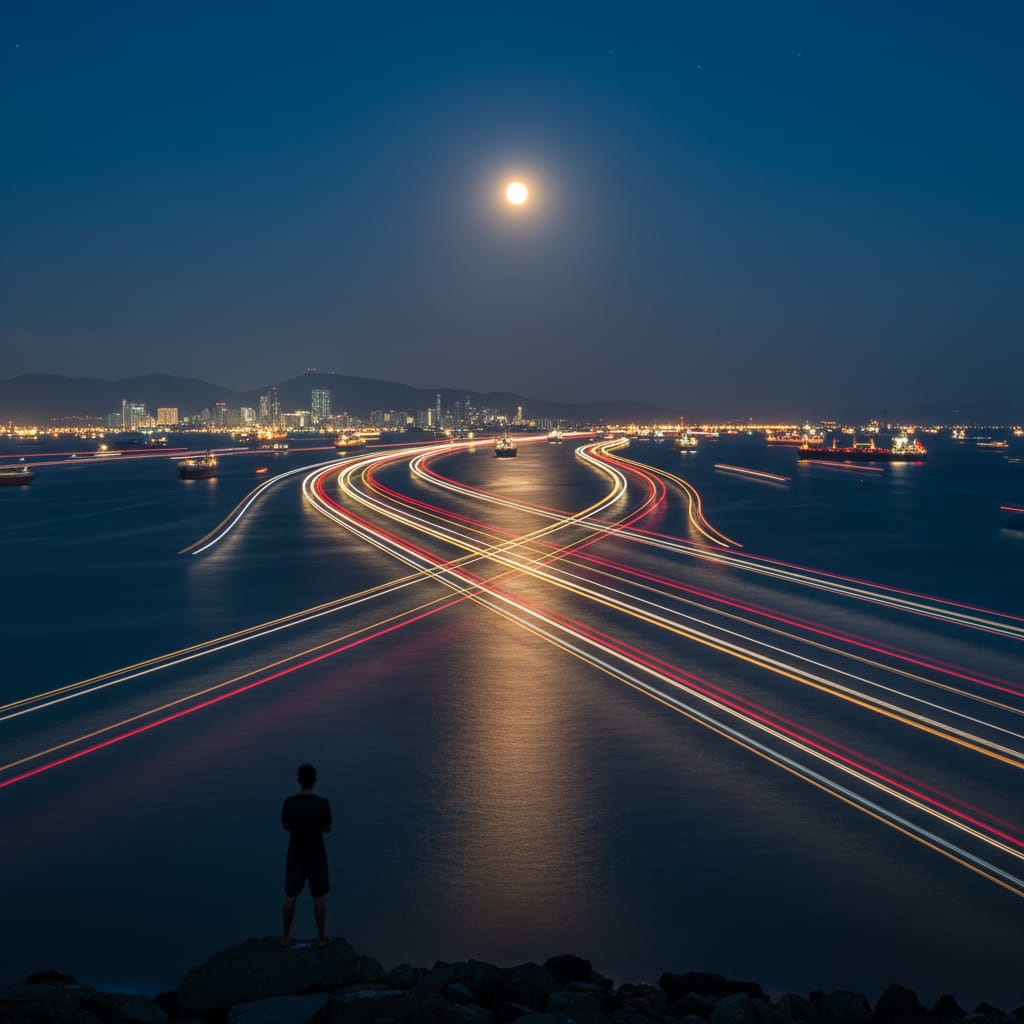
The Strait of Malacca That Never Sleeps (and the Neighbours Who Can’t Afford to Nap)
By Mihar Dias April 2026
There are few places on earth where global capitalism squeezes itself quite so tightly as the Strait of Malacca—that narrow, congested waterway where oil tankers, container ships, and the occasional geopolitical anxiety attack all pass through with unnerving regularity. If the world economy had a jugular vein, this would be it.
So when Malaysia, Indonesia, and Singapore gather yet again—this time at the 34th Aids to Navigation Fund Committee meeting—to reaffirm their commitment to keeping the strait safe, one is tempted to respond with a polite, “Well, yes… what exactly was the alternative?” https://en.vietnamplus.vn/three-southeast-asian-nations-pledge-to-safeguard-vital-malacca-shipping-lane-post341334.vnp
After all, ensuring safe passage through one of the world’s busiest maritime arteries is less a bold strategic initiative and more an existential necessity. This is not optional cooperation; it is compulsory adulthood. Tens of thousands of vessels pass through annually, carrying everything from Middle Eastern oil to Chinese exports and Western consumer guilt. A hiccup here is not a local inconvenience—it’s a global migraine.
But let’s not be too dismissive. In a region where diplomacy can sometimes resemble a family dinner with unresolved inheritance disputes, the quiet, consistent cooperation between these three nations is almost… suspiciously functional. No dramatic summits, no chest-thumping declarations, no Twitter diplomacy. Just ships moving, lights blinking, and maritime charts being updated. Boring, in the most reassuring way possible.
The Maritime and Port Authority of Singapore and its counterparts understand something many politicians don’t: that stability doesn’t come from grandstanding, but from maintenance. Not the sexy kind that gets headlines, but the tedious, technical, relentlessly consistent kind—buoys, beacons, dredging, surveillance, and the occasional reminder to pirates that this isn’t the 18th century anymore.
Yet beneath this cooperative calm lies a subtle tension. The Strait’s importance has grown alongside the world’s dependence on fragile supply chains. Every container stuck during the COVID-19 pandemic, every oil shock, every geopolitical spat has quietly elevated the stakes. The Strait of Malacca is no longer just a regional concern—it is a global insurance policy.
And like all insurance policies, it only becomes interesting when something goes wrong.
Which is precisely why this trilateral cooperation matters. Not because it is dramatic, but because it is preventative. It is the geopolitical equivalent of brushing your teeth—unexciting, often overlooked, but catastrophically important if neglected.
Still, one cannot help but wonder how long this harmony will last in an increasingly complex operating environment, as politely phrased by committee chairman David Foo. Translation: more ships, more risks, more competing interests, and perhaps more external powers casting a watchful eye over this narrow stretch of water. When the world’s traffic depends on your backyard, the neighbours tend to take an interest—invited or otherwise.
For Malaysia, in particular, this cooperation is both a responsibility and an opportunity. While others may see the Strait as a transit corridor, we would do well to see it as leverage. Strategic geography is one of the few assets that doesn’t depreciate—unless, of course, it is mismanaged.
So yes, the reaffirmation by Malaysia, Indonesia, and Singapore is welcome. Necessary, even. But let’s not confuse maintenance with mastery. Keeping the Strait safe is the baseline; the real question is whether the region can translate this quiet competence into broader strategic influence.
Because in a world increasingly defined by chokepoints—be they digital, economic, or maritime—the nations that control the flow don’t just ensure safety.
They shape destiny.
And for now, at least, destiny continues to pass quietly through the Strait of Malacca—one container ship at a time.
Mihar Dias (mihardias@gmail.com) is a content creator under the Newswav Creator programme, where you get to express yourself, be a citizen journalist, and at the same time monetize your content & reach millions of users on Newswav. Log in to creator.newswav.com and become a Newswav Creator now!
The User Content (as defined on Newswav Terms of Use) above including the views expressed and media (pictures, videos, citations etc) were submitted & posted by the author. Newswav is solely an aggregation platform that hosts the User Content. If you have any questions about the content, copyright or other issues of the work, please contact creator@newswav.com.