
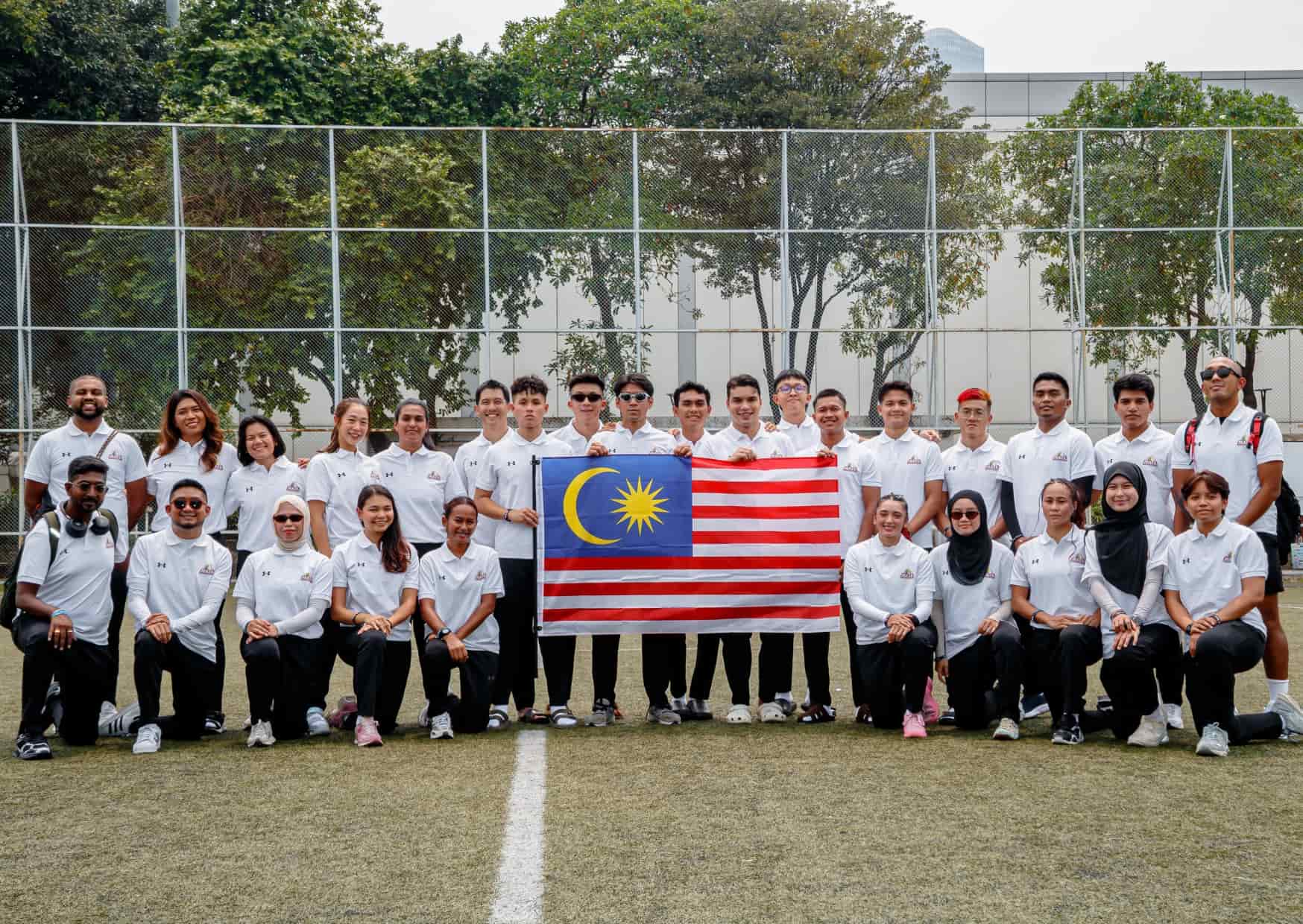
Malaysia's National Flag Football team was off to Jakarta, Indonesia for the Southeast Asia Flag Football Championship on October 16 - 18, 2026 and the results achieved was remarkable.
Behind these results were athletes who had dedicated their time and effort to representing Malaysia on the regional stage. For some, the championship marked their first experience representing the national team and competing overseas at a higher level. While the medals marked a successful outcome, the journey to the podium also tested the athletes' ability to adapt, manage pressure and trust one another when it mattered most.
Leaning to Compete Under Pressure
The challenges began before the teams even stepped onto the field in Jakarta. Reflecting on the preparation leading up to the tournament, the national team director and head coach, Mark, observed a shift in focus among both the men's and women's team.
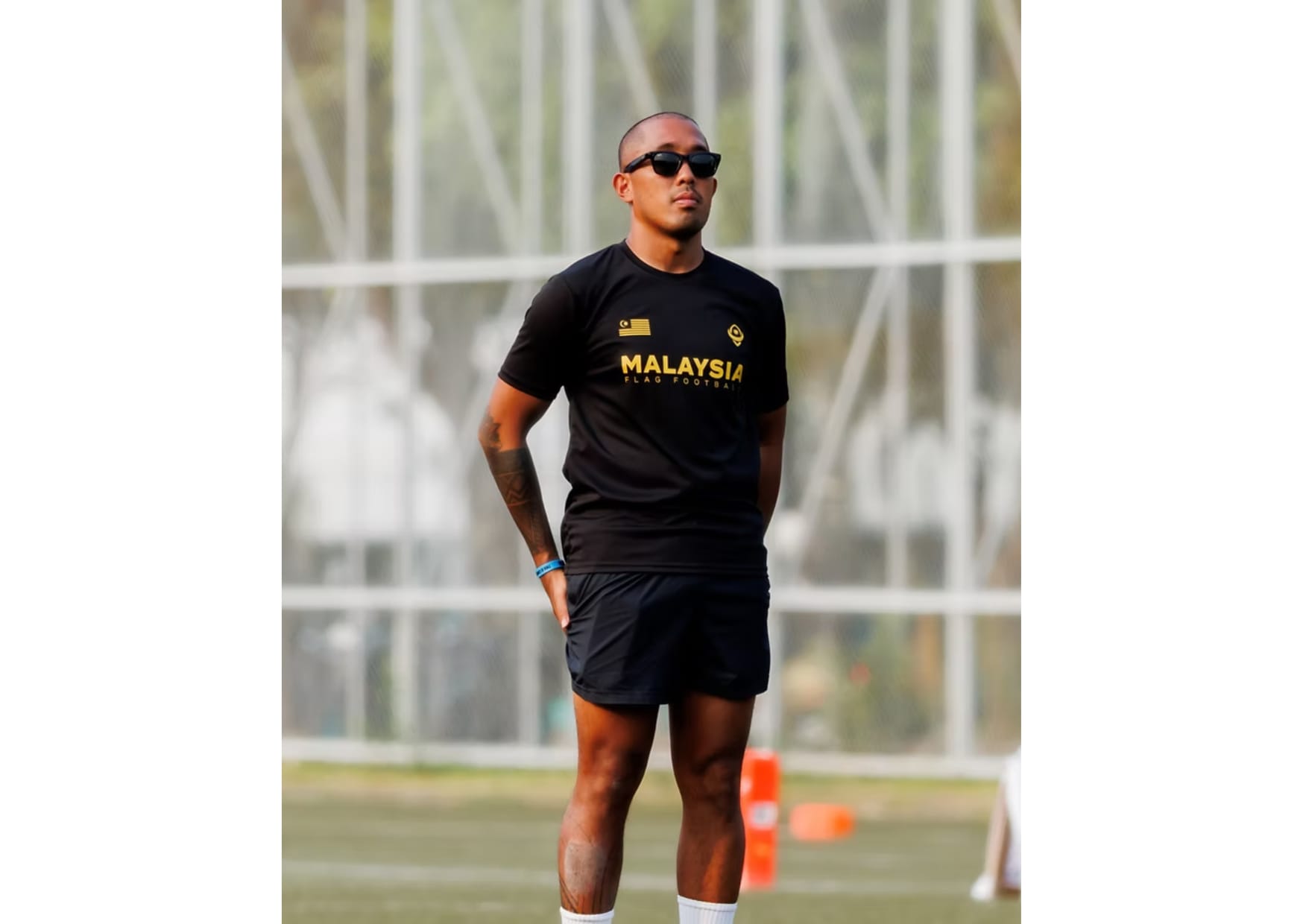
Some players were experiencing the national-team environment and overseas competition for the first time. With that came the pressure of wanting to. perform well, the fear of making mistakes and the tendency to overthink what could go wrong.
Rather than viewing these concerns as setbacks, the director saw them as part of the learning process. Preparation could help athletes feel ready, but it could not guarantee a perfect performance.
"You can always come in prepared, but you can't be perfect in what you do," the director explained, describing the experience as a learning curve for both squads.
The tournament offered the athletes an opportunity to recognise what they needed to work on, understand how they responded to unfamiliar situations and carry those lessons forward into future competitions.
That learning process became particularly visible during the championship itself. According to Mark, both squads struggled to perform at their best during the first two days, as players worked to understand how to manage the pressure of competing on a bigger stage.
But by the third and final day, both teams began shifting their attention towards what they could control: executing their plays, relying on their preparation and focusing on the next opportunity.
Putting the Team Before the Individual
For head coach Mark, one of the most encouraging aspects of Malaysia's campaign was the willingness of athletes to put individual preferences aside for the benefit of their teammates and country.
The national squad had been built around a principle that every athlete should learn to play on both sides of the ball, in both offence and defence. This meant players needed to be adaptable, understand different responsibilities and be ready to contribute wherever the team needed.
He highlighted players including Thomas, Raul and Wei Hong, alongside defensive players who continued to encourage their offensive teammates and remained prepared to step in when needed.
What stood out was not simply which athletes received the most playing time or made the biggest individual impact, but their willingness to fill gaps, support one another and prioritise the team's needs.
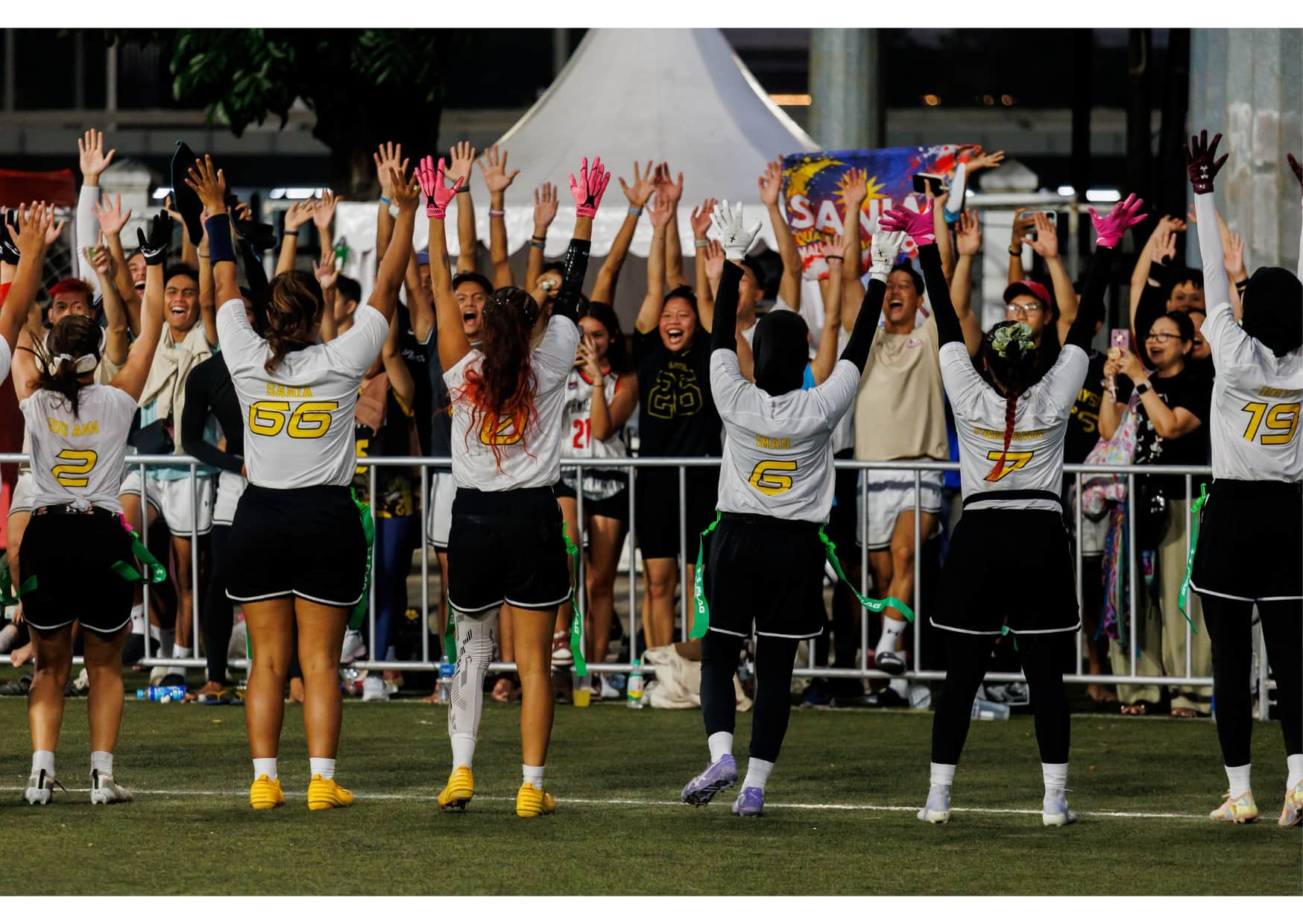
"They came and banded together to full up everyone's strength when the morale was done," Mark said.
As he put it, the aim was not to have athletes who simply declared, "I would like to perform," but those who asked, “What can I do?”
The Strength of Standing Together
Teamwork became even more apparent as the championship reached its decisive stages, with the women's team, led by team Captains Colleen Augustin and Sarah Diyana advancing to the finals and the men's team, led by Captains Andrew Low and Adrin Fahmi, reaching the semi-finals.
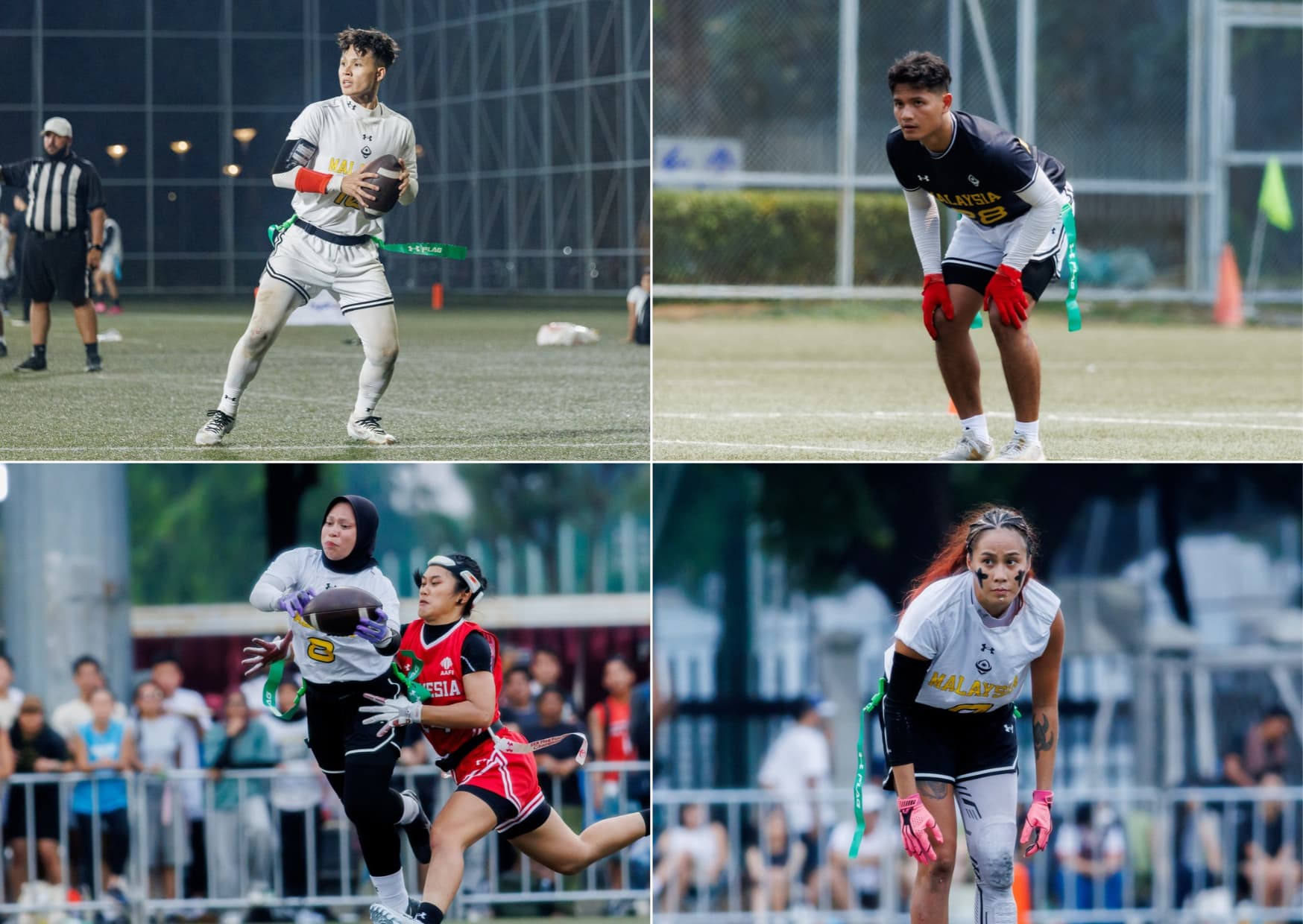
Mark recalled how athletes rallied around one another, lifting morale after difficult moments and encouraging their teammates to focus on the next play rather than dwell on what had already happened. The sense if unity was not limited to the field as he noticed how players included one another in social media content and group activities, making an effort to bring everyone into the experience.
These moments offered a glimpse into the relationship developing within the squads; relationships that could help athletes navigate the pressures of competition and create an environment where every player felt part of the collective effort.
For Mark, this was among the most meaningful takeaways from Jakarta. The focus was not solely on how well they executed their skills, but on how they treated one another and worked towards a shared goal.
A Podium Finish and a Reality Check
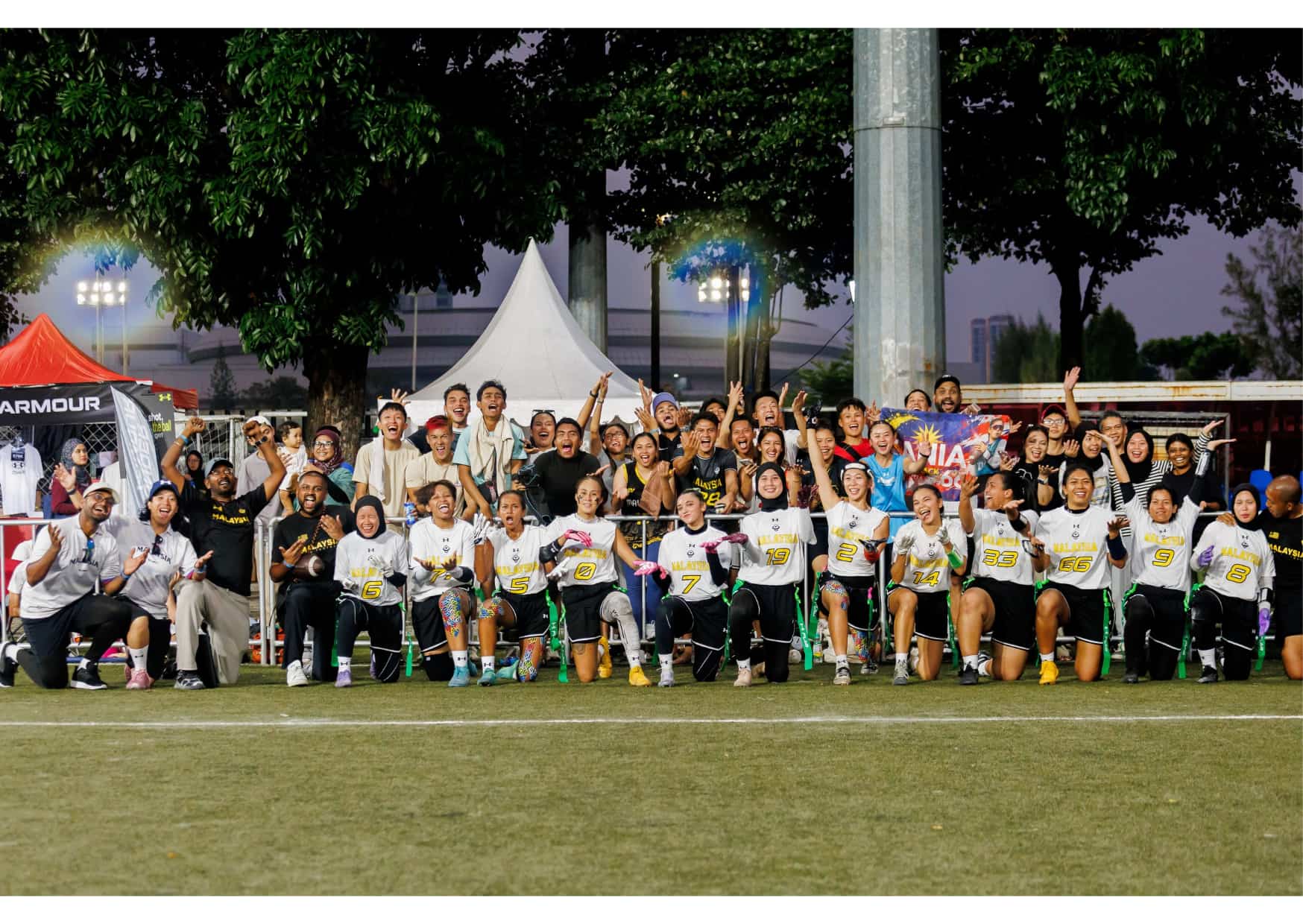
Despite the silver and bronze medals, the director was careful not to treat the results as a sign that Malaysia had already reached its full potential.
The objective entering the championship was not simply to win. The director wanted both squads to lear how to compete as a team, with reaching the playoffs set as a goal. Winning a medal, in that sense, was a bonus.
Competing against the region's other national teams also gave Malaysia a clearer understanding of the standard required to progress further.
Director Mark acknowledged that Malaysia had the potential to become a strong team, but still had work to do.
The double podium finish therefore represents both an achievement and a starting point. It recognises what the athletes accomplished in Jakarta while giving the national programme a clearer direction for preparation ahead of its next competition.
Both teams offered an opportunity to recognise the athletes behind the results; the players who stepped up under pressure, supported their teammates and carried the Malaysian flag with pride.
Their achievements also marks an important moment for flag football in Malaysia. As the sport continues to grow across the region and prepares for its Olympic debut at LA2028, the performances of both national teams offer a chance to celebrate their progress while looking ahead to what further development and support could make possible.
Alrissa Mariam (alrissamram@gmail.com) is a content creator under the Newswav Creator programme, where you get to express yourself, be a citizen journalist, and at the same time monetize your content & reach millions of users on Newswav. Log in to creator.newswav.com and become a Newswav Creator now!
The User Content (as defined on Newswav Terms of Use) above including the views expressed and media (pictures, videos, citations etc) were submitted & posted by the author. Newswav is solely an aggregation platform that hosts the User Content. If you have any questions about the content, copyright or other issues of the work, please contact creator@newswav.com.