
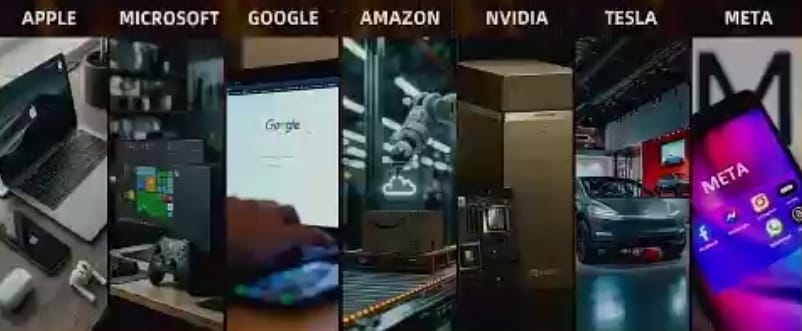
Over the past two decades, a handful of technology companies have grown from ambitious innovators into global powerhouses that shape how we live, work, shop, communicate, and even travel. Companies like Apple, Microsoft, Google, Amazon, NVIDIA, Tesla, and Meta dominate global markets and influence billions of people daily.
Though often grouped together as “Big Tech,” each company has a unique origin story, business model, and strategic focus. Together, they represent the driving forces behind digital transformation, artificial intelligence, cloud computing, electric mobility, and the future of connectivity.
Apple: The Power of Ecosystem Integration
Apple is synonymous with premium consumer electronics and seamless ecosystem design. From the iPhone to the MacBook, Apple’s strength lies in its tight integration of hardware, software, and services.
Core Strengths:
- Consumer devices (iPhone, iPad, Mac)
- Wearables (Apple Watch, AirPods)
- Services (App Store, Apple Music, iCloud)
Apple’s strategy revolves around creating a closed, optimized ecosystem that encourages customer loyalty. Users who own one Apple product often purchase others because they work effortlessly together. The company generates significant revenue not only from device sales but increasingly from recurring services.
Microsoft: Enterprise Backbone of the Digital World
Microsoft has transformed from a PC software company into a cloud-first, AI-driven enterprise leader.
Core Strengths:
- Windows operating system
- Office productivity suite
- Azure cloud computing
- Enterprise software solutions
With its dominance in business infrastructure, Microsoft powers organizations worldwide. Azure competes aggressively in cloud computing, while Microsoft’s investment in artificial intelligence tools positions it as a central player in enterprise AI solutions.
Google: The Gateway to Information
Google began as a search engine but evolved into a multifaceted technology giant.
Core Strengths:
- Search and digital advertising
- Android operating system
- YouTube
- Cloud computing
- AI research
Google’s primary revenue comes from advertising, powered by its unmatched data and search capabilities. Its Android operating system powers billions of devices globally, making it one of the most influential software platforms in existence.
Amazon: The Everything Store and Beyond
Amazon started as an online bookstore and became the world’s largest e-commerce marketplace.
Core Strengths:
- E-commerce marketplace
- Logistics and fulfillment network
- Amazon Web Services (AWS)
- Smart devices (Alexa, Echo)
While most consumers know Amazon for online shopping, AWS is one of its most profitable divisions. AWS provides cloud infrastructure to startups, corporations, and governments, making Amazon a foundational layer of the internet.
NVIDIA: The Engine of Artificial Intelligence
Originally focused on gaming graphics cards, NVIDIA has emerged as a central force in AI computing.
Core Strengths:
- GPUs for gaming
- AI training hardware
- Data center acceleration
- Autonomous systems technology
NVIDIA’s chips power modern artificial intelligence systems, including machine learning models and large-scale data processing. As AI demand grows, NVIDIA’s role as the hardware backbone of the AI revolution continues to expand.
Tesla: Reinventing Transportation and Energy
Tesla disrupted the automotive industry by proving that electric vehicles could be desirable, fast, and technologically advanced.
Core Strengths:
- Electric vehicles (Model S, Model 3, etc.)
- Battery technology
- Autonomous driving systems
- Energy storage and solar solutions
Beyond cars, Tesla positions itself as an energy and AI company, investing heavily in battery innovation and self-driving software.
Meta: Building the Social and Virtual Future
Formerly known as Facebook, Meta focuses on social connectivity and virtual reality.
Core Strengths:
- Social platforms (Facebook, Instagram, WhatsApp)
- Digital advertising
- Virtual reality (Oculus)
- Metaverse development
Meta generates most of its revenue through advertising but is investing heavily in virtual and augmented reality technologies to build immersive digital environments.
Key Differences in Business Models
| Company | Primary Revenue Source | Strategic Focus |
|---|---|---|
| Apple | Hardware + Services | Consumer ecosystem |
| Microsoft | Enterprise software + Cloud | Business infrastructure |
| Advertising | Data & search dominance | |
| Amazon | E-commerce + Cloud | Logistics & infrastructure |
| NVIDIA | Semiconductors | AI hardware |
| Tesla | EV sales | Sustainable energy & autonomy |
| Meta | Advertising | Social connectivity & VR |
The AI Race: A Shared Battlefield
Artificial intelligence has become the central competition arena among these companies.
- Microsoft integrates AI into enterprise tools.
- Google advances AI research and consumer AI.
- Amazon uses AI in logistics and cloud services.
- NVIDIA builds the hardware powering AI.
- Tesla applies AI to autonomous driving.
- Meta develops AI for social feeds and virtual environments.
- Apple integrates AI privately into devices for user experience improvements.
Each company approaches AI differently, but all see it as foundational to their future.
Market Influence and Global Impact
Collectively, these companies:
- Employ millions worldwide
- Influence global stock markets
- Shape public discourse and communication
- Drive innovation in nearly every major industry
Their platforms connect billions of people daily. Their cloud systems power businesses and governments. Their devices sit in our hands and homes.
Challenges Ahead
Despite their dominance, these tech giants face growing challenges:
- Regulatory scrutiny
- Antitrust investigations
- Data privacy concerns
- Increasing competition
- Rapid technological disruption
Governments worldwide are examining their influence, particularly regarding market competition and user data.
Conclusion: Architects of the Digital Era
Apple, Microsoft, Google, Amazon, NVIDIA, Tesla, and Meta are more than just corporations — they are architects of the digital age. Each plays a distinct role in shaping the technological landscape, from hardware and cloud infrastructure to AI, social networks, and electric vehicles.
As innovation accelerates, the competition between these companies will define the next chapter of global technology — one increasingly driven by artificial intelligence, automation, sustainability, and immersive digital experiences.
William Lee (kokwei67@gmail.com) is a content creator under the Newswav Creator programme, where you get to express yourself, be a citizen journalist, and at the same time monetize your content & reach millions of users on Newswav. Log in to creator.newswav.com and become a Newswav Creator now!
The User Content (as defined on Newswav Terms of Use) above including the views expressed and media (pictures, videos, citations etc) were submitted & posted by the author. Newswav is solely an aggregation platform that hosts the User Content. If you have any questions about the content, copyright or other issues of the work, please contact creator@newswav.com.