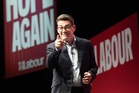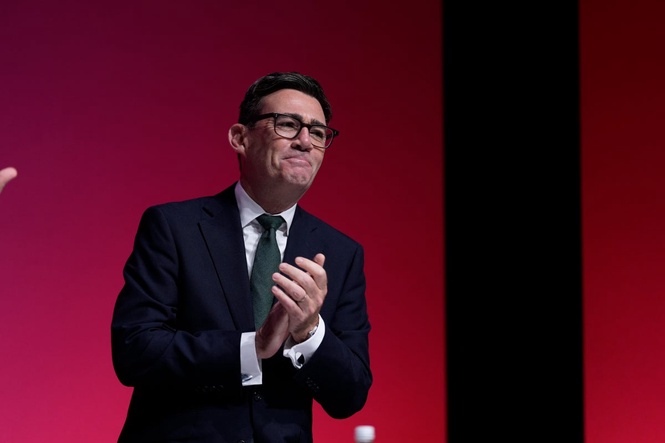
At last, a British prime minister is daring to speak with conviction and courage, displaying true leadership when others have been found lacking. In stating baldly that Britain could go “all the way” towards rejoining the EU, Andy Burnham is throwing down the gauntlet for the next general election.
The Tories have said as much, accusing the premier of seeking “to reopen old wounds by restarting the battles of the Brexit years”. There is no harm in that – in fact, it is to the country’s good. Because for too long, the nation has not addressed a fact that was obvious to many before we left the EU and has only become starker since: that we would lose more than we gained.
This news brand said as much back then and has continued to do so in the intervening decade. For those 10 years, there has been little sign of what we were assured would be a “Brexit dividend”. Ask those Brexiteers who still cling to the belief they were in the right, and many have come to regret their calamitous folly. They struggle to come up with a case for any good it has done Britain. That should be proof enough.
They may point to getting the Covid vaccine before the EU, but that was only by a matter of weeks. Europe soon caught up. They might cite trade deals with nations outside the bloc but those agreements collectively have not come close to replacing having a customs union of 450 million people on our doorstep. They freely admit to taking us out on the basis of peddling untruths – which in itself says everything and should mean they do not merit an audience. Now, it seems, they are girding their loins for a rematch.
Except the public is no longer so easily fooled. The majority of the electorate, according to the polls, are behind closer ties with the EU. The business community, which lamentably failed to make its voice heard the first time round on the misguided notion that it does not pay them to be involved in politics and, as a result, paid a heavy price, is overwhelmingly in favour. They know the cost and difficulty of trading with our neighbours. Where once it was free and easy, now there are barriers. The charges, bureaucracy, not to mention the time lag, are suffocating.
Economists, led by the Bank of England no less, have put a figure on the loss to the economy from exiting, of 6 per cent of GDP. Ask any country in the world if they would voluntarily cede such an amount, and they would think you insane. We did so, say the Europhobes, in order to “take back control”. Really? Instead of being a senior member of a club that together is capable of challenging the superpowers, we find ourselves playing the poor relation, having to tour the globe, cap in hand, begging for a bit here, a favour there. We went from being a leader of Europe to being a leader of nothing.
They highlight immigration, scapegoat it, as if migration was the be-all and end-all of departing the EU. But it was Boris Johnson, that great proponent of Brexit, who presided over the explosion in immigration with the “Boriswave”. Burnham was correct when he said that Britain would be better off working within, with partners in the EU, than without, in attempting to curb the tide of people wishing to settle here.
It is not a done deal. A rocky road lies ahead, one that will be strewn with boulders heaved by the xenophobic right. Already, they are hailing Burnham’s words as a “betrayal”. Yet they had 10 years, most of which were under Tory rule – including by Johnson himself – to prove what we were gaining, and they did not or could not.
There are options. We could attempt to rejoin the single market and customs union while not rejoining the EU itself. This would entail signing up to the European Economic Area, like Norway and Liechtenstein. We would grow our GDP by 2 to 3 per cent, and we would acquire four freedoms of movement – of goods, money, people and services.
We could “do a Switzerland” and obtain “frictionless access” to the single market with its attendant EU energy market, student schemes and space, digital and preventable disease research programmes, in return for free movement of people and payment of an annual sum (Switzerland pays £322m a year) into various EU funds.
We could follow Canada and opt for associate membership – assuming it was offered. This is still in a formative stage and the full detail is not clear, but it would see some sort of closer and freer relationship.
We could go for a full return. A UK referendum would be required, and the EU would need reassurance that there would be no repeat: that we would not rejoin, then walk out again. All 27 EU members would have to agree, and that is far from certain. The prospect of forfeiting the pound for the euro will be raised, but it should be remembered that out of the 27 only 21 have the euro as their official currency – five are due to switch but have yet to do so, and Denmark has a legal opt-out and maintains its own currency.
Or we do nothing, and remain exactly as we are. That is the die-hard Brexiteers’ preference, but this is a moment for honesty, a commodity they do not possess. Burnham is effectively saying that is no longer an option. For that, he deserves applause and he has our support.
Read More