
The Weight of Words: Accountability in the Age of Digital Activism
Malaysia cannot build a beautiful community through humiliation, provocation, and perpetual outrage.
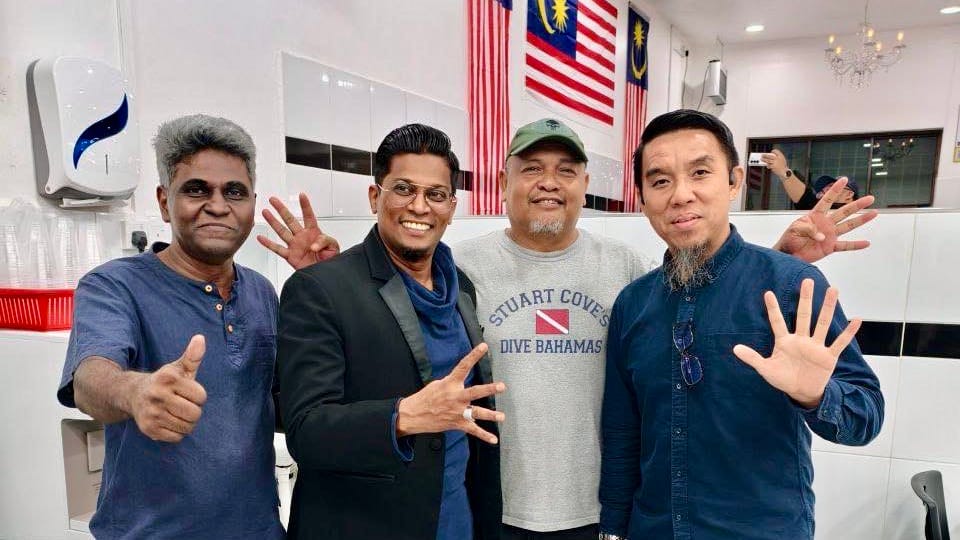
Malaysia today faces a dangerous transformation in the way public influence is exercised. The age of the community leader, teacher, or preacher speaking carefully from a stage has been replaced by the age of the viral clip, the confrontational livestream, and the algorithm-driven outrage cycle. In this environment, figures such as S. Chandrasegaran, Firdaus Wong, and Zamri Vinoth have become more than personalities they have become symbols of how digital activism is reshaping Malaysia’s fragile social fabric.
Each represents a different style of influence. Yet all three, in different ways, expose the same national dilemma: when public engagement becomes driven by provocation rather than persuasion, society eventually pays the price.
The controversy surrounding Cikgu Chandra reached a boiling point after his repeated use of the phrase “botol kicap” to describe Indians a derogatory expression tied to skin colour and racial mockery. His eventual apology was necessary, but it also revealed something deeper about the ecosystem that rewards inflammatory rhetoric. Outrage travels faster than reason and farther. The more divisive the language, the more attention it receives. In the economy of virality, controversy is often mistaken for courage.
That reality should disturb Malaysians not merely because racial slurs are offensive, but because they corrode the ethical responsibility attached to influence itself. A teacher occupies a unique moral position in society. In every civilisation, the educator is entrusted not only with knowledge, but with character formation. When harsh rhetoric becomes normalised under the banner of “truth-telling,” the line between critique and contempt begins to disappear.
Meanwhile, Zamri Vinoth represents another dimension of Malaysia’s digital tension: uncompromising religious commentary delivered with confrontational intensity. His legal troubles and eventual court appearance illustrate how quickly online provocation can spill into real-world consequences. Yet even this episode raised uncomfortable public questions about selective outrage and selective enforcement. Some asked why certain forms of inflammatory rhetoric attract immediate legal scrutiny while others appear tolerated depending on political or communal sensitivities.
Adding another layer to the debate was the revelation that Firdaus Wong reportedly assisted with Zamri’s bail arrangements. That detail matters because it highlights the emergence of tightly networked digital activism circles where personalities defend, amplify, and sustain one another. Critics have understandably questioned why influential supporters step forward while large numbers of passionate online followers often remain spectators once legal consequences arrive. Viral support online, it seems, does not always translate into tangible responsibility offline.
Public perception matters in moments like these. When the first publicly highlighted interaction between controversial figures revolves around bail assistance rather than reflection or reconciliation, it inevitably raises questions about the culture surrounding modern digital activism. To many ordinary Malaysians, it creates the impression of an ecosystem more focused on solidarity between provocateurs than accountability toward the social consequences of their rhetoric.
Still, the conversation must remain nuanced and objective. Firdaus Wong’s approach differs significantly from the direct aggression often associated with Zamri Vinoth or the racially charged language associated with Cikgu Chandra. Firdaus frequently operates through softer messaging, strategic framing, and “soft power” engagement. Yet soft delivery alone does not automatically guarantee social harmony. Influence must ultimately be judged not only by tone, but by outcome. If public discourse consistently leaves communities feeling cornered, insulted, suspicious, or defensive, then even polished rhetoric risks widening social fractures rather than healing them.
This is where Malaysia’s broader 3R challenge race, religion, and royalty becomes critically important. These are not ordinary topics in a multi-racial nation built on delicate historical compromises. They require restraint, precision, and maturity. Yet social media rewards the opposite. Nuance performs poorly against outrage. Reflection loses to reaction. And the algorithm rarely distinguishes between constructive criticism and destructive provocation.
The danger is not merely offensive speech. The danger is the gradual normalisation of contempt as public culture.
A healthy society absolutely requires criticism. Wrongdoing within any community should never be hidden behind racial solidarity or religious defensiveness. But criticism delivered through humiliation rarely reforms people; more often, it hardens resentment. Advice wrapped in mockery ceases to be advice. It becomes performance.
Malaysia does not need influencers who act as permanent gatekeepers policing their own races while attacking others across digital barricades. It needs bridge-builders capable of speaking uncomfortable truths without stripping communities of dignity. National unity cannot survive as a transactional slogan repeated during elections while public discourse grows increasingly tribal, hostile, and algorithmically manipulated.
The concept of a “beautiful community” is impossible without mutual restraint. A beautiful society is not one without disagreement it is one where disagreement does not descend into dehumanisation. Leaders, educators, religious figures, and digital activists must understand that words do not merely generate clicks; they shape emotional climates. They influence how neighbours see one another. They determine whether future generations inherit coexistence or suspicion.
The rule of law must also remain uncompromising and consistent. Selective enforcement whether real or perceived only deepens cynicism and communal distrust. Malaysians must believe that standards apply equally regardless of race, religion, popularity, or political convenience. Without that confidence, every legal action risks being interpreted not as justice, but as tribal competition.
In the end, the issue is larger than Chandra, Firdaus Wong, or Zamri Vinoth. These controversies are symptoms of a deeper national crossroads. Malaysia must decide whether its future will be built on perpetual outrage or principled coexistence.
Because a nation cannot heal if its loudest voices profit from keeping wounds open.
Annan Vaithegi examines society, authority, and the consequences when moral lines are blurred.
Annan Vaithegi (annanvaithegi@icloud.com) is a content creator under the Newswav Creator programme, where you get to express yourself, be a citizen journalist, and at the same time monetize your content & reach millions of users on Newswav. Log in to creator.newswav.com and become a Newswav Creator now!
The User Content (as defined on Newswav Terms of Use) above including the views expressed and media (pictures, videos, citations etc) were submitted & posted by the author. Newswav is solely an aggregation platform that hosts the User Content. If you have any questions about the content, copyright or other issues of the work, please contact creator@newswav.com.