

In an insightful examination of contemporary Malaysian society, a notable academic seeks to answer one question: why do some Malays feel like they are under attack all the time? The answer reflects broader concerns about the educational and cultural isolation experienced by some, contributing to a sense of perpetual defensiveness in the face of perceived challenges. As the world offers unprecedented access to diverse knowledge through various mediums, the necessity for a more inclusive and informed approach to cultural and religious education becomes increasingly apparent.
For context, the Malay academic in question was Professor Dr. Mohd. Tajuddin Bin Mohd. Rasdi. He is a Professor of Islamic Architecture at UCSI University. In addition to his academic role, he is a prolific writer on social issues in Malaysia, focusing on topics such as faith, education, and politics. He began his writing career in 2013 as a letter contributor for Malaysiakini. His first appointment as a social and political columnist was with Free Malaysia Today. He also contributes as a columnist for The Borneo Post, Sinar Harian, and Utusan Malaysia. Being a public intellectual, he was invited to Harith Iskander's podcast, “What's Going On Malaysia?” where he shares his thoughts on why some Malays always feel like they are under attack.
1. They don't read
He stated that some Malays do not read, or at least do not read to understand. According to him, this is because some ustaz or mufti emphasize that religion should not be studied through reading. Instead, they stress that believers should learn religion from a teacher. This perspective is understandable historically, as in the past, books were scarce, and even if available, most people were illiterate. Without photocopiers, everything had to be copied by hand, making learning from books impractical. Therefore, to learn about religion, one had to go to a teacher, a practice known as “berguru”.
However, in today's world, books are readily available, and platforms like YouTube offer vast resources for learning about religion. The sources of learning are no longer limited to a single teacher and are now varied. Consequently, we need to adopt a different approach to religious education. Ustaz might caution readers to be careful when reading translations of the Quran and hadith. Dr. Mohd Tajuddin Bin Mohd Rasdi acknowledges that one limitation for Malaysian Muslims is the lack of understanding of Arabic. To address this, he reads multiple translations of the Quran, from the works of Abdullah Yusuf Ali to Syed Abul A'la Maududi, and compares them to seek the truth.
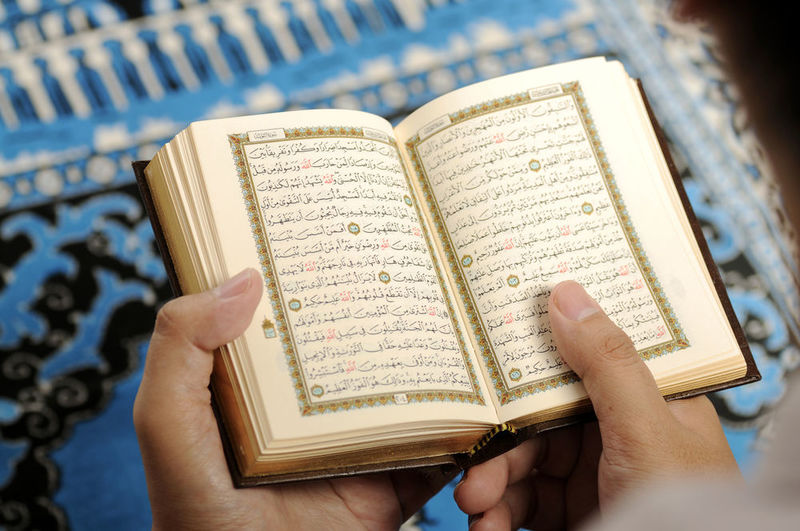
Personally, I think the suggestion to read multiple translations is a sensible one, but oddly enough, he was criticized heavily for his view on this aspect. One Facebook user, Azhari Wahab, commented, “Just an assumption and opinion. Not facts. I won't even address his weak argument (learn what? If weak in Arabic, learn Arabic instead? Not translations, lol).” I would like to defend Professor Dr. Mohd. Tajuddin Bin Mohd. Rasdi against such criticism in this regard.
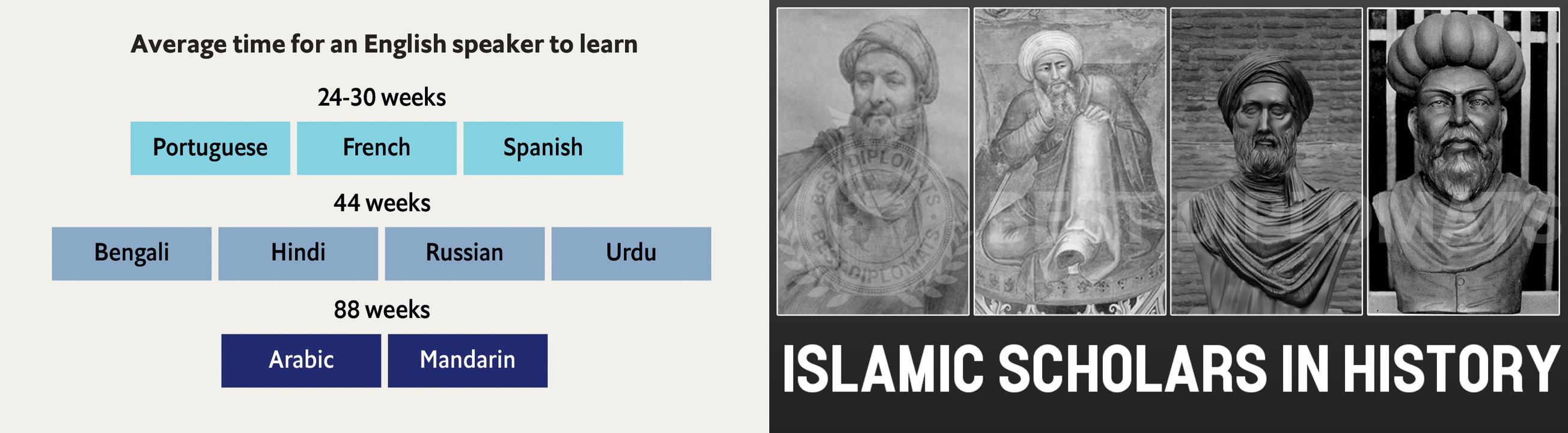
First of all, suggesting that people should NOT read translations and instead learn Arabic to understand the Holy Book is impractical. Arabic is one of the most difficult languages in the world, and becoming conversational in this beautiful language takes approximately 1.69 years, which is equivalent to 2,200 classroom hours. This estimate doesn't even account for the time required to master reading and writing. Not only that, the same word can have many meanings. Take the English word ‘lead’ for example. When I write ‘lead’, do I mean ‘lead’ as in ‘I lead the way’ or ‘lead' (the chemical element)? I am sure Arabic has many words that are written the same way but have different meanings depending on their context, just as many languages do. So if we follow Azhari Wahab's suggestion NOT to read translations and instead learn Arabic to understand the Holy Book, not only do we have to grasp the basics of Arabic, but we also have to learn Arabic culture in order to understand the context in which those words are used which can vary.
Not only that, but different scholars offer varying interpretations because Islam encourages Muslims to think, reflect, and ponder. This practice, called Ijtihad, involves scholars using reasoning to address issues facing Muslims, as detailed in the books of Usul al-Fiqh (Principles of Islamic Jurisprudence). The difference in the opinions of scholars protects the Ummah from incorrect interpretations of Shari'ah rulings. It's important to note that scholars agree on the majority of Quranic verses, and disagreements arose after the Companions' generation, sometimes involving wording rather than the meaning of the verses. There is wisdom that some verses and hadiths are not entirely clear, as this encourages people to strive to understand their intended meanings. This ambiguity allows for space for discussions and interpretations among scholars. So, if you can take into account all these, the critics of Dr. Mohd. Tajuddin Bin Mohd. Rasdi, be my guest(s) in NOT reading the translations/interpretations and instead learning the Quran in Arabic ONLY - dipersilakan!
2. They don't associate with other cultures
Dr. Mohd. Tajuddin Bin Mohd. Rasdi has observed that some Malays do not engage with other cultures, preferring to socialize exclusively within their own race. Even those who travel overseas often stick to their racial social circles, missing out on the opportunity to experience and understand other cultures. In contrast, Dr. Tajuddin actively participates in cultural exchanges, having given talks in churches, temples, and other places of worship. He has also conducted measured drawings for Chinese temples like the Cheng Hoon Teng temple in Malacca, allowing him to learn about various cultures firsthand.
Related to 1. They don't read, Dr. Mohd. Tajuddin Bin Mohd. Rasdi has read extensively about other religions, including Buddhism, Christianity, and Taoism. He has studied texts such as the Bible and the Tao Te Ching. This extensive reading has given him a deep understanding of the diverse races and religions practiced in Malaysia. He further emphasized that it is important to engage with other cultures to avoid looking at things in a ‘simple, wrapped-up box’. “When you study religion in a short, narrow construct - you will even be frightened by your own shadow because you don't have wide thinking”, added Dr. Mohd. Tajuddin Bin Mohd. Rasdi.

A snippet of the video featuring Dr. Mohd. Tajuddin Bin Mohd. Rasdi, in which he lays out the following reasons as to why Malays feel they are under attack all the time has drawn a considerable amount of praise and criticism. On Facebook, many (mostly Malays) have criticized the Professor. RumahKu accused the Professor of being a “lifelong DAP member” and mocked him by saying that “only he (Dr Mohd Tajuddin Bin Mohd. Rasdi) reads, other Malays do not read…”. Many have also accused the professor of being a “liberal” and having “liberal thinking”.
In contrast, on Instagram, many (mostly Malays) have praised the professor for his answer. One user, awa.nama commented, “I agree. They're so afraid of reading translations, worried that reading hadith books will lead them astray, so they end up not reading at all. Ustaz underestimates the abilities of the common people, these people who do not read are insecure. Easily offended over small matters. Non-Muslims without a foundation in Islam read the Quran and convert, so why would we be so foolish that reading could lead us astray? If you don't understand, ask an ustaz. But don't let it be an excuse not to read and learn.” Another comment comes from maymay_adzaman, which is as follows: "The number of Malays who are most triggered in this comment section is alarming. The context of his discussion is about having a broad/open mind. Calling him ‘very liberal’ is based on your own assumption, which I feel you have little understanding of the term. There is no harm in referring to several Quran translations, as long as they are from a reliable source/publisher. Then you can refer your findings to a scholar or expert. He is not trying to "bring down Malays". He is simply stating the obvious that unfortunately, many Malays don't read or do enough research. Unless it's about some celebrity's dirty laundry scoff, then you can take the trophy home - you even research until kingdom come. He isn't bringing down his own race. He's trying to AWAKEN his own race. But unfortunately, many of you are triggered in another direction. Even with a translated version of this video, many of you can't comprehend this topic of discussion. It's frustrating to read."
Perhaps, in confronting these challenges, the call to embrace a broader perspective on learning and cultural engagement emerges as pivotal. As Malaysians navigate a complex landscape shaped by tradition and modernity, fostering a culture of critical reading and cross-cultural interaction not only enriches individual understanding but also cultivates a more cohesive and resilient society. By transcending boundaries of ignorance and insularity, there lies the opportunity to forge a path toward mutual respect, deeper comprehension, and collective progress for all.
Aaron Colt is a content creator under the Newswav Creator programme, where you get to express yourself, be a citizen journalist, and at the same time monetize your content & reach millions of users on Newswav. Log in to creator.newswav.com and become a Newswav Creator now!
The User Content (as defined on Newswav Terms of Use) above including the views expressed and media (pictures, videos, citations etc) were submitted & posted by the author. Newswav is solely an aggregation platform that hosts the User Content. If you have any questions about the content, copyright or other issues of the work, please contact Newswav.

