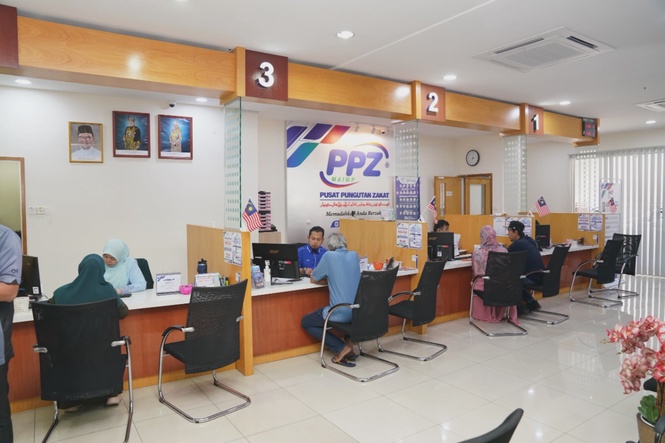
Corporate zakat is emerging as a strategic business tool, helping companies strengthen ESG performance, enhance employee wellbeing and create lasting social impact.
PETALING JAYA: For many employers, zakat is simply another annual obligation to fulfil. But experts say businesses that treat it as a strategic investment rather than a compliance exercise stand to gain far more than tax efficiencies – from stronger environmental, social and governance (ESG) performance and employee wellbeing to deeper community impact.
As companies place greater emphasis on sustainability, responsible business practices and long-term value creation, corporate zakat is increasingly being recognised as more than a religious obligation. Instead, it is emerging as a business strategy that can create measurable value for companies while benefiting the communities they serve.
UniKL Business School Islamic Finance associate professor Dr Aimi Zulhazmi Abdul Razak said corporate zakat could create value for businesses while delivering measurable social impact when integrated into corporate strategies.
He said zakat could support businesses’ ESG goals by providing a structured mechanism for companies to demonstrate their social contributions.
“Corporate zakat hits both profit and loss objectives as well as community impact at the same time,” he said.
In other words, what has long been regarded as a religious obligation can also become part of a company’s broader business strategy, helping organisations meet rising stakeholder expectations while creating tangible social value.
Aimi Zulhazmi also highlighted the role of technology in making zakat contributions more accessible, particularly through salary deduction mechanisms that allow employees to contribute consistently.
“Initiatives such as PPZ-MAIWP’s Skim Potongan Zakat Bulanan (SPZB) could help remove barriers by automating monthly contributions and simplifying the payment process for employees.
“Technology removes friction. When payments become automatic, zakat becomes a habit rather than a once-a-year responsibility.”
PPZ-MAIWP’s Skim Potongan Zakat Bulanan (SPZB) is a salary deduction facility introduced by Pusat Pungutan Zakat-MAIWP to make zakat payments more convenient and consistent for employees. Through the scheme, employees can authorise monthly deductions from their salaries to fulfil their zakat obligations, simplifying the payment process while encouraging regular contributions.
Aimi Zulhazmi said businesses could leverage corporate zakat to strengthen investor relations, enhance employee engagement, develop communities and support long-term sustainability efforts.
He added that zakat contributions could also complement companies’ talent and human resource strategies by helping reduce employees’ financial stress and strengthening their perception of the organisation as a values-driven employer.
“Companies are increasingly expected to show how they create social value, not just financial returns. A structured zakat programme can provide measurable social impact that aligns with these expectations,” he said.
He said corporate zakat also offers businesses an opportunity to create community impact that extends beyond traditional corporate social responsibility (CSR) initiatives by embedding giving into a structured, long-term strategy rather than one-off charitable activities.
On financial planning, Aimi Zulhazmi said companies should avoid treating zakat as an annual obligation handled at the last minute, as early planning would allow businesses to incorporate it into cashflow management and sustainability reporting.
“Think of it like tax planning. You do not plan your taxes only at the end of the year. Zakat should also be planned throughout the year,” he said.
KPMG Malaysia tax head Soh Lian Seng said corporate zakat should be viewed as part of a broader financial stewardship framework that allows companies to align profitability with social responsibility.
He said businesses that incorporate zakat planning into their financial strategies could better manage budgeting, cash flow forecasting and governance processes while ensuring compliance with regulatory and religious obligations.
“Malaysia’s tax framework formally recognises the role of zakat, with payments made by businesses to approved zakat authorities generally eligible for deduction in computing taxable income, subject to conditions under the Income Tax Act.
“However, tax benefits should not be the primary motivation for companies to fulfil their zakat obligations.
“While the tax benefit should not be the primary motivation for paying zakat, it does provide a mechanism that recognises the contribution businesses make to social redistribution and community development,” he said.
Soh said there was still a knowledge gap among businesses, particularly small and medium-sized enterprises (SMEs), on the interaction between corporate zakat and taxation.
He said while many companies understood zakat from a religious perspective, some remained unfamiliar with the related tax treatment, documentation requirements and how it could support broader stakeholder objectives.
“Some organisations also assume that zakat and tax are entirely separate obligations without recognising that Malaysia’s framework is designed to accommodate both.
“Increasingly, stakeholders expect organisations to demonstrate that value creation extends beyond financial returns. Corporate zakat provides a structured mechanism through which businesses can contribute positively to society while strengthening stakeholder trust and corporate reputation,” he said.
On salary deduction schemes that allow employees to contribute zakat through their employers, Soh said such initiatives could encourage consistent zakat payments while supporting employees’ personal financial responsibilities.
He advised employees to ensure contributions are made through recognised and authorised zakat institutions, with proper records maintained for tax filing purposes.
Beyond financial considerations, he said workplace zakat initiatives could also strengthen employee engagement and workplace culture by demonstrating that employers support employees’ personal values.
Soh said business leaders should ultimately view corporate zakat as part of a wider strategy to create long-term and inclusive growth.
“Finance leaders should view zakat not simply as a tax or compliance matter, but as part of a broader strategy to create long-term, sustainable and inclusive growth,” he said.