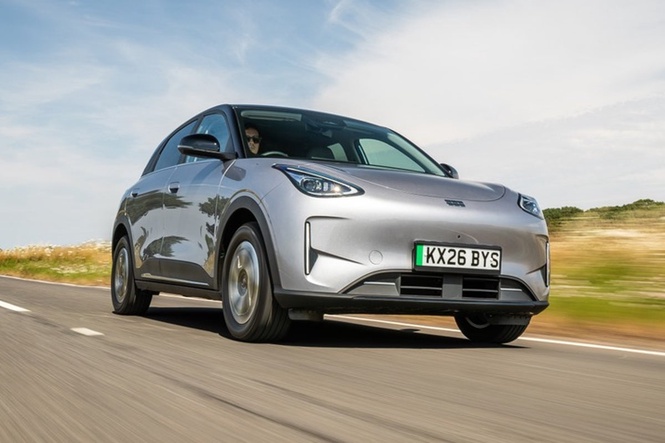
Could China’s biggest-selling car, the Geely EX2, become the new Vauxhall Corsa for learners? That‘s what I asked myself while driving it around Germany – and I came to the conclusion that yes, it could be the ideal car for driving schools to stick a set of L-plates on to. There’s something about a car like this; one that makes so few demands of its driver that it seems rather well suited to somebody getting to grips with driving in the first place. Or, frankly, somebody who’s been driving for years and just wants an easy life.
The EX2 arrives in Britain as Geely’s third model, following the EX5 and Starray. Geely’s UK operation might be relatively new, but the wider group manages brands including Volvo, Lotus, Polestar and Smart, so there’s a much bigger business behind that unfamiliar badge, with Lotus providing a bit of ride and handling knowhow to Geely models. The EX2 itself sits below the EX5 and takes the form of a compact, five-seat electric supermini rather than another sizeable SUV.
At 4,135mm long, 1,805mm wide and 1,580mm tall, it’s usefully compact, although a 2,645mm wheelbase helps explain the amount of room inside. There are two battery sizes, three trim levels and a starting price of £20,990, while the Ultra I drove costs £25,490. That buys you a long equipment list, although we’ll get to exactly what your money buys later on.
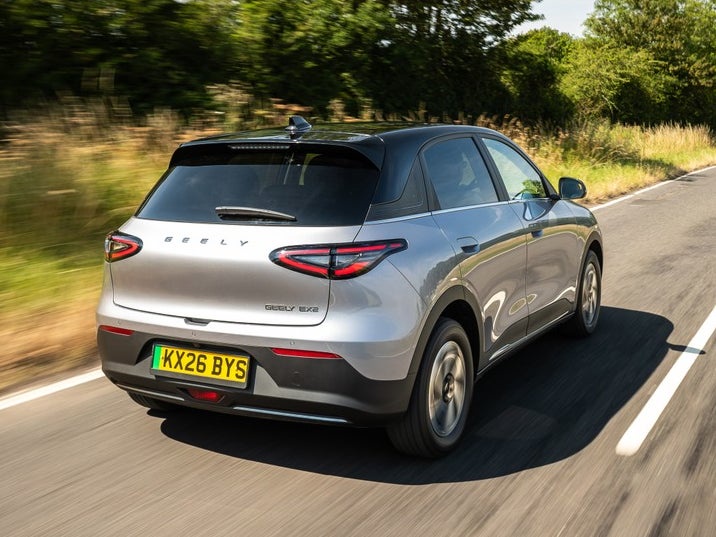
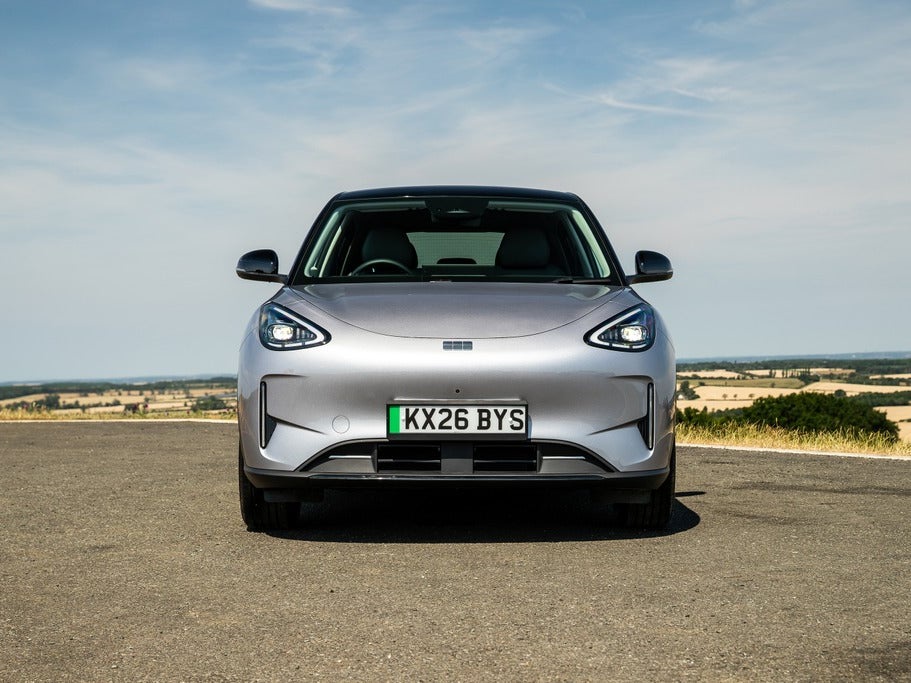
Geely talks about a smiling front end and feather-inspired headlights, with semi-concealed door handles along the sides. The Ultra adds a black roof, while the specification includes 16-inch alloy wheels, LED rear lights and a rear spoiler. There’s also a strange, patterned section on the C-pillar that had me wondering what the designer was trying to tell me. Inside, there’s another unusual pattern across the dash. Neither makes the car more desirable.
My time around Wetzlar in Germany included town streets, country lanes and the autobahn, with road surfaces that were sometimes every bit as poor as those at home. It showed up a few shortcomings, but also a car that’s very easy to drive and feels equally undemanding to live with. It’s not especially exciting, but that isn’t necessarily what you’re looking for in a small, affordable car.
How we tested
I tested the EX2 Ultra around Wetzlar, Germany, while judging German Car of the Year – where it was named Best Value Car – assessing driving, technology and practicality, including my usual Fowler Car Park Test™ at a German Aldi supermarket.
Geely EX2: from £20,990, Geelyauto.co.uk
Independent rating: 7/10
- Pros: Easy to drive, roomy rear seats, big boot and useful storage, generous equipment, low starting price
- Cons: Motorway wind noise, small driver display, dated interior details, tinny doors, awkward parcel shelf
Geely EX2 specs
- Price: from £20,990
- Battery size: 35.35kWh Pro; 47.14kWh Max and Ultra
- Maximum claimed range: 157 miles Pro; 214 miles Max and Ultra
- Charging : 80kW DC Max and Ultra; 60kW DC Pro; 30 to 80 per cent in 25 minutes
Battery, range, charging, performance and drive
Sometimes I really like a car that you can just jump into, not have to think about too much and drive away. That’s exactly what the EX2 is like – it’s a simple car to drive, and sometimes that’s all you need.
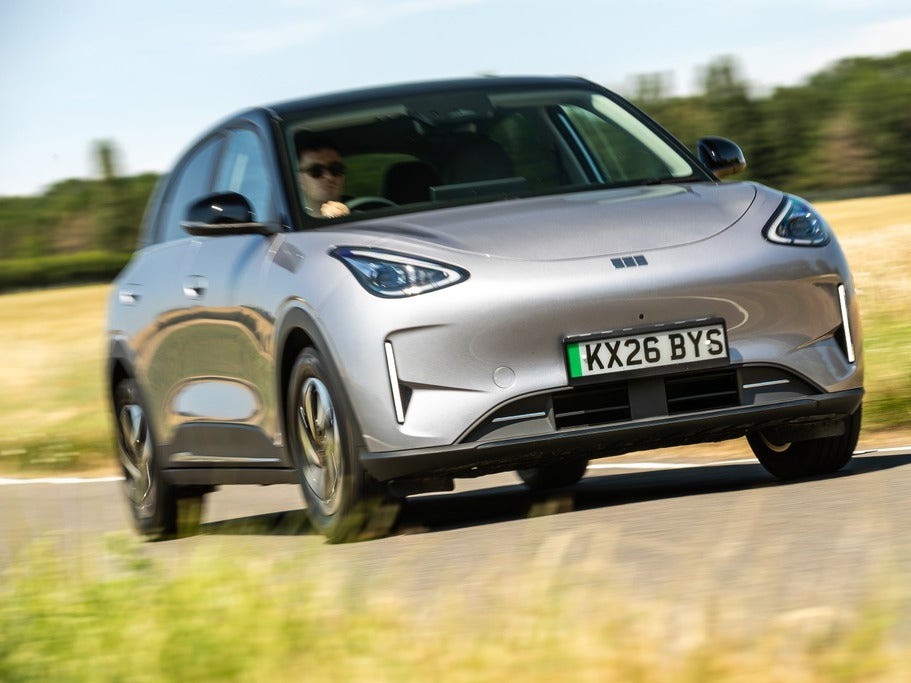
The accelerator is nicely judged, so it’s intuitive to feed in the amount of power you actually want, and the steering is equally undemanding. This isn’t a car that takes much getting used to, which brings me back to that learner-driver thought. Geely makes much of its rear-wheel-drive layout, although I wouldn’t confuse that with a promise of driving thrills. Easy life is the phrase I kept coming back to.
The Pro gets 81bhp and a 35.35kWh usable battery, giving a maximum claimed range of 157 miles and a 0-62mph time of 14.2 seconds. Max and Ultra versions have 114bhp and a 47.14kWh usable battery, increasing the maximum claimed range to 214 miles and cutting the acceleration time to 11.5 seconds. All three have 150Nm of torque and a perfectly adequate 81mph top speed.
The battery spec looks pretty advanced. For the geeks amongst us, it uses lithium-iron-phosphate chemistry and cells by CATL, with liquid cooling across the range. Geely’s cell-to-pack construction is accompanied by 18 temperature sensors, a high-strength steel shield underneath and an impact-protection structure with four horizontal and five vertical elements. The company also quotes 89.2 per cent overall electric-drive system efficiency. If you’re going to boast about all of that at a dinner party, don’t invite me.
For rapid charging, the numbers aren’t very special. Pro models can accept up to 60kW DC, while Max and Ultra increase that to 80kW. Geely quotes 25 minutes to charge from 30 to 80 per cent, so that’s a half-battery top-up rather than the 10-to-80 per cent charging time more commonly used by manufacturers. As ever, the battery’s temperature and condition, its starting charge and the equipment you’re plugged into can all affect how long you actually spend waiting.
All versions have a 6.6kW onboard AC charger. Plugged into a 7kW supply, Geely quotes five hours and 18 minutes to take the Pro from 10 to 100 per cent, or seven hours and 10 minutes for the larger battery in Max and Ultra. So a pretty much empty to full overnight charge at home will be fine.
Geely says it fits its OneBox braking system with Comfortable Stopping technology and G-TCS traction control, while quoting 16 soft connection points intended to reduce noise and vibration. In plain English, that all helps towards the easy-going nature of the car.
The ride isn’t bad at all. You’ll certainly notice bumps, but the car doesn’t crash into them, and the way it coped with some scruffy German tarmac suggested more solidity than the tinny-sounding doors might have led me to expect. There’s a difference between knowing the road surface isn’t perfect and feeling as though the car is taking it personally; the EX2 is on the more agreeable side of that divide.
It’s not especially fun to drive, though, and the motorway exposes another weakness: there’s a lot of wind noise. Away from the autobahn, its easy controls make more sense, and it’s clear that city driving is what this car is really about. That doesn’t prevent a longer trip, but the lack of motorway refinement is something you’ll notice if faster roads form a large part of your daily driving.
Interior, practicality and boot space
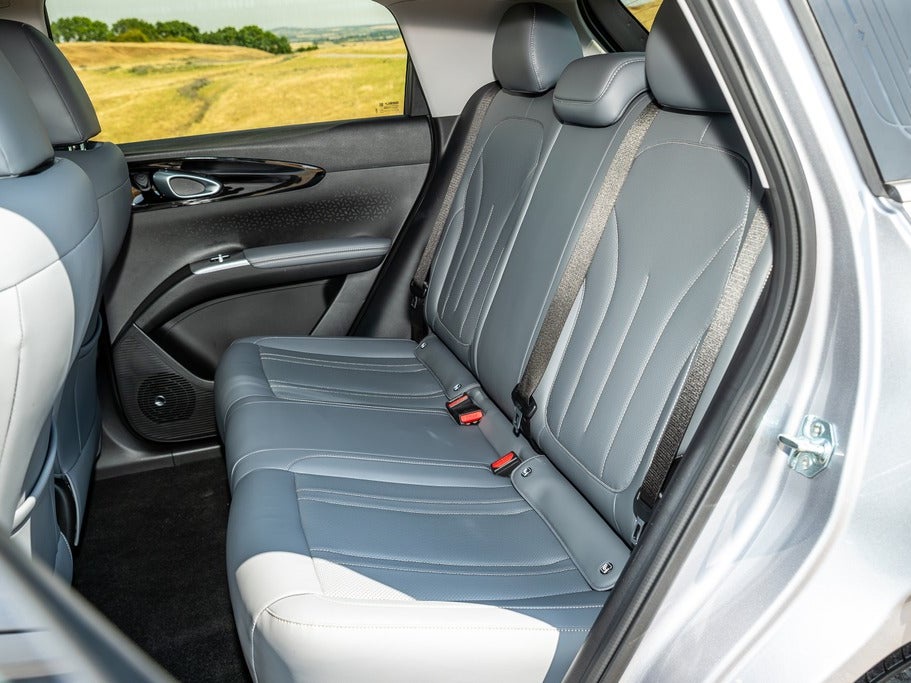
There’s a lot of room in the back of the EX2, which is one of the biggest surprises about it. I genuinely opened the back door and my eyebrows raised. Geely describes rear-seat space as comparable with the class above, and there’s certainly plenty for passengers to make use of. It’s a five-seater with a flat rear floor, so you’re not trying to arrange everybody’s feet around a large hump down the middle.
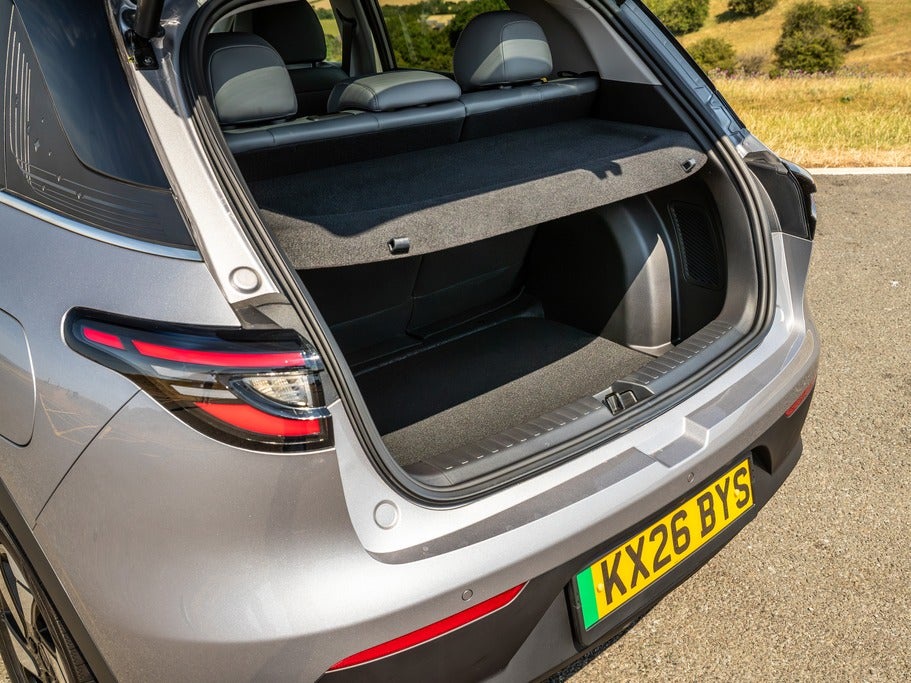
The boot is big and deep, too, with 375 litres available with the rear seats upright and 1,320 litres when the 60:40 split backrests are folded. However, the parcel shelf doesn’t lift out of the way when you open the hatch. That’s both cheap and irritating in a car that otherwise puts quite a bit of thought into storage, and the Ultra’s powered tailgate (another eyebrow raiser on a car like this) doesn’t make that shelf any more cooperative.
There’s a separate 70-litre compartment under the bonnet, plus a 10-litre drawer on the passenger side and sizeable door bins. An optional 28-litre storage box can also be fitted beneath the rear seats, although that’s an optional extra and not fitted as standard. Between all those spaces and the rear boot, there’s plenty of scope for keeping the usual family clutter under control and had I wanted to go to town at Aldi, there’s plenty of room to explore the middle isle.
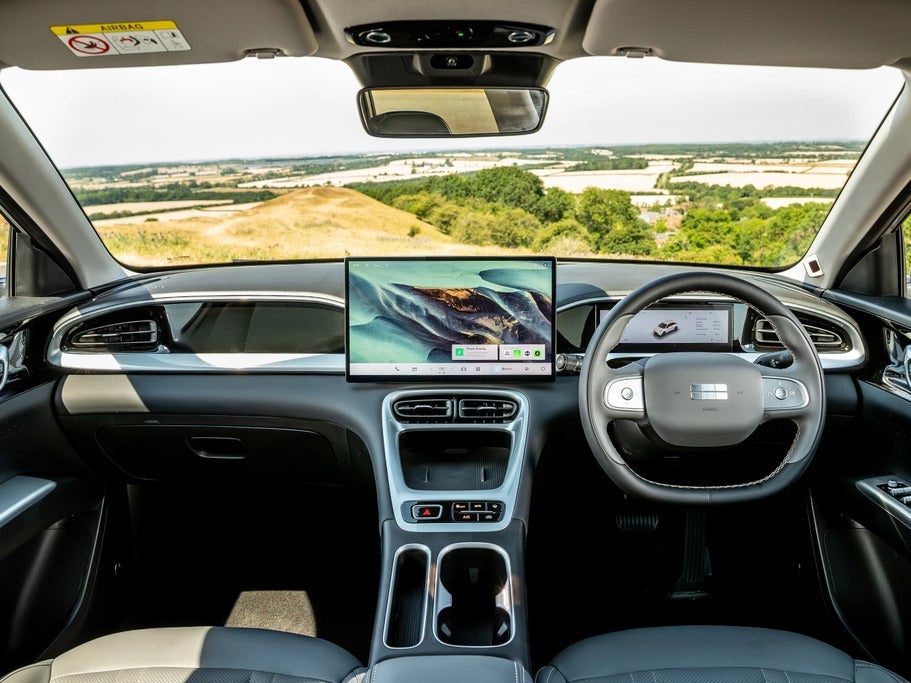
The cabin’s quality is a slightly mixed affair. There’s soft padding where you need it, including around the places your elbows are likely to rest, and across the middle of the dashboard. Open the doors, though, and they sound rather tinny. That first impression doesn’t quite match the more substantial feeling the car gives when it’s dealing with bumps; the way it sounds and the way it feels don’t tell quite the same story.
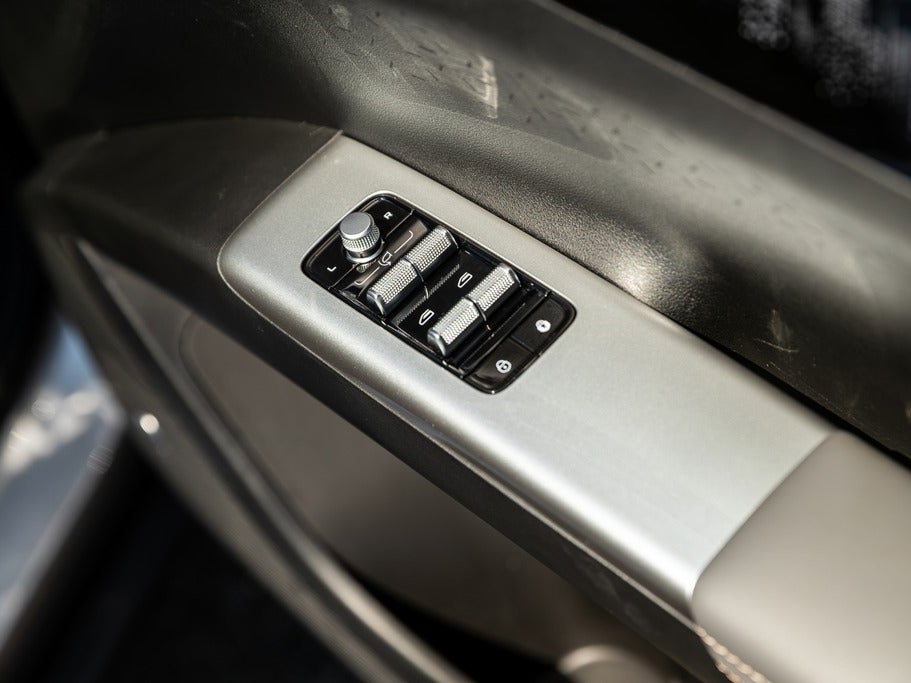
The design itself feels a bit yesteryear. There’s a strange squiggly pattern across the dashboard ahead of the passenger, while the different metallic finishes don’t sit especially happily together. You get a brushed-steel effect in one place and rather old-fashioned, chrome-looking window and mirror switches nearby. It’s as though different decades have been asked to share the same interior.
The seats are upholstered in synthetic leather and look suitably upmarket, while my car also had six-way electric adjustment for the driver and four-way adjustment for the front passenger. The Ultra trim level adds heated front seats and a heated steering wheel, plus the always-unnecessary 256-colour ambient lighting. The steering wheel has a two-tone microfibre and leather covering, and there are rear air vents, a front centre armrest, two cupholders and illuminated vanity mirrors. All four electric windows have one-touch operation but – as with many Chinese models – the controls seem upside-down.
I also gave the car my usual Fowler car park test, this time at a German Aldi, looking at parking and the everyday jobs owners will actually do. The rear window is a little shallow, but overall visibility is okay. Combined with the easy steering and compact body, that helps explain why the EX2 left me thinking more about undemanding ownership than anything even approaching sporty.
Technology, stereo and infotainment
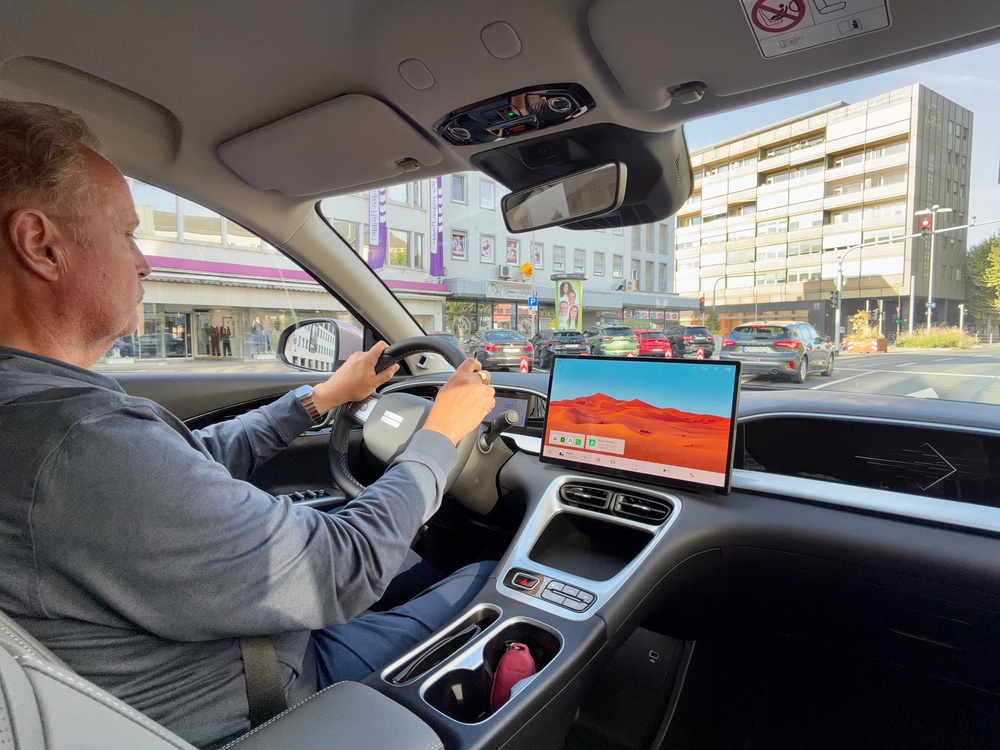
The 14.6-inch central touchscreen works well, which is a good start because there’s plenty going on inside it. It runs Geely’s Flyme Auto system and comes as standard on both models. There are also a few physical air-conditioning buttons between the front seats, although that’s an odd place to put them and, frustratingly, they don’t include temperature adjustment. Having buttons is useful; leaving out one of the functions you’ll want most is less so.
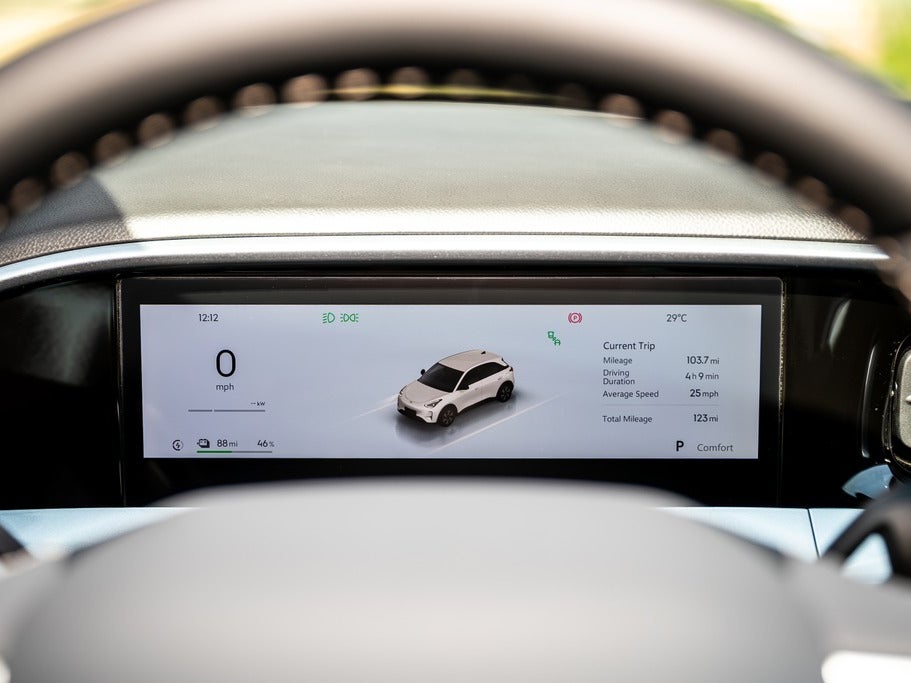
I’m less keen on the driver display. Geely says it measures 8.8 inches, but it feels small, the fonts are tiny and it’s mounted low enough for the steering wheel to cover it as you turn. A generous touchscreen specification doesn’t compensate for driving information that isn’t as easy to see as it should be. This is one of those areas where a little more thought about the basics would have helped.
Wireless Apple CarPlay and Android Auto are standard, alongside online navigation that can help locate charging points. There are integrated apps including Spotify, Audible, Amazon Music and TuneIn, while the voice assistant can operate navigation, climate settings, infotainment and the windows. The system also supports over-the-air updates, allowing features and functions to be updated during ownership.
Pro and Max models have four speakers, comprising two tweeters and two woofers, with a quoted maximum output of 140W. The Ultra adds two more woofers for a six-speaker, 200W system. Spatial audio and preset equaliser settings are included, with different modes for different types of music. That all looks good on paper, but sounds no more than okay in the Ultra model I was driving.
The Ultra also has wireless phone charging, while there are two USB-A sockets and one USB-C connection. There’s 4G connectivity, too, with free connected-car services included for two years.
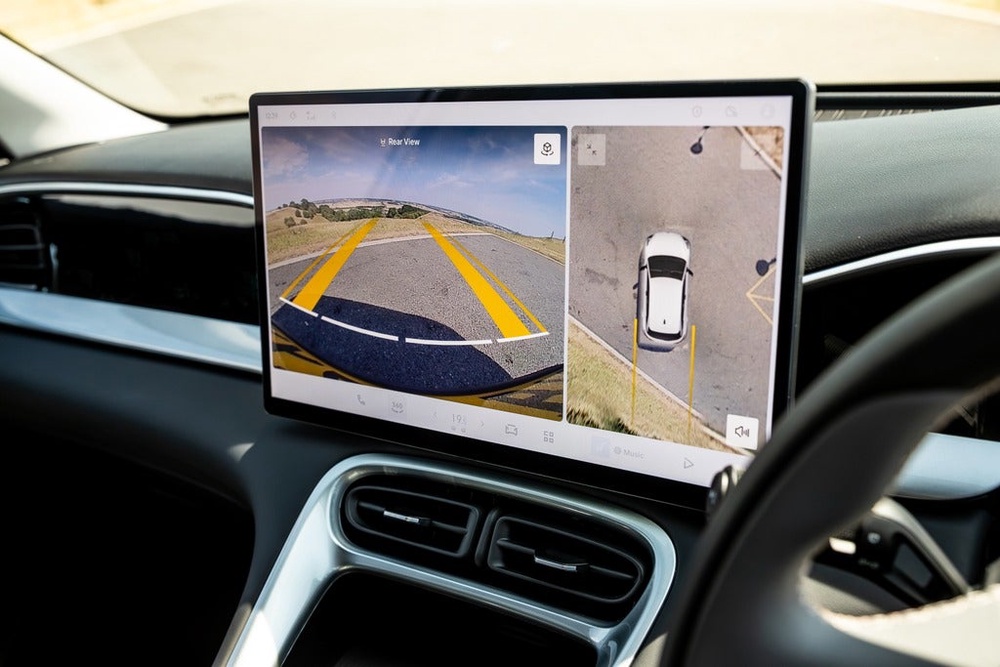
Parking is easy – as you’d expect – helped by a reversing camera and rear sensors, with the Ultra upgrading to a 360-degree camera system with a whacky transparent-chassis view. The top-spec car’s equipment also includes automatic LED headlights, intelligent high-beam control, rain-sensing wipers, heated and electrically adjustable mirrors, and rear privacy glass.
There’s an extensive driver-assistance list on the Ultra, including adaptive cruise control, automatic emergency braking, traffic-sign recognition, intelligent speed assistance and driver monitoring. Lane-departure warning, lane keeping, emergency lane keeping, lane-change assistance and automatic lane-change assistance are listed, along with highway assistance and evasive-manoeuvre assistance. Blind-spot detection, front and rear cross-traffic alerts, forward and rear collision warnings and door-opening warnings complete another sizeable chunk of the specification.
Seven airbags, rear Isofix child-seat mountings, electronic child locks and occupant detection for the front and rear seats are included. There are also stability and anti-roll systems, hill-start and hill-descent assistance. It all adds up to a properly posh big-car specification list for not a lot of money.
Prices and running costs
The EX2 range starts with the £20,990 Pro, which already includes the large touchscreen, digital driver display, synthetic leather upholstery, electrically adjustable front seats and wireless smartphone connectivity – that could become the learner driver’s favourite. The EX2 Max costs £2,500 more and brings the larger battery and more powerful motor. That increases the maximum claimed range from 157 to 214 miles, rather than simply adding more equipment to the same car.
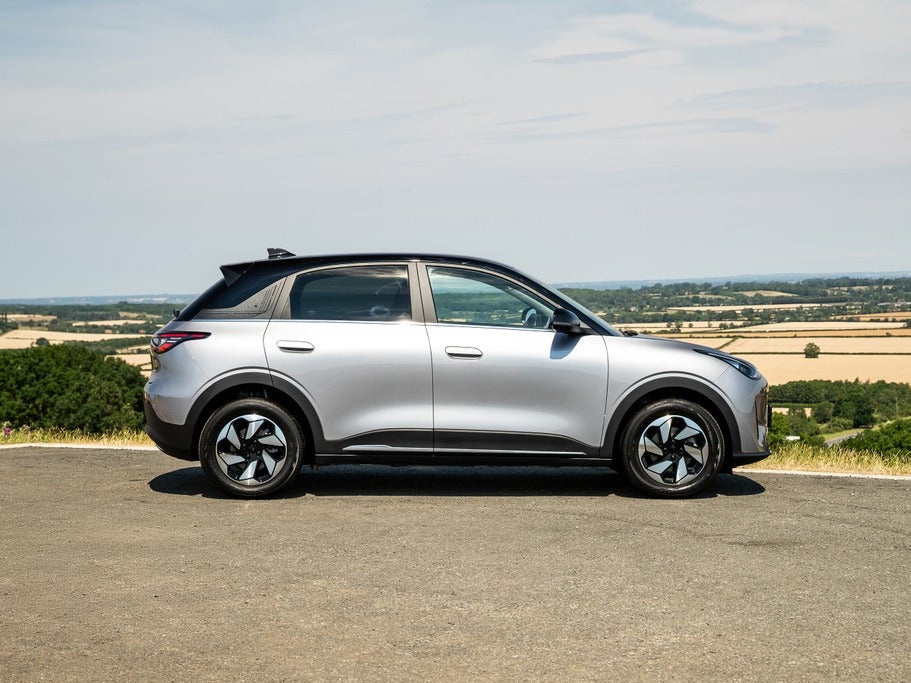
The £25,490 Ultra I drove sits another £2,000 above that, adding a pretty luxurious specification including heated front seats and steering wheel, wireless charging, the 360-degree camera, powered tailgate, ambient lighting, black-roof two-tone styling and the upgraded stereo. It’s a lot of kit for the money, and there’s enough here to make you feel as though you’ve won the lottery without also needing a winning ticket to pay for the car.
There’s some scope for personalisation, too – not quite in the same league as a Mini or Renault 5, but Geely offers three bonnet-stripe designs in either black or white, priced at £185.
There’s warranty cover of up to eight years or 125,000 miles, and the same for the battery too. Four years of free roadside assistance are included – not that there’s much mechanical to go wrong.
The verdict: Geely EX2
Undemanding, easy to drive and loaded with kit, the EX2 has plenty going for it. There are shortcomings, but another glance at the price makes those faults rather easy to forget about. It’s no Volkswagen Polo, but then it’s not priced like a Polo. It’s an undemanding little car with some imperfections, rather than an expensive one asking you to overlook them.
Geely EX2 rivals
FAQs
How long does it take to charge?
Geely quotes 25 minutes from 30 to 80 per cent, with maximum DC charging rates of 60kW for the Pro and 80kW for Max and Ultra. All versions have a 6.6kW onboard AC charger. Using a 7kW supply, a 10-to-100 per cent takes roughlyfive hours and 18 minutes for the Pro and seven hours and 10 minutes for Max and Ultra.
How much does it cost and is it worth it?
Prices start at £20,990 for the Pro, rising to £23,490 for the Max and £25,490 for the Ultra I drove. It’s easy to drive, has plenty of passenger and luggage space and comes with generous equipment. It’s fair to say the Geely EX2 majors on value.
Does Geely replace batteries for free?
The EX2 has an eight-year/125,000-mile battery warranty, alongside vehicle warranty cover of up to eight years or 125,000 miles, too.
Why trust us
Our team of motoring experts have decades of experience driving, reviewing and reporting on the latest EV cars, and our verdicts are reached with every kind of driver in mind. We thoroughly test drive every car we recommend, so you can be sure our verdicts are honest, unbiased and authentic.
Read MoreAion UT review: my verdict on the posh-looking electric supermini taking on the Renault 5
How to install an EV charger at home: Costs, grants and what to expect
Skoda Epiq review: I’ve driven the cool new electric SUV, but is it epic?
Leapmotor B03X review: I drove the new electric SUV with 237 miles of range that’ll improve with age
Bentley ploughs on with electric Luxury Urban SUV plans
BMW iX3 review: Is this new electric SUV with 500-mile range a game-changer?
This fast-charging EV can have an almost-full battery in under 10 minutes
Volkswagen ID. Cross review: Small electric SUV feels impressively polished and properly posh