
Thin laptops normally force manufacturers into an awkward compromise: use a fan and make room for vents, or go fanless and limit sustained performance. Lenovo’s Project AeroBlade concept suggests there may soon be a third option.
Shown at IFA 2026, the 14-inch concept uses Frore Systems’ AirJet solid-state cooling technology instead of a conventional spinning fan. The result is a laptop measuring under 10mm thick and weighing less than 830g, while still retaining active cooling.
How do you cool a laptop without a fan?
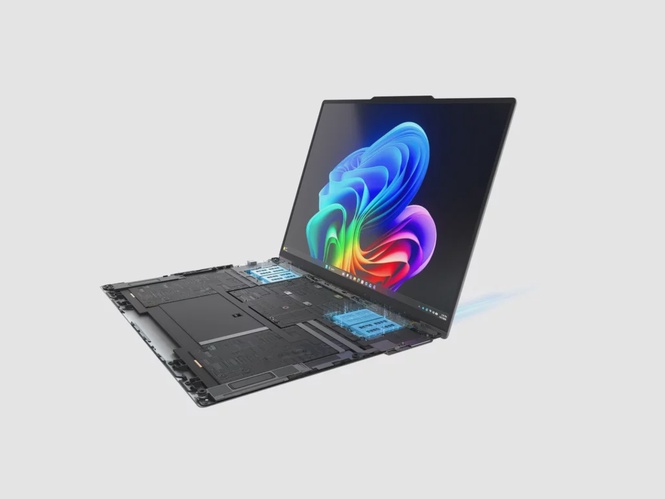
AirJet modules use rapidly vibrating piezoelectric membranes to move air through the machine. There are no spinning fan blades, allowing the cooling hardware to occupy a much smaller space while generating high air pressure.
Lenovo’s prototype reportedly uses four AirJet modules and can support around 20W of thermal dissipation. That may not sound enormous next to a gaming laptop, but it is significant for an ultra-thin productivity machine where sustained CPU performance is often constrained by heat.
No bottom vents could be a bigger deal than it sounds
Project AeroBlade also does away with the usual intake vents on the bottom of the laptop. Besides producing a cleaner design, that could reduce the amount of dust pulled into the machine and make it less sensitive to being used on a bed, sofa or lap.
Solid-state cooling should also be quieter because there is no conventional fan motor. That makes the technology particularly attractive for ultraportables that want MacBook Air-like acoustics without giving up active cooling.
Why isn’t every laptop using AirJet already?
The technology has appeared in demonstrations and niche devices for several years, but cost, manufacturing scale and integration remain important hurdles. Project AeroBlade is still a concept rather than a retail product, and Lenovo has not announced a price or release date.
The prototype uses an Intel Lunar Lake platform alongside an OLED display, Thunderbolt 4 and Wi-Fi 7, although those specifications could change if Lenovo decides to commercialise the design.
The interesting part is not necessarily this exact laptop. If solid-state cooling becomes economical enough for mainstream notebooks, manufacturers could build thinner machines without accepting the performance limitations associated with passive cooling. For people who carry a laptop every day, that could be a much more meaningful upgrade than another small processor speed bump.