Some children develop permanent teeth that are unusually sensitive, discoloured or prone to crumbling soon after they emerge.
The problem is not caused by poor brushing or too much sugar. It may be molar incisor hypomineralisation, or MIH, a common but often poorly recognised developmental dental condition.
MIH affects the enamel of teeth that began forming in very early childhood. It can make eating, drinking and toothbrushing painful, while also increasing the risk of tooth decay and repeated dental treatment.
Although dentists are increasingly aware of the condition, important questions remain about how common it is, what causes it and how best to prevent its long-term effects.
A problem with enamel formation
Tooth enamel is the hard outer surface that protects teeth from daily wear, temperature changes and decay. It is the hardest material in the human body and is normally rich in minerals, which give it strength.
In MIH, enamel does not develop normally while permanent teeth are forming inside the jaw. The affected enamel contains fewer minerals, making it softer and less resistant to damage.
The condition most often involves the first permanent molars, sometimes called six-year molars because they usually emerge at around this age. It can also affect the permanent front teeth, known as incisors.
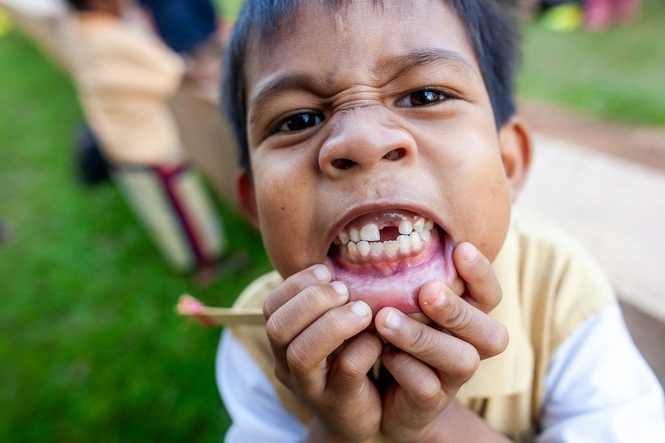
Affected teeth may have clearly defined patches that are white, cream, yellow or brown. Yellow-brown areas generally indicate more severely weakened enamel. In some children, the enamel breaks down soon after the tooth erupts, exposing the deeper layers of the tooth and causing pain or marked sensitivity.
Common, but not always recognised
MIH appears to be widespread. Estimates vary substantially between studies and countries, partly because dentists and researchers have not always used the same methods to identify and record it.
Research cited by dental researchers in Scandinavia suggests that around 28% of children in the region may be affected. Studies across Europe have also reported high rates, while lower rates have often been reported in parts of Africa and Asia.
These geographic differences should be interpreted cautiously. They may reflect genuine differences in risk, but could also be influenced by access to dental care, awareness among clinicians and variations in how studies diagnose MIH.
The key point for families is that MIH is not rare. A child with patchy, sensitive or easily damaged new adult teeth should be assessed by a dentist rather than assumed to have simply developed cavities or poor oral hygiene.
What research suggests about possible causes
MIH is thought to develop during a relatively short period in early life, broadly from around birth to the age of two, when the enamel of first permanent molars and incisors is forming.
Researchers have examined several possible influences, but no single cause has been established. Evidence from human observational studies suggests MIH may be associated with illness or health events during pregnancy, birth and early childhood.
Possible links include frequent or prolonged illness in infancy, fever, respiratory infections and other repeated infections. Complications around birth, including premature birth or reduced oxygen supply, have also been investigated.
Long-term antibiotic use has been reported more often in some children with MIH. However, this does not prove that antibiotics themselves cause the condition. Children who need repeated antibiotics may have had infections or underlying health problems that are the more relevant factor.
Environmental exposures, including air pollution, and nutritional factors such as low vitamin D have also been studied. Genetic susceptibility may help explain why some children develop MIH after similar early-life experiences while others do not.
In plain terms, MIH appears to result from a disruption to enamel-making cells at a crucial stage of tooth development. The disturbance may have several possible causes, and a child’s inherited susceptibility may also matter.
Why MIH can be difficult for children
The effects of MIH are not only cosmetic. Fragile enamel can chip or break, especially on molars that must withstand the force of chewing.
Children may experience pain when brushing, or sensitivity to cold, hot, sweet or acidic food and drinks. This can lead some to avoid brushing the affected area, making plaque and tooth decay more likely.
Dental treatment may also be difficult. Severely affected teeth can be sensitive even before treatment begins, and local anaesthetic may be less effective in some cases of inflamed or highly sensitive molars.
Early recognition is therefore important. It allows dentists to protect vulnerable teeth before substantial enamel breakdown or decay occurs.
How strong is the evidence?
It is well established that MIH is a developmental defect of enamel affecting permanent molars, often alongside incisors. Its effects on tooth sensitivity, enamel breakdown and risk of decay are also well recognised in dentistry.
The causes, however, are less certain. Much of the research has been observational, meaning it can identify patterns and links but cannot reliably show that one exposure directly causes MIH.
For example, early childhood illness may be associated with MIH, but illness can occur alongside factors such as medication use, premature birth, nutritional difficulties or environmental exposures. Separating these influences is challenging.
Differences in diagnostic criteria also make it harder to compare prevalence estimates between countries and across time. More consistent studies, including research that follows children from pregnancy or birth onwards, could help clarify which factors are most important.
What parents can do
There is currently no proven way for parents to prevent MIH from developing, because the enamel disruption occurs before the affected permanent teeth emerge.
However, parents can help reduce the consequences once teeth begin to come through. Regular toothbrushing with fluoride toothpaste is important, even when teeth are sensitive. A dentist can advise on practical ways to make brushing more comfortable and on the appropriate fluoride use for a child’s age and individual risk.
Parents should seek a dental assessment if a child’s new permanent molars or front teeth have unusual white, yellow or brown patches, seem to crumble, or cause pain during eating or brushing.
A calm, supportive approach to dental visits can also matter. Children with MIH may have had painful experiences involving their teeth, so explaining that dental care is intended to prevent pain and protect the tooth may help reduce anxiety.
Treatment depends on how severely teeth are affected
Dentists usually assess MIH as mild, moderate or severe. Treatment is tailored to the individual tooth, the child’s symptoms and the likelihood that the enamel will break down.
For mild cases, dentists may use fluoride treatments to strengthen the tooth surface and reduce sensitivity. Sealants, thin protective coatings applied to the chewing surface of molars, can help keep bacteria and food debris out of vulnerable grooves.
Moderately affected teeth may need fillings, particularly if enamel has broken away. More severely damaged molars may be protected with preformed stainless-steel crowns. These cover the tooth and can reduce pain, limit further breakdown and lower the risk of decay.
In a small number of severe cases, removal of a damaged permanent molar may be considered. Timing is important because the decision may affect how the remaining teeth move as a child grows. This requires careful planning by a dentist and, where necessary, an orthodontic assessment.
Front teeth are often treated more conservatively at first, especially if the main concern is discolouration rather than loss of enamel. As children get older, options may include whitening or resin infiltration, in which a fluid material is placed into porous enamel to improve its appearance.
What happens next
Researchers need clearer evidence on the causes of MIH and more agreement on how it should be diagnosed and recorded. Better data could show whether rates are genuinely changing and identify children most likely to benefit from early monitoring.
For now, MIH should be understood as a problem of tooth development, not a sign that a child or parent has failed to care for their teeth. Prompt dental assessment, preventive care and treatment matched to severity can help protect affected teeth and reduce the need for more complex care later in life.
The post This Mysterious, Little-known Tooth Condition Affecting Millions of Children first appeared on PP Health Malaysia.