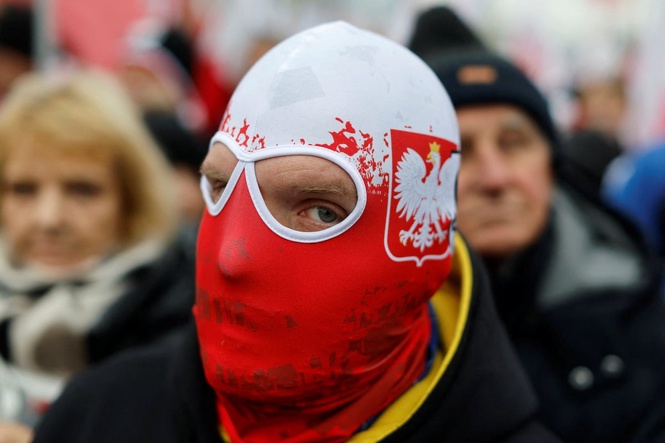
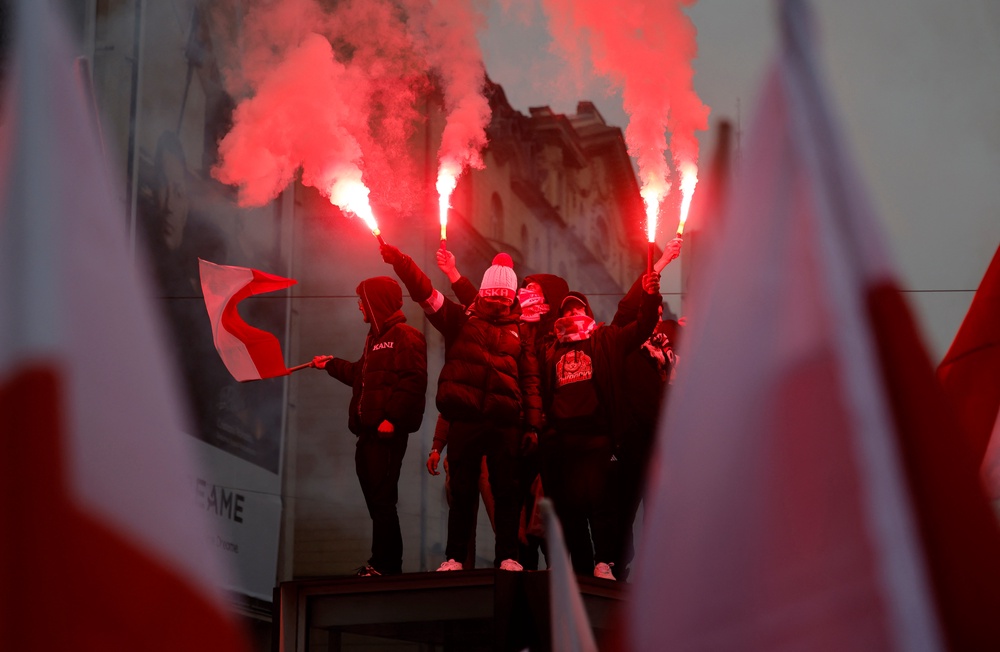
Thousands of people gathered for an annual far-right march in Poland on Wednesday, just days after a mass shooting in Krakow.
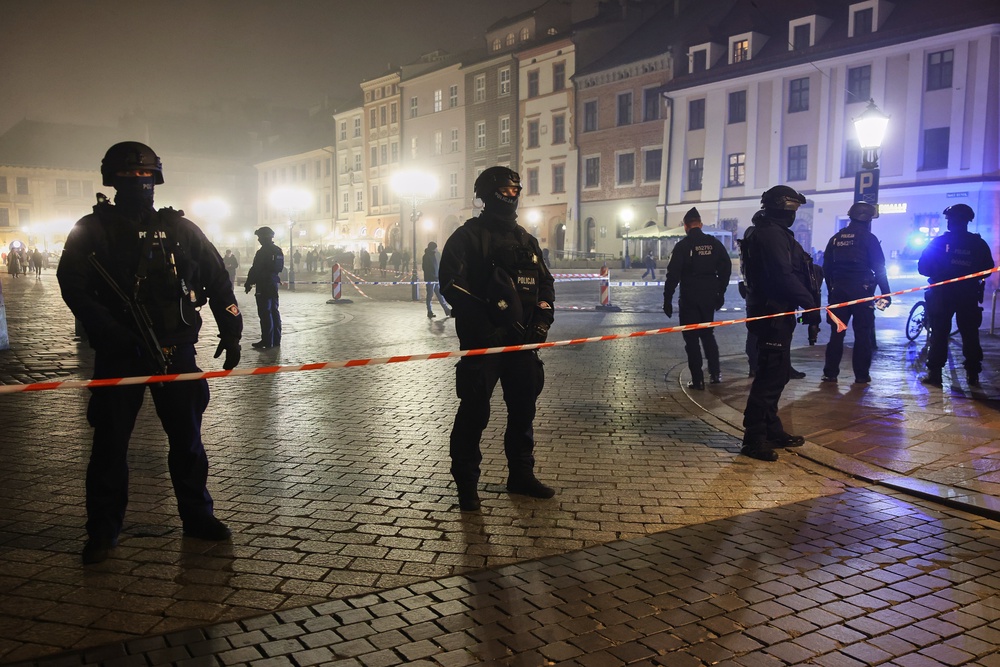
Extra police were deployed in the capital of Warsaw ahead of the Independence Day march, a tradition that has long caused friction between right-wing parties and the now-ruling centrists.
Critics say the march is a smokescreen to platform racism and antisemitism, while participants claim the gathering is an expression of national pride.
Poland’s Prime Minister Donald Tusk called for restraint amid sharper-than-usual political divisions after ministers outraged nationalists by saying the gunman who killed six people in the main square of Krakow may have been motivated by far-right ideology.
The gunman, named by prosecutors as Michał Oksiński, drove into a market square on 7 November, killing six people – including a British national – and injuring 15. He was later pronounced dead following a shootout with police.
Police then discovered three bodies at the family home of the 24-year-old suspect in Ostrowiec Swietokrzyski, about 93 miles northeast of Krakow.
Officers said that the victims were believed to be his sister, mother and father.
Interior minister Marcin Kierwinski said Oksiński held “very radical views” and “was fascinated by far-right ideologies”.
"I address everyone, including those who will be gathering in Warsaw,” Mr Tusk said in Szczecin, northwestern Poland.
“We may hold different views, we may keep each other in check, and at times we may even be political opponents; yet, anyone who truly cares about Poland must understand that this space, defined by independence, freedom, and a secure Republic, is a common good.”
Organisers of the march urged people not to exploit it for political ends, saying they expect a record turnout – including appearances from foreign nationalists across Europe.
"We have condemned political attacks linked to this tragedy - regardless of whether they came from the right or the left," said Rafal Buca, a spokesperson for the march organisers.
Police said they had deployed more officers from outside Warsaw, declining to give exact numbers.
Concrete barriers were installed on streets adjacent to the starting point downtown, while officers searched nearby areas.
Authorities have in the past attempted to stop the march taking place following clashes between some of the participants and their political opponents or police.
Read MoreScottish man killed in Krakow shooting in which six died
Tributes paid to ‘exceptional’ painter killed in Krakow shooting that left six dead
Police officer dies after backpack explodes at scene of Spain shooting
Austria tightens laws against spying to protect the international organizations it hosts
Some 300 Italian schools evacuated due to bomb threats
How Turkey’s drive to expand a major coal plant is polluting its climate push