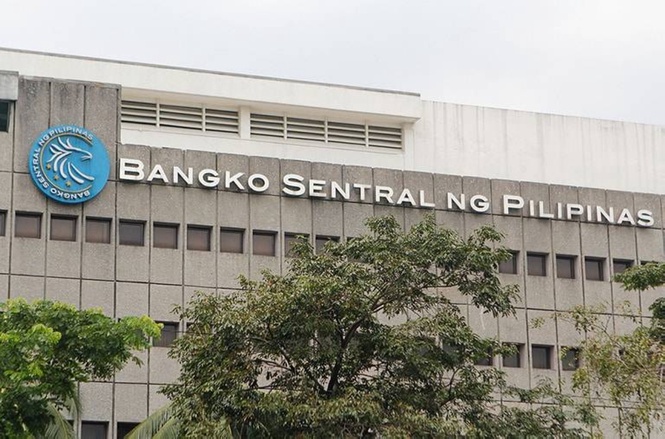
THE Bangko Sentral ng Pilipinas (BSP) should not be expected to use interest rate increases to defend the peso against the US dollar, as the central bank’s primary responsibility is to contain inflation and maintain price stability.
GlobalSource Partners economist and former BSP Deputy Governor Diwa Guinigundo said in a commentary on Wednesday that the BSP “did not raise interest rates primarily to defend the peso.”
“It did so to address mounting inflationary pressures and prevent inflation expectations from becoming unanchored," he added.
Guinigundo argued that exchange rate movements are influenced by global dollar strength, international interest rates, geopolitical uncertainties, capital flows, investor risk appetite and domestic economic prospects.
“Monetary policy cannot be expected to correct the structural weaknesses behind the peso's vulnerability,” he said.
The BSP policymaking body Monetary Board has surprised the market last month by raising key policy rates by 50 basis points. This brought rates to a higher 5.5 percent.
The peso has been on a weakening trend since the Middle East war broke out in March, when the local currency began trading at the P60:$1 level.
It further depreciated to the P63:$1 level and hit a record low of P64.17:$1 on Oct. 27, despite the BSP's jumbo rate hike on Oct. 22.
“Consequently, the peso's continued depreciation immediately after the BSP's rate increase did not establish that the policy decision was ineffective,” Guinigundo said.
Guinigundo argued that not every episode of peso depreciation should automatically trigger an interest rate increase, just as every rate hike should not be expected to immediately strengthen the currency.
Structural weaknesses
Beyond monetary policy, he said the government must address the structural weaknesses that make the peso vulnerable to external shocks.
“The Philippines continues to face a persistent trade deficit, considerable dependence on imported energy and production inputs, limited export diversification, and recurring requirements for foreign financing,” Guinigundo said.
“These structural realities generate demand for foreign exchange that cannot be eliminated through higher interest rates or foreign-exchange intervention,” he added.
Guinigundo said that indiscriminate import restrictions could provide temporary relief to foreign exchange demand but may also undermine productive capacity, delay critical investments and weaken future economic growth.
Instead, he called for improvements in public investment efficiency, stronger domestic agriculture and manufacturing, lower logistics and energy costs, and the development of more competitive exports with higher domestic value added.
“The objective must be to increase the country's capacity to earn foreign exchange, not merely manage its demand for dollars,” Guinigundo said.
“There is also a need to manage capital flows intelligently,” he added.
Governance also a factor
Guinigundo identified governance and institutional credibility as equally important factors in determining the peso's long-term stability.
He said transparency in public spending, accountability and the rule of law have direct implications for investment decisions, country-risk premiums and capital flows.
Controversies surrounding public infrastructure spending underscore the need for independent audits, transparent procurement and credible accountability mechanisms, he said.
“Investors look beyond interest rates and growth projections,” Guinigundo said.
The former central bank official argued that investors consider not only interest rates and economic growth prospects but also policy predictability, institutional integrity and the protection of investments when deciding whether to commit capital to the Philippines.
He stressed that weak governance can discourage long-term investments and increase the risk premium attached to Philippine assets, potentially adding to pressures on the local currency.
“No amount of monetary tightening can fully compensate for weaknesses in these areas,” Guinigundo said.
“Good governance is therefore not separate from economic and currency stability,” he added.
“It is one of their essential foundations.”