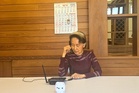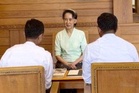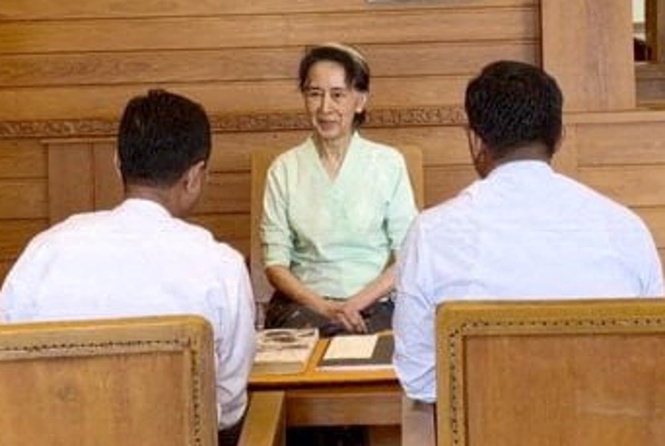
The son of Myanmar's detained former leader Aung San Suu Kyi spoke to his mother this week for the first time in more than five years.
Kim Aris, who for years had only received sporadic, second-hand updates about the 81-year-old who is currently serving an 18-year prison sentence on charges she denies, said they chatted for more than 20 minutes.
Suu Kyi, a Nobel Peace Prize winner, has been detained since February 2021, when Myanmar's military ousted her elected government and arrested civilian leaders in early-morning raids.
The coup sparked nationwide protests that evolved into an armed resistance movement, plunging the impoverished country into a civil war that has killed about 100,000 people and displaced millions.
The Independent has long campaigned for Suu Kyi’s release and documented her journey in a film entitled Cancelled: The Rise and Fall of Aung San Suu Kyi.
Here we review the timeline of events that has led to Suu Kyi’s continue incarceration:
April 1988: Suu Kyi finds her footing in Burma’s nascent democracy movement
Aung San Suu Kyi is the daughter of the country’s independence hero, General Aung San, who was assassinated in 1947, less than six months before the country, then called Burma, became independent from Britain.
Suu Kyi moved to New Delhi in 1960 when her mother was appointed ambassador to India and then spent most of her young adult life in the United States and England, where in 1972 she married British scholar Michael Aris.
She returned home to Myanmar in early 1988 to attend her ailing mother as pro-democracy protests erupted against the decades-long rule of military dictator General Ne Win.
As security forces started gunning down demonstrators that summer, Suu Kyi seized the moment with an impassioned plea for democracy before 150,000 people in Yangon.
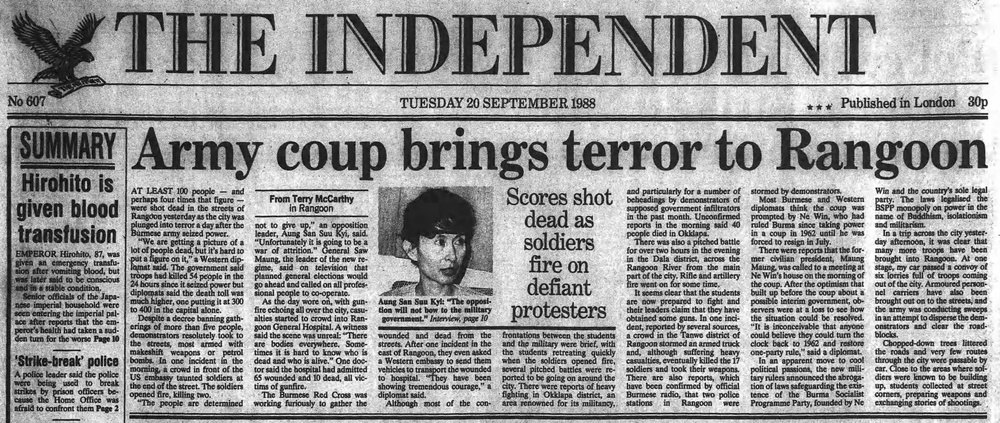
"I could not as my father's daughter remain indifferent to all that was going on," she told the crowd.
By September, she had had helped found a concrete opposition party, the National League for Democracy (NLD). But within a year she found herself under house arrest, confined to a gruelling state of existence that has continued on and off ever since.
May 1990: Democratic vote put down by junta
The NLD was not deterred by its founder’s imprisonment and won a landslide election victory in May 1990, with 392 of 492 seats, or 59.9 per cent of the vote.
Suu Kyi’s detention and the wider political situation in Myanmar had captured the world’s attention. Reports emerged of political prisoners being beaten, shocked, immersed in water for long periods and deliberately deprived of sleep.
At one stage there were an estimated 30,000 political prisoners being held by military government. On at least two occasions in 1990, prisoners died shortly after being released from jail.
Suu Kyi represented hope of an alternative, and her electoral victory threatened to bring down the junta - until the government nullified the polls and refused to hand over power.
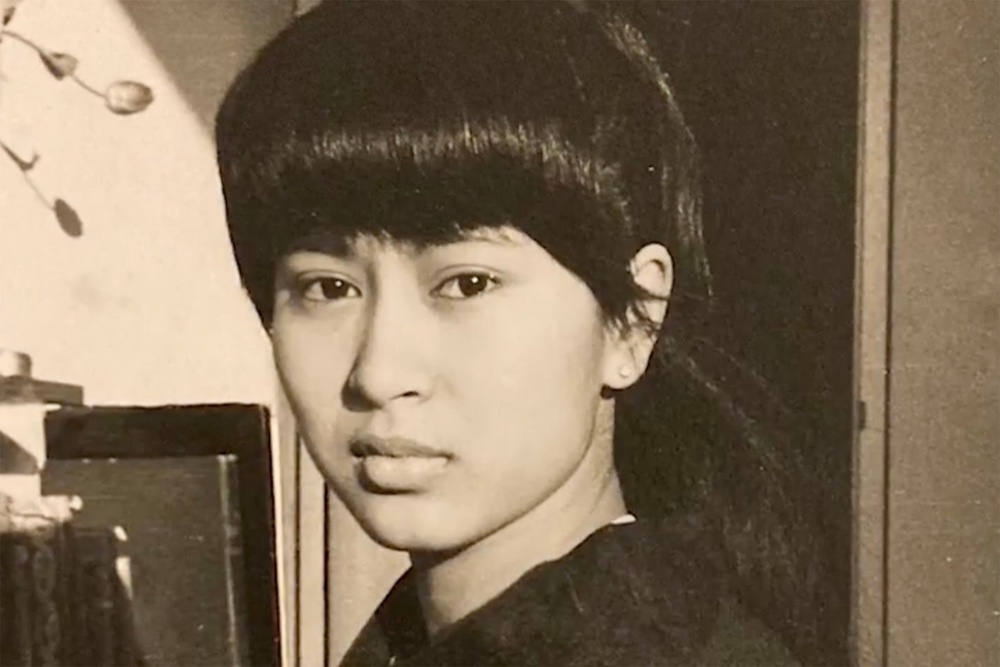
October 1991: Suu Kyi wins Nobel Peace Prize under house arrest
After her electoral shutdown, and still living under house arrest, Suu Kyi was awarded the Nobel Peace Prize in 1991 for her nonviolent struggle for democracy.
She was described by the foundation as “Burma’s modern symbol of freedom”, inspired by Mahatma Gandhi’s pacifism in pursuit of a “democratic society in which the country's ethnic groups could cooperate in harmony”.
The peace prize impacted global perceptions of the democracy leader, but did not break the junta’s resolve. Suu Kyi would remain under house arrest until July 10, 1995.
July 1995: Suu Kyi faces uphill battle after release
Six years had passed by the time Suu Kyi was released from her first house arrest in the summer of 1995. Her party, the NLD, still existed and defied its ban on changes in party leadership to reappoint her as the general secretary that October.
Political violence continued to unsettle, but not break, Suu Kyi’s efforts to bring democracy to Myanmar. A motorcade was attacked in Rangoon in 1996, and Suu Kyi’s movements were sharply restricted from 1997.
Human Rights Watch reported that year that any hope that her 1995 release might be a sign of human rights reform by the ruling junta “were destroyed during 1996 as political arrests and repression dramatically increased and forced labor, forced relocations, and arbitrary arrests continued to be the daily reality for millions of ordinary Burmese”.
That June, a new law came into effect making even verbal criticism of the government an offence carrying a 20 year sentence. Meanwhile in ethnic minority areas more than 85,000 people were forcibly evicted from their homes to military-run work camps or garrison towns.
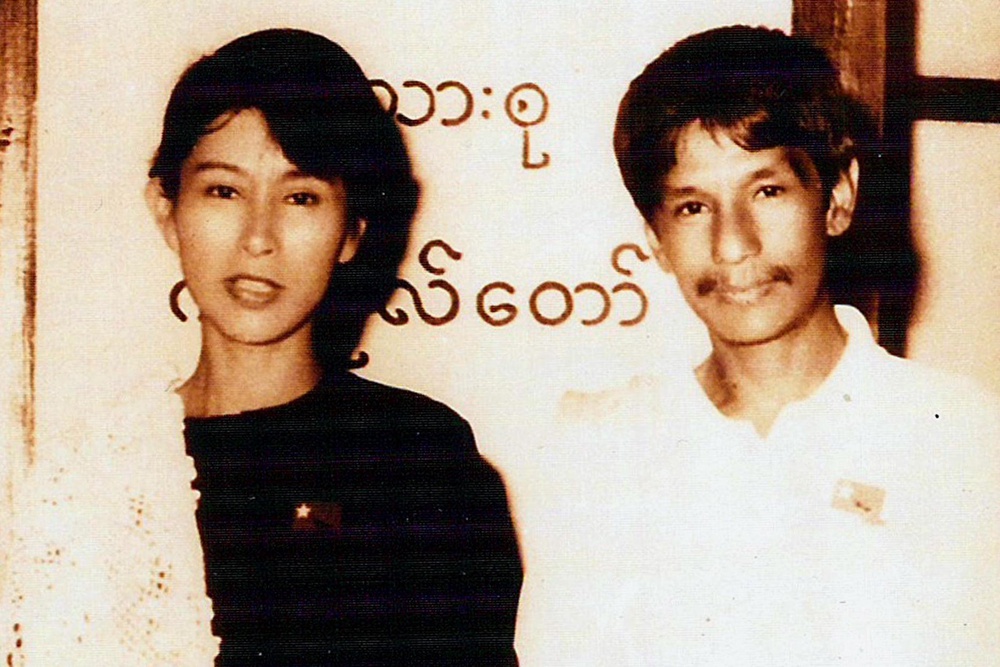
March 1999: Husband dies in England
Suu Kyi’s husband, Michael Aris, died of cancer in England on March 27, 1999.
The couple had not seen each other since 1995 because he had been denied a Myanmar visa and she refused to travel abroad for fear of being barred from returning to Myanmar.
September 2000: Suu Kyi back under house arrest
Suu Kyi was placed under house arrest for a second time in September 2000, despite the restrictions around her activities.
She would be released two years later, in May 2002, assuring supporters of a renewed commitment to “allowing all of our citizens to participate freely in the life of our political process”.
May 2003: Suu Kyi targeted in apparent assassination attempt
During a political tour of northern Myanmar, Suu Kyi’s entourage was ambushed and several of her supporters killed during what is widely seen as an assassination attempt.
Suu Kyi was transferred back to her house soon after. Extensions to her house arrest are issued in May 2007 and May 2008. The UN Working Group on Arbitrary Detention judges that the 2008 ruling is illegal under international and domestic law.
August 2007: Burmese democracy rears its head
In August and September 2007, Burmese democracy activists took to the streets alongside monks and ordinary citizens to peacefully protest against decades of dictatorship and economic mismanagement.
The rare protest movement, known as the Saffron Revolution, because it was led by Buddhist monks, became the largest pro-democracy demonstrations seen in the country since 1988.
But as in 1988, the generals responded with a brutal crackdown, beating unarmed demonstrators, making mass arrests and firing on the crowds. Foreign journalists had long been kept out of the country, but many local reporters were also arrested.
A small but brave resistance managed to export some evidence of the crackdown captured on mobile phones.
May 2009: Suu Kyi stands trial for breaching house arrest
Suu Kyi was arrested in May 2009 to be tried for violating the terms of her house arrest, after telling the authorities an American intruder had arrived at her abode.
She stood trial from May until July, with frequent delays, in a trial closed to the public. She was initially sentenced to three years hard labour, later revised to 18 months of further house arrest.
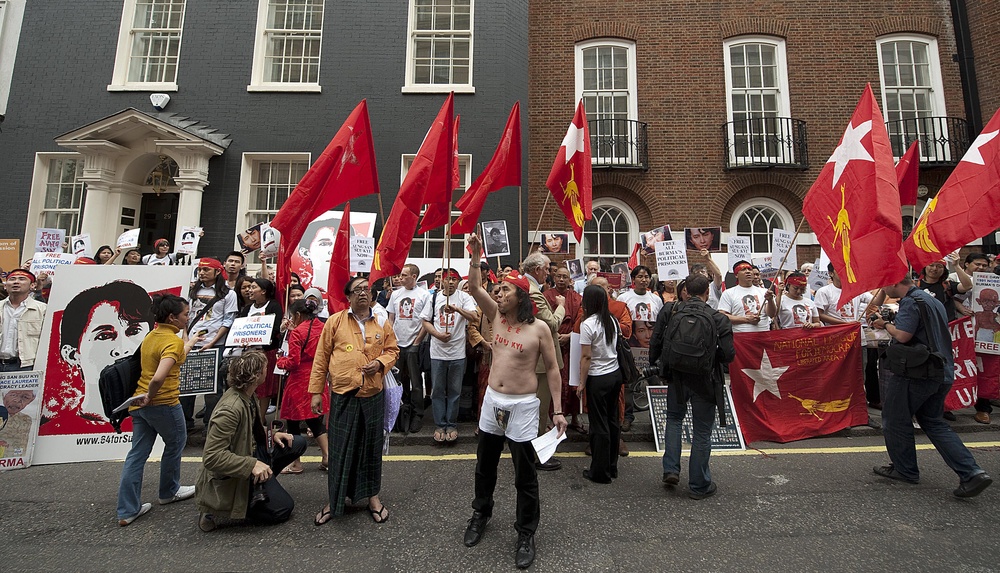
November 2010: Military backed party wins election
The military-backed Union Solidarity and Development Party won the first general election in 20 years after Suu Kyi’s party boycott the polls, saying the rules were unfair. Suu Kyi was released from house arrest six days later.
April 2012: Suu Kyi wins a seat in parliament
Suu Kyi won a seat in parliament as her party participates in by-elections after the nominally civilian government makes concessions on election laws.
November 2015: NLD wins election landslide
Three years later, her party won a general election by a landslide, paving the way for her to assume power in a specially created role of state counsellor, with the constitution barring her from becoming president.
Suu Kyi vowed to resolve the country's myriad ethnic conflicts, attract foreign investment and continue reforms started by former general Thein Sein. However, the military retained significant power under a constitution written and ratified under army direction in 2008.
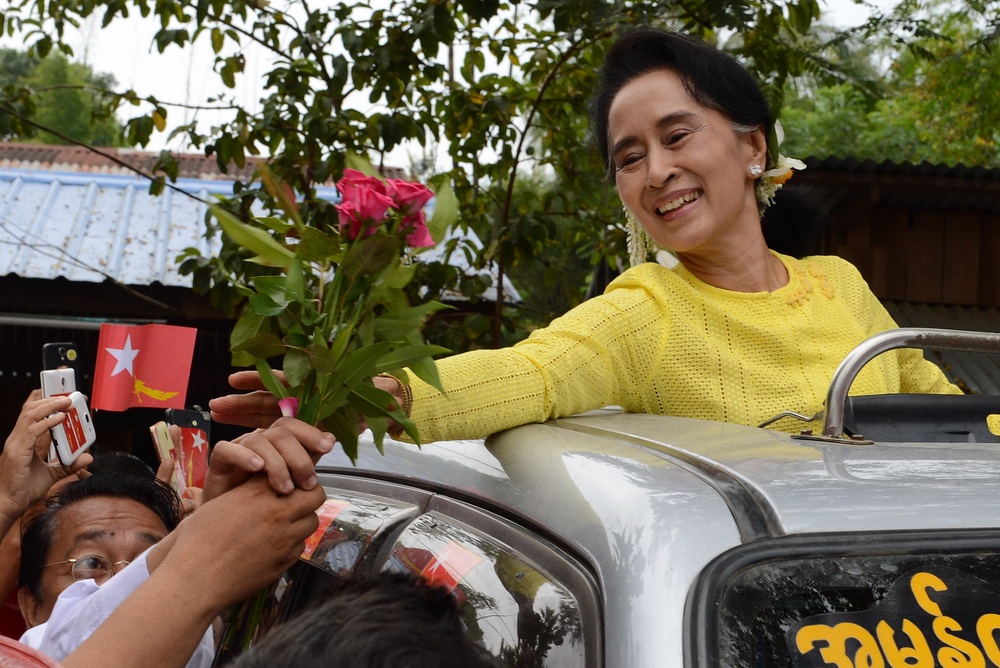
August 2017: Government accused of ethnic cleansing Rohingya minority
In 2017, insurgents claiming to represent Myanmar’s Muslim Rohingya minority attacked security forces in the western state of Rakhine, killing dozens.
The army responded with a brutal counterinsurgency campaign including mass killings, rape and arson that eventually drove more than 730,000 Rohingya into Bangladesh.
Critics say the military’s actions constitute ethnic cleansing and possibly genocide. To the dismay of longtime admirers, Suu Kyi later says the army responded “mostly appropriately” to attacks by armed insurgents.
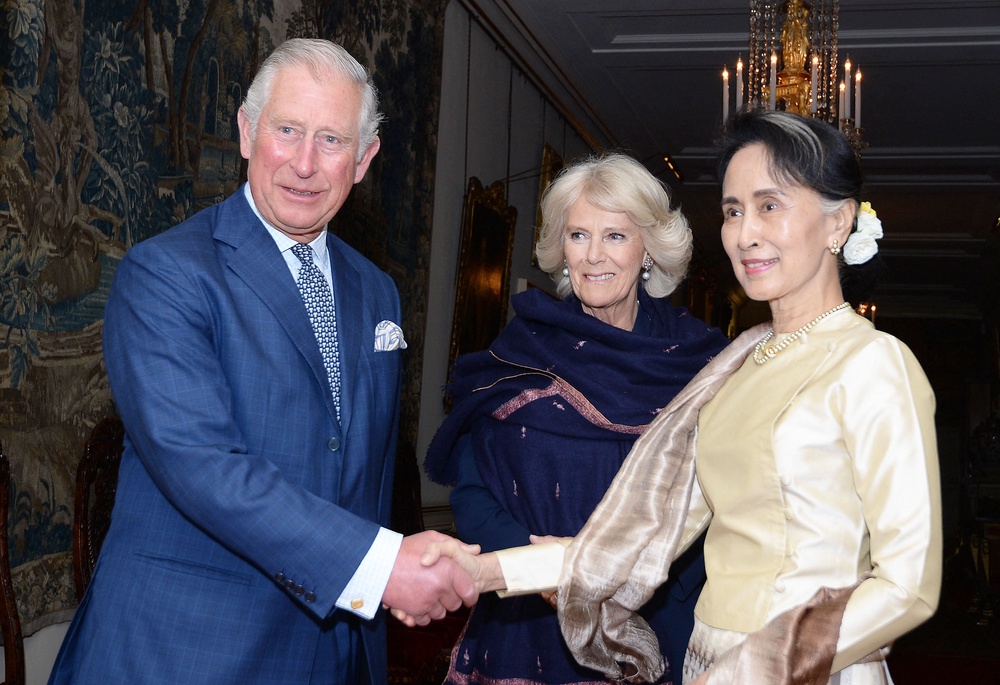
December 2019: Suu Kyi rejects claims of genocide
Suu Kyi appeared at The Hague to defend Myanmar against claims of genocide. Speaking at the UN International Court of Justice (ICJ) described the violence as a “internal armed conflict” and was accused of complicity in the violence. Her appearance does great damage to her reputation.
November 2020: NLD captures even greater majority
The NLD built on its 2015 success with an even larger majority of parliamentary seats in November 2020.
But the main opposition, the military-backed Union Solidarity and Development Party (USDP), demanded a re-run of the election and called for military help to ensure fairness, alleging irregularities.
The NLD said it would seek to form a government of national unity after official election results showed it had comfortably won. But by January, the army was threatening to “take action” unless the election dispute was settled.
February 2021: Military launches coup
Myanmar’s military launched a coup, and Suu Kyi and top colleagues in her party and the government were detained shortly before the new session of Parliament convened.
A court authorised her detainment for 15 days, and on 3 February she was charged with importing ten or more walkie-talkies. At the time, the New York Times said the charges "echoed previous accusations of esoteric legal crimes”.
US president Joe Biden threatened new sanctions as a result of the coup, as calls for Suu Kyi’s release grew.
Suu Kyi and other senior figures from the ruling party were detained in an early morning raid. She was charged with several more offences, including corruption, violation of the Official Secrets Act, and a charge "under section 25 of the natural disaster management law". Her lawyers said the charges were made to keep her out of the public eye.
Suu Kyi has remained under house arrest since her detention in February 2021.
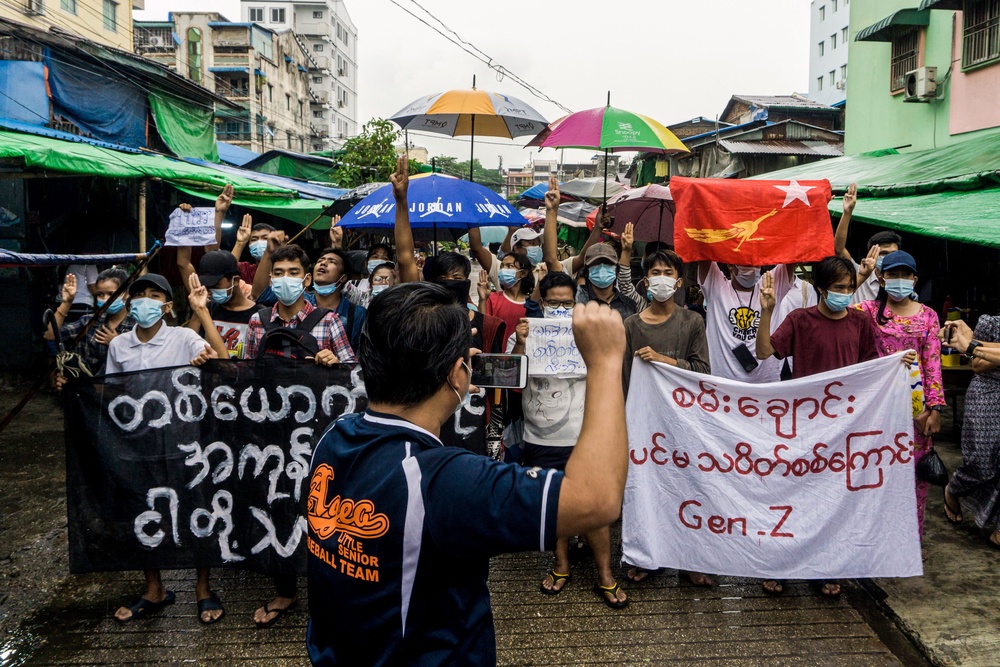
December 2024: The Independent releases award-winning documentary on plight
The Independent released its award-winning documentary Cancelled: The Rise and Fall of Aung San Suu Kyi in December 2024, examining her political career and legacy.
Responding to the documentary, three former foreign secretaries, William Hague, Sir Malcolm Rifkind and Jack Straw, said the ousted former leader was jailed on trumped-up charges and deserves the chance to lead her country democratically.
Former deputy foreign secretary Andrew Mitchell, who attended the release of the film, said: “She has been treated terribly by the illegal junta in Myanmar. She should be released immediately – and films like this help explain why.”
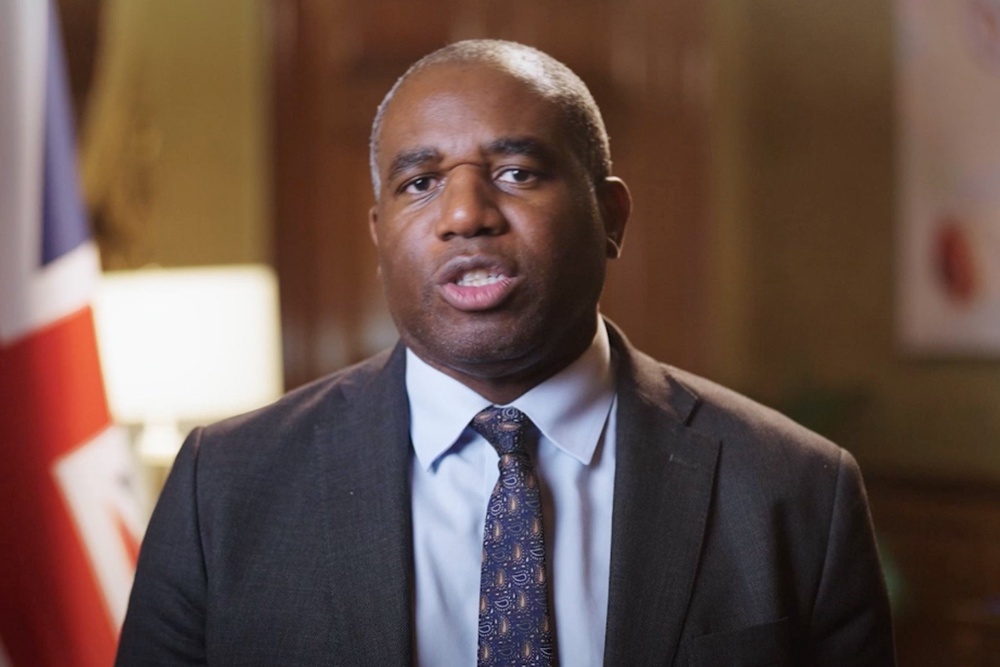
January 2025: Foreign secretary pleads for Suu Kyi’s release
Then British foreign secretary David Lammy issued a historic and impassioned plea for the release of Suu Kyi in January 2025.
It was the first time the foreign secretary had made a direct appeal to the military junta to free her and give the country’s people “the peace and democracy they deserve”.
Mr Lammy told The Independent: "Four years ago, Myanmar's military overthrew Aung San Suu Kyi's democratically elected government, stripping the Myanmar people of their right to a democratic voice ...
“Four years on, we have not forgotten. Release Aung San Suu Kyi. Release all those arbitrarily detained. Give Myanmar's people the peace and democracy they deserve.”
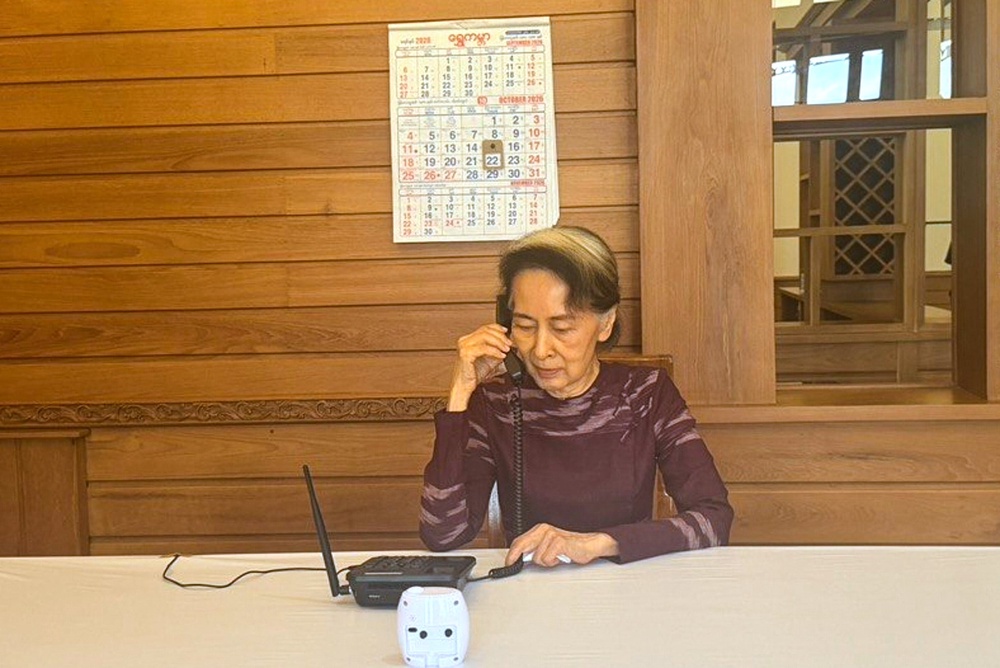
April 2026: Suu Kyi placed back under house arrest
Suu Kyi was moved to house arrest in Naypyitaw in April following a military-engineered election that installed coup leader Min Aung Hlaing as president.
The move was presented as part of an amnesty deal to mark a Buddhist religious holiday, although analysts saw the relief - as well as amnesty for thousands of other prisoners - as a hollow bid by the new regime to seek broader international acceptance.
Burma Campaign UK said earlier that the slow, staged release of political prisoners was designed to gain maximum positive publicity while at the same time making no fundamental changes or reforms.
"If the Burmese military regime were genuine about reform, they could release all 14,000 political prisoners today," Minn Tent Bo, the group’s advocacy and communications officer, said.