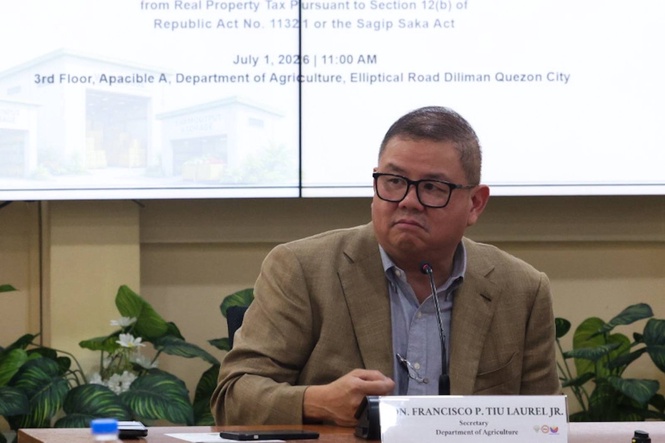
AGRICULTURE Secretary Francisco Tiu Laurel Jr. has called for stronger cooperation between Asean and India as geopolitical conflict, climate shocks, volatile energy, and higher farm input costs threaten regional food supplies.
Speaking at the Ninth Asean-India Ministerial Meeting on Agriculture and Forestry in New Delhi on Wednesday, Tiu Laurel said Asean could no longer treat food security as a domestic concern because disruptions to trade, transportation, energy, and agricultural inputs cross national borders.
“Geopolitical and economic uncertainties, climate-related tragedies, and volatility in energy, transport, food, and agricultural input markets continue to test the resilience of our food systems and supply chains,” he pointed out.
Protecting food security and agricultural supply chains remained a key Asean priority because disruptions to global trade and logistics could quickly affect farmers, consumers, and food prices.
He cited discussions during the 47th Asean Ministers on Agriculture and Forestry meeting in 2025 and a special ministerial meeting in April this year on the situation in the Middle East. In those meetings, Asean member-states emphasized preparedness, market transparency, sustainable production, and stronger supply-chain resilience.
Tiu Laurel described India as an important partner in agriculture, food systems, research, technology, and capacity development.
Officials also reviewed the Asean-India Medium-Term Plan of Action for Cooperation in Agriculture and Forestry for 2021 to 2025 and discussed its successor covering 2026 to 2030.
“As we move into the next phase of Asean-India cooperation, we look forward to practical, results-oriented activities that contribute to food security, sustainability, resilience, innovation, knowledge exchange, and the well-being of our agricultural communities,” Tiu Laurel said.
The discussions are especially relevant to the Philippines, where extreme weather, geopolitical disruptions, and fluctuations in the cost and availability of fuel, fertilizer, animal feed, and other farm inputs threaten agricultural stability.
Tiu Laurel said stronger regional coordination could help Asean and its partners respond to disruptions before they develop into full-blown supply crises.