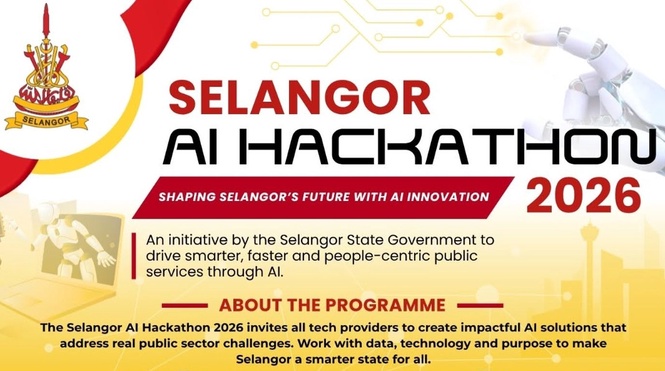
On 21 August 2026 we sat down at SHRDC in Shah Alam with a laptop, a webcam and an envelope we had picked at random. Three hours later we submitted a working prototype, and by lunch our name was on the top 10 list at the Selangor AI Hackathon 2026.
We did not take one of the three cash prizes. This post is about why a two-person software house made the cut, and what the day taught us about how AI projects get judged when the person judging has a real budget.
One thing up front. We signed a non-disclosure agreement before we were given anything, so nothing here describes the material we worked on.
What the Selangor AI Hackathon 2026 actually asked for
The Selangor State Government ran it with SHRDC, billed to entrants as "AI for Better Public Service Delivery". SHRDC says about 80 companies registered and 30 teams qualified. Entry was limited to registered companies, in teams of two or three staff. Teams worked on real complaint records held by the state and local councils, across six problem areas.
Two rules shaped everything. Every team drew its subject at random on the morning, so nobody could prepare in advance. And the organisers said more than once that they wanted a solution working across all six areas, not just the one you drew.
The handling rules were tighter than most companies apply to their own customer records. Every participant signed the NDA before getting access. Only AI platforms that do not retain data were allowed, and each team had to declare which model it ran. All event material was permanently deleted afterwards.
What we built in three hours
We spent the week before building a harness, not a solution, since nobody could see anything in advance. On the day it did three things.
A file becomes a map. Drop it in and every record lands as a pin. Council records are rarely tidy, so most of our prep went into a column mapper and an offline list of Selangor place names. That work is invisible in a demo, and it is the reason the demo worked.
A local AI model reads each complaint. Running on the laptop, with nothing sent to the cloud, it tagged every complaint with a type, a severity and the agency that should act. Many complaints belong to a utility rather than the council, so routing matters.
A camera lane closes the loop. Complaint records tell you where problems repeat, so we showed the next step: a CCTV camera at a repeat site, an AI that flags when someone leaves rubbish and walks away, and a Telegram bot where a resident sends a photo, gets a case number, then a closure message with before and after photos. Nobody sits in the middle of that.
That last lane is now part of what we build for private property managers, under our AI solutions work.
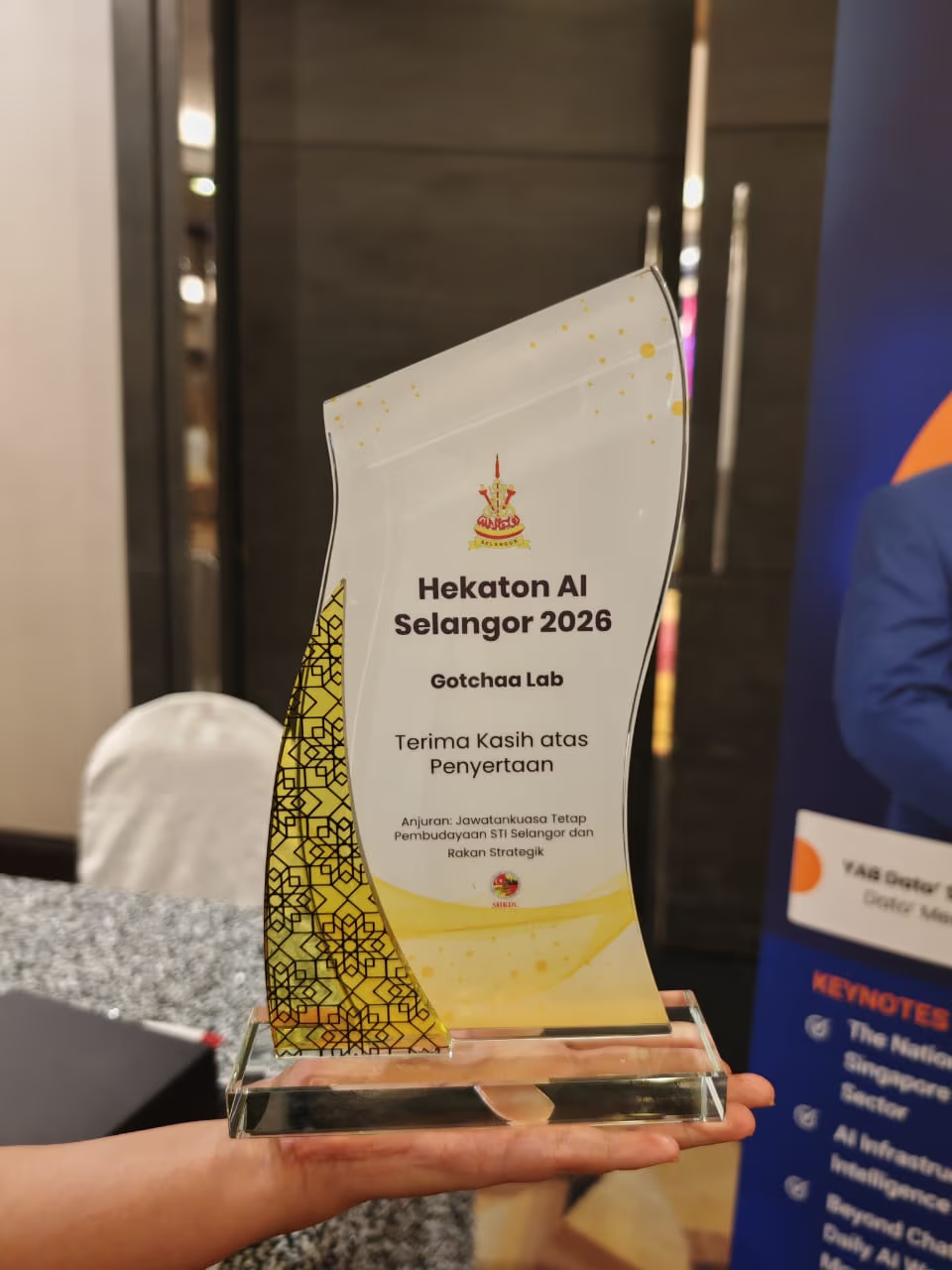 The Selangor AI Hackathon 2026 plaque (printed as Hekaton AI Selangor 2026) presented to Gotchaa Lab at the closing ceremony on 9 September 2026. The plaque credits the Jawatankuasa Tetap Pembudayaan STI Selangor and strategic partners.
What the Selangor AI Hackathon judges cared about
The panel drew from the state secretariat, SHRDC, Dell, MIMOS and MTDC. Our read, from the pitching session and the questions we got:
- Does it work on their records as they are, not on a cleaned sample? Teams that built for one tidy subject had a harder afternoon.
- Where is the AI, and can you name it? Every team had to declare the model that ran. A panel that asks that is not impressed by a chatbot wrapper.
- Does it change a number the council reports? Complaints received is the KPI today. A tool that verifies and prevents problems changes what gets counted.
On the third point we were showing a roadmap, and the winners had stronger stories. We think that was a fair call.
What this means if you are buying AI
Wiring up the AI classification took about twenty minutes. The cleaning, the place-name matching, the routing rules and the closure message took the rest of the three hours and most of the week before.
That ratio holds on client work. When a vendor quotes an AI project, the model is rarely the expensive part. The expensive part is making it work on your records the way they arrive, which for most Malaysian businesses is still a spreadsheet or a PDF. Our AI project scoping guide covers the same pattern.
The hackathon was a reminder that AI tools do not remove the judgment work. They move it earlier. If you have a pile of complaints, reports or tickets and no clear picture of what is in them, talk to us. We will tell you honestly whether AI is the right tool, or whether you need cleaner records first.