
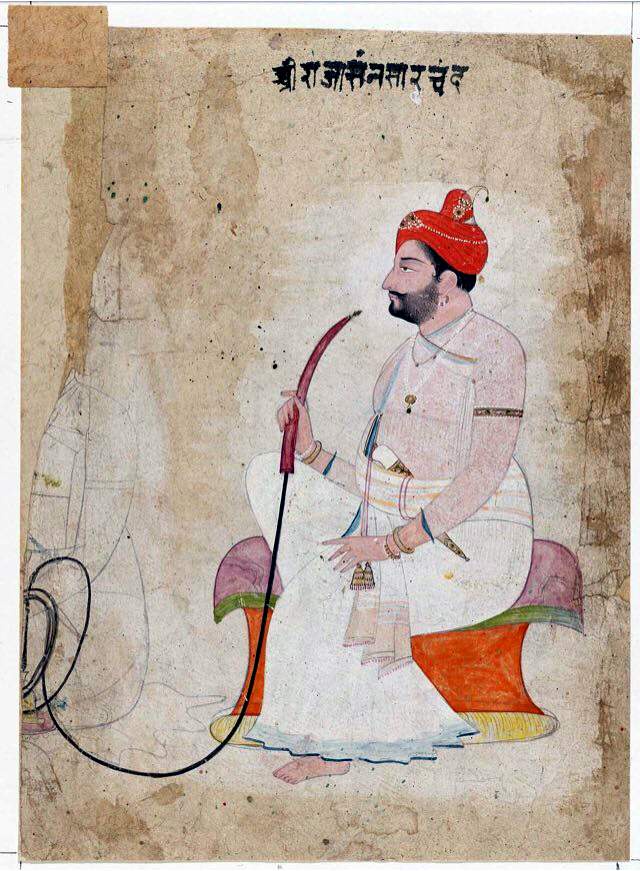
For centuries, the fertile valleys nestled between the Ravi, Beas and Sutlej rivers have nurtured one of the oldest continuously remembered political and cultural traditions in the Indian subcontinent. Known in ancient texts as Trigart, this Himalayan kingdom occupies a unique place in history, where legend, literature, art and statecraft intertwine to create a legacy that has endured for millennia.
The story of Trigart is inseparable from that of the Katoch dynasty, a royal lineage that has long been regarded as among the oldest surviving ruling families in the world. The kingdom finds mention in the Mahabharata, where Raja Susharman Chandra, considered the 234th ruler of the line, appears as a prominent figure. Centuries later, British chronicler James Tod, in his celebrated Annals and Antiquities of Rajasthan, described the Katochs as “the oldest surviving ruling family in the world,” a testament to the extraordinary continuity of their rule.
Where myth meets history
Like many ancient dynasties, the Katochs trace their origins to sacred legend. Tradition holds that their progenitor, Bhumi Chand, emerged from the divine perspiration of Goddess Kalika Mata as she battled powerful demons. While mythology cloaks the beginnings of the dynasty, its influence on the history and culture of the western Himalayas is firmly rooted in historical memory.Over generations, the rulers of Trigart transformed a landscape blessed by rivers and mountains into a thriving centre of political power and cultural achievement. Their story reflects not merely the rise and fall of kings but the evolution of an enduring civilisation.
Guardians of a mountain kingdom
Among the earliest historically remembered rulers is Raja Puru, who is associated with resistance to Alexander the Great’s advance into northwestern India. Whether preserved through history or heroic tradition, such accounts symbolise the fierce independence that came to define the rulers of the Kangra hills.
As the kingdom expanded, governance evolved through the creation of cadet branches. The first major offshoot was Jaswan, which occupied the tract between the Beas and the Sutlej. Other branches, including Bhavnauar, Palahan and Jhandian, administered territories around present-day Nangal, Anandpur Sahib and Noorpur Bedi. Together, these principalities created a vibrant political network that linked the Shivalik foothills to the higher Himalayan ranges. Rather than weakening the kingdom, this decentralised structure fostered local patronage, regional identities and cultural growth while preserving loyalty to a shared heritage.
Guler: The cradle of Pahari miniature painting
One of the most remarkable chapters in Trigart’s history began with an unexpected tragedy. In the early fifteenth century, Raja Harichand of Kangra disappeared while hunting and was presumed dead after falling into a well. Believing their king lost forever, his queens committed sati, and preparations began for his brother Karam Chand’s accession. When Harichand eventually emerged alive, he was devastated by the irreversible loss. Unwilling to reclaim the Kangra throne, he established a new principality — Guler.
What began as a personal act of renunciation ultimately transformed the artistic history of India.
Guler emerged as the birthplace of the celebrated Pahari miniature painting tradition. Under enlightened patrons such as Raja Dilip Chand and Raja Goverdhan Chand, master artists Manaku and Nainsukh, sons of the renowned Pandit Seu, created paintings distinguished by elegance, emotional depth and remarkable refinement. Their masterpieces today grace museums and private collections across the world.
The artistic innovations of Guler spread throughout the western Himalayas, profoundly influencing the painting traditions of Basohli, Chamba, Garhwal and later Kangra. The movement reached its zenith under Raja Sansar Chand, whose patronage in the late eighteenth century transformed the Kangra Valley into one of the foremost cultural centres of northern India.
Temples, forts and living heritage
The legacy of the Katoch rulers extends far beyond paintings and palaces. Across the region, their contributions survive in stone, water and sacred spaces.
The ancient Bathu ki Ladi temple complex in Jawali, often referred to as Badri Vishal, remains one of the most evocative examples of medieval temple architecture. The Narbadeshwar Temple at Sujanpur is celebrated for its exquisite frescoes, while the Kaleshwar Temple near Nadaun continues to overlook the tranquil waters of the Beas.
Equally remarkable are the traditional kuhl irrigation channels developed under royal patronage. These ingenious community-managed water systems have sustained agriculture in the hills for centuries and are studied internationally as models of sustainable water management.
Dominating this cultural landscape is the majestic Kangra Fort, among the oldest forts in India. Through invasions, earthquakes and changing empires, it has remained a symbol of the resilience of the Trigart kingdom.
Courage beyond the battlefield
The character of the hill rulers was shaped not only by military valour but also by humility and public service. Local tradition remembers Raja Bhaanbhatt, who chose not to burden the state treasury and instead earned his livelihood by spinning cotton on the banks of the Banganga.
Such stories have survived because of generations of Bhaats, locally known as Darves, who carried the history of the hills through oral ballads and folk narratives. Their songs preserved memories that official histories often overlooked.
The forgotten rebels
The contribution of the region to India’s freedom struggle began long before 1857.
In 1848, Raja Pramodh Chand of Kangra, Raja Umed Chand of Jaswan and Wazir Ram Singh Pathania of Nurpur mounted a joint resistance against British authority. Their uprising preceded the First War of Independence by nearly a decade, yet remains largely absent from mainstream narratives of India’s anti-colonial movement.
Their sacrifice endures in local memory as a reminder that the spirit of resistance in the hills emerged well before the wider national awakening.
An unbroken cultural continuum
The courts of the Katoch rulers also nurtured literature, scholarship and intellectual life. Works such as Dalipranjani and Ramras Lahiri flourished under royal patronage. Scholars including Chander Sharma Guleri, famed for the iconic Hindi short story Usne Kaha Tha, emerged from a cultural environment that valued learning as much as power.
Across centuries, travellers, chroniclers and historians repeatedly described the Kangra hills as a land of brave yet modest rulers, deeply rooted in spirituality and culture. Their achievements survive in temples, paintings, irrigation systems, forts and folk traditions that continue to shape regional identity.
The story of Trigart is therefore much more than a royal chronicle. It is the story of a civilisation that blended mythology with history, power with patronage, and resilience with creativity. From epic lore to artistic brilliance, from forgotten rebellions to living traditions, the kingdom’s legacy continues to flow through the rivers, valleys and memories of the Kangra hills.