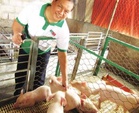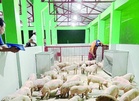
LOCAL hog raisers are losing money, but consumers are still paying dearly for pork. That gap should be at the center of the debate over imports.
Producers report farmgate prices of P120 per kilogram (kg) or less, against production costs of P180 to P190/kg. They warn that sustained losses could force more raisers out of business. Yet pork belly (liempo) still sells for around P370/kg.
These prices are not directly comparable: Farmers sell live hogs, while retailers sell meat after slaughter, processing and transport. Even so, the opposing trends raise a question: Why are falling farmgate prices failing to bring consumers relief?
Local producers blame imports. Bureau of Animal Industry data show pork imports reached 455,381 metric tons in January-June, about 11 percent higher than the 409,693 MT a year earlier.
They attribute the increase to lower tariffs and an expanded minimum access volume (MAV), the quota allowed into the country at a lower duty.
Executive Order (EO) 62 set pork tariffs at 15 percent for imports within the quota and 25 percent for those exceeding it, down from 30 percent and 40 percent, respectively.
EO 116 expanded the MAV from 54,210 MT to 204,210 MT to address shortages caused by African swine fever (ASF). The disease devastated local herds, prompting the government to turn to imports to augment supply and contain prices.
The Department of Agriculture’s allocation scheme assigned 120,000 MT to Food Terminal Inc. for the Kadiwa ng Pangulo program, 30,000 MT to registered meat processors and 54,210 MT to qualified commercial traders. With farmgate prices falling and retail prices remaining high, producers are questioning whether these arrangements protect them.
But would restoring higher tariffs solve the problem?
The answer requires looking beyond import volumes to the way pork moves from farms to consumers.
First, imported pork products serve different markets. Jowls and offal, for example, provide relatively cheap ingredients for sisig, siomai, siopao and other popular food.
Producers want these products reclassified as regular pork cuts and subjected to higher tariffs. That could reduce competition for local meat, but could also raise costs for food vendors, processors and consumers.
The trade-off is clear: protection for producers could mean more expensive meals for households already watching every peso.
Second, supermarkets are changing where people buy meat. Their frozen pork offerings compete with fresh meat sold in wet markets, giving consumers another option when prices rise.
If shoppers shift their purchases to supermarkets, wet-market vendors may sell less. That matters because wet markets remain an important outlet for locally raised hogs.
Third, weak purchasing power can further reduce demand. Families with tight budgets may buy smaller portions, choose cheaper cuts or substitute other food.
These pressures travel back through the supply chain.
A trader-consolidator typically buys live hogs from small raisers and sells them to vendors for slaughter and retail sale. When sales slow, animals stay longer in the trader’s possession, adding feed, housing and handling costs. Higher fuel and transport expenses compound the problem.
Faced with slow turnover, traders may buy fewer hogs or offer farmers lower prices. At the same time, they may try to maintain selling prices to recover their costs.
This offers a possible explanation for the squeeze on farmers and consumers. It should be tested against actual buying prices, operating costs and margins throughout the chain. The price gap alone does not establish who is earning excessively or where intervention is most needed.
Higher tariffs could give local raisers temporary relief by making imports more expensive. But they would not automatically reduce feed costs, control ASF, improve transport or strengthen household purchasing power.
Nor would restricting cheaper imported ingredients guarantee that any gains reach small farmers.
Without closer scrutiny of the supply chain, consumers could simply pay more while producers remain vulnerable.
The government must take the distress of hog raisers seriously. A shrinking local industry would weaken food security and leave the country more dependent on imports.
But protecting producers also requires understanding why consumers are paying high prices while farmers sell at a loss. Import policy is only one part of that problem.
What measures can help rebuild local production while keeping pork affordable? That’s what we will discuss in part II of this piece.