THE most revealing part of US President Donald Trump’s controversial account of his recent talks with President Ferdinand Marcos Jr. was not his insistence that the Philippines buy its imported farm products and energy exclusively from the United States. It was his explanation of why America was entitled to demand it.
Speaking at the White House on Nov. 20, Trump complained that the Philippines buys farm goods from countries such as Brazil rather than from American farmers. Then he posed a question Filipinos should ponder: “Is Brazil going to help them in case they get into a little skirmish with China?”
In one sentence, Trump tied America’s military commitment to the Philippines to its commercial interests here. The implications deserve far more discussion than they have received.
Generations of Filipinos have been taught to regard America as a benevolent power whose special relationship with us rests on shared democratic traditions, historical ties and a commitment to freedom. Defense Secretary Gilberto Teodoro and his acolyte the Philippine Coast Guard official Jay Tarriela embody that colonial mentality that mistakes Washington’s adversaries for the Philippines’ enemies. Trump’s account should shock them into waking up from this brainwashing.
Trump is different from his predecessors only in that he says so openly that he pursues American economic interests through military and political power. Earlier US presidents were more adept at wrapping their policies in waving banners of democratic solidarity, international cooperation and the rules-based order. Trump speaks like a businessman: deficits, tariffs, military spending, concessions. His account shows how transactional relations between a superpower and a smaller country can become.
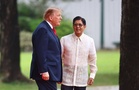
Trump said he told Marcos, at their Nov. 18 meeting in Malacañang, that from Jan. 1, 2027, the Philippines should buy all its imported agricultural and energy requirements from the United States, and that Marcos readily agreed. By Trump’s own estimate, American suppliers now provide only about a fifth of our farm and energy imports.
Our ambassador to Washington, Jose Manuel Romualdez, says Trump is a liar. He denies that Marcos said “yes, sir,” and says the president replied, in essence, that if the United States can supply these goods, why not. Any commitment, Romualdez said, must await negotiations on cost and feasibility. Marcos himself says the talks cover expanded access to American food and energy products, with the aim of diversifying our sources, not replacing them. In his words, Trump “opened American markets” to us, which describes access, not exclusivity.
Embellished
Whether Trump accurately reported Marcos’ response is only one aspect of the controversy. Even if he embellished, his public rationale remains significant. He invoked America’s willingness to help us in a confrontation with China as grounds for privileged access for US farmers and energy companies. What Filipinos understood as an alliance to safeguard our independence is thus presented as commercial leverage.
The demand is even more extraordinary because the Philippines accounts for one of America’s smallest goods trade deficits among its major Asian trading partners. According to US Census Bureau data, the 2025 figure was about $8.6 billion, against $178 billion with Vietnam, $72 billion with Thailand, $31 billion with Malaysia and $24 billion with Indonesia. Even Cambodia’s was considerably larger.
Yet the White House fact sheet of Nov. 18 said the two presidents “committed to eliminate the US trade deficit with the Philippines” through higher Philippine imports of US energy and agriculture products. Eliminate, not merely reduce. Since when has erasing another country’s trade deficit been Philippine economic policy? Trump hailed it as “the biggest trade deal we’ve ever made,” but Manila describes the outcome as an understanding on economic cooperation, and nothing has been signed.
Could Marcos’ accommodating, even subservient, posture explain why Trump believes he can extract such concessions? Having expanded American military access to our territory under the Enhanced Defense Cooperation Agreement and made American military support central to his China policy, Marcos may have weakened his own bargaining position. Trump’s portrayal of a Philippine president who readily acquiesces, accurate or not, is telling.
It is entirely legitimate for an American president to promote American exports. A Philippine president has the same obligation toward Filipino producers. But why should America’s security commitments give it the right to decide where Filipinos buy their essential commodities?
Nor is America’s trade deficit a form of aid. Americans buy Philippine goods because they need them or because they are competitively priced. That is ordinary commerce, not generosity.
Imperialism is often misunderstood because many associate it only with the territorial conquests of the European powers: foreign armies occupying countries, governors administering colonies, imperial flags over conquered lands. Modern theories recognize that a powerful country need not formally strip another of its independence to hold sway over its economic and political affairs.
Our own history illustrates the point. When the United States recognized Philippine independence in 1946, the Bell Trade Act preserved substantial economic privileges for Americans, and the parity amendment to our Constitution gave Americans rights equal to Filipinos in exploiting natural resources and operating public utilities. For decades, the American bases served Washington’s strategic aims in Asia well beyond the defense of the Philippines, whatever our governments said about national security. This mix of formal independence and continuing economic and military dependence is why critics called the relationship neocolonial.
Trump’s proposal revives those questions. His predecessors sought advantages through prolonged negotiations on trade, investment and military cooperation. Trump openly describes a deal in which American military support justifies American commercial privilege. On this reading, what is notable about his foreign policy is its explicitness, not its novelty.
Who is the bully?
For years, Philippine defense and foreign affairs officials have called China a bully because it uses overwhelming economic and military superiority to pressure a much weaker country. Do they apply that principle consistently to the other great power with which we have extensive economic and military ties?
Suppose Chinese President Xi Jinping demanded that the Philippines buy all its imported food and energy from China, citing the gap in military power. Critics of Beijing would hardly call it an opportunity to expand trade. They would call it economic coercion. That the United States is our treaty ally should not exempt its demands from the same scrutiny. A principle that bends to the flag of the bully is not a principle.
None of this means dismissing legitimate concerns about Chinese coast guard operations and confrontations with Philippine vessels in the South China Sea. Opposing Chinese pressure is entirely compatible with opposing American pressure.
Indeed, the proposal as Trump described it contradicts Marcos’ own explanation of how to strengthen food and energy security. With many suppliers, trouble in one country need not become a domestic crisis. Dependence on a single country invites disruption, price increases and political pressure.
Behind the mythology lies an elementary principle: American presidents are responsible for American interests, as Chinese leaders are for Chinese interests. Philippine leaders must advance Philippine interests, which sometimes coincide with America’s, sometimes with China’s, and sometimes conflict with both.
The myth of American benevolence is damaging because it discourages us from applying to American policies the critical standards we readily apply to others. It encourages the assumption that American deployments are motivated chiefly by concern for our security, that American diplomacy is invariably good for us, and that American economic proposals aim at our prosperity. That lie has even created the hysteria against a superpower, a neighbor even that has had its people become part of our economic elite. Trump’s account challenges those assumptions by making explicit the commercial considerations that can accompany a promise of military protection.
Facebook: Rigoberto Tiglao
X: @bobitiglao
Website: www.rigobertotiglao.com