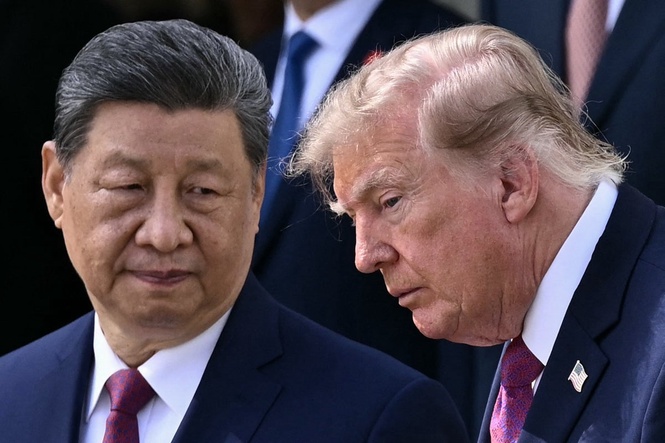
China and the US can and must develop and manage AI “for good”, Chinese leader Xi Jinping has told Donald Trump, further ramping up tensions with the American president who has dubbed fears over the technology “a hoax”.
On his first state visit to the US in more than a decade, Mr Xi told Mr Trump: “Both China and the United States are leading nations in artificial intelligence. [We must] ensure that the development of AI is always under human control and serves the wellbeing of the people.”
The US president had rolled out the red carpet for the Chinese leader amid friction between the two superpowers, largely over global trade.
Thursday's lavish state summit at the White House appeared heavy on symbolism but light on substance, with no sign of major breakthroughs between the world's biggest economies, even as Mr Trump highlighted progress under a bilateral trade mechanism.
Both leaders also identified AI as an area of cooperation.
AI bosses have sounded the alarm in recent weeks over the potential of the technology to threaten the future of the human race. Sam Altman, the chief executive of OpenAI maker ChatGPT, said the world was right to be afraid of AI, and the warnings have led to new calls for regulation of the technology.
But at the UN General Assembly on Tuesday, Mr Trump dismissed calls for stricter controls, branding the warnings “a hoax”, setting up a clash with the Chinese leader. He also said he wanted AI to be renamed “super-intelligence”.
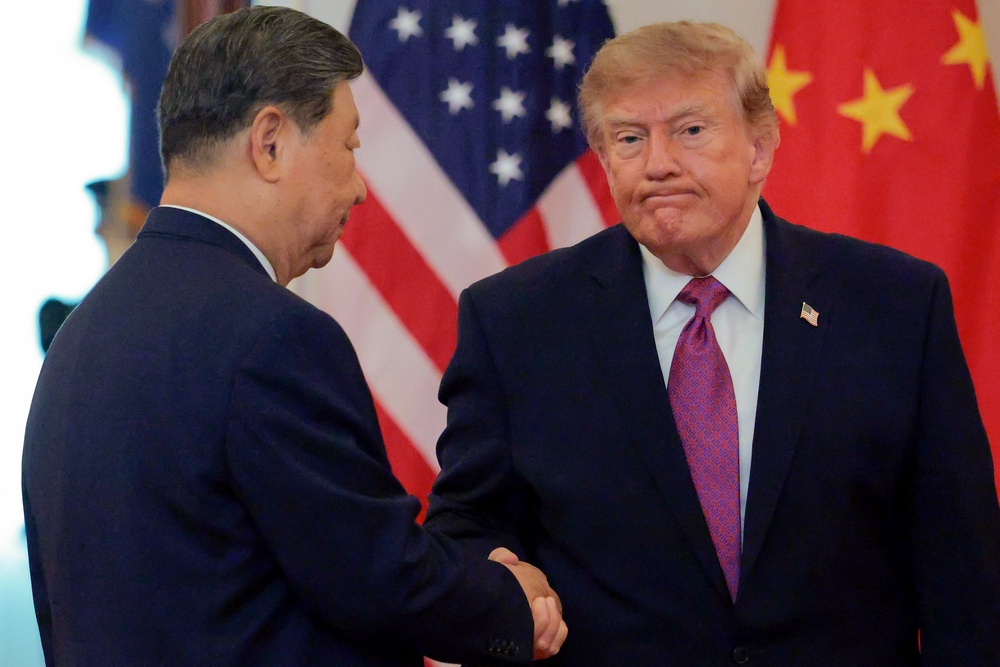
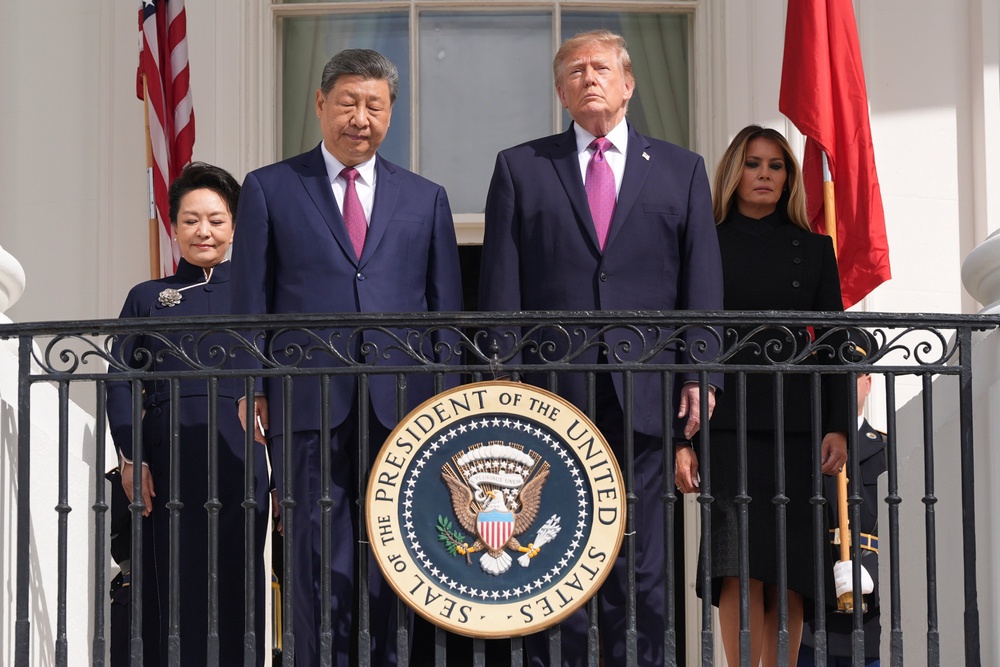
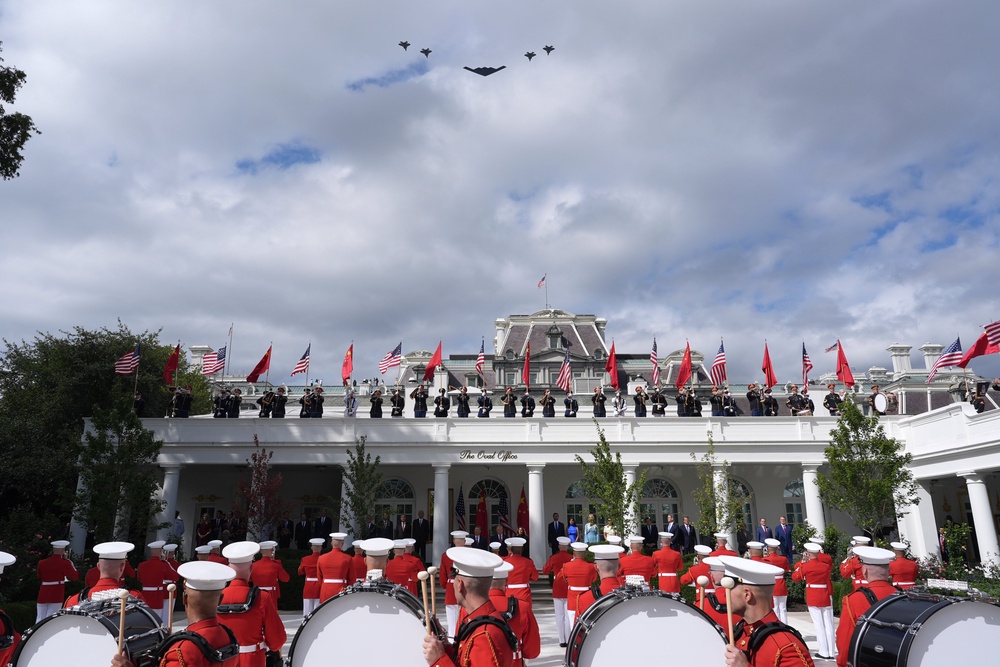
Mr Xi’s visit began in Washington on Thursday with much fanfare, including a military ceremony, a flyover at the Rose Garden and Chinese flags waving from the Oval Office roof.
However, the meeting between the leaders of the world’s two largest economies comes as Mr Trump faces international backlash for inviting Russian president Vladimir Putin to Miami’s G20 gathering in December despite the war in Ukraine.
Mr Trump, who has dubbed his relationship with Mr Xi the “G2”, said their meeting would have an impact on the world for decades to come.
“During this visit, we will also discuss pressing issues concerning security, technology, and 'super-intelligence’,” Mr Trump said.
“The decisions we make in these areas today can promote peace and prosperity for decades and decades to come.”
Mr Xi was treated to a state dinner on Thursday evening with tech executives including Apple’s Tim Cook, Amazon’s Jeff Bezos, Open AI’s Sam Altman, Tesla’s Elon Musk, Nvidia’s Jensen Huang and Alphabet’s Sundar Pichai.
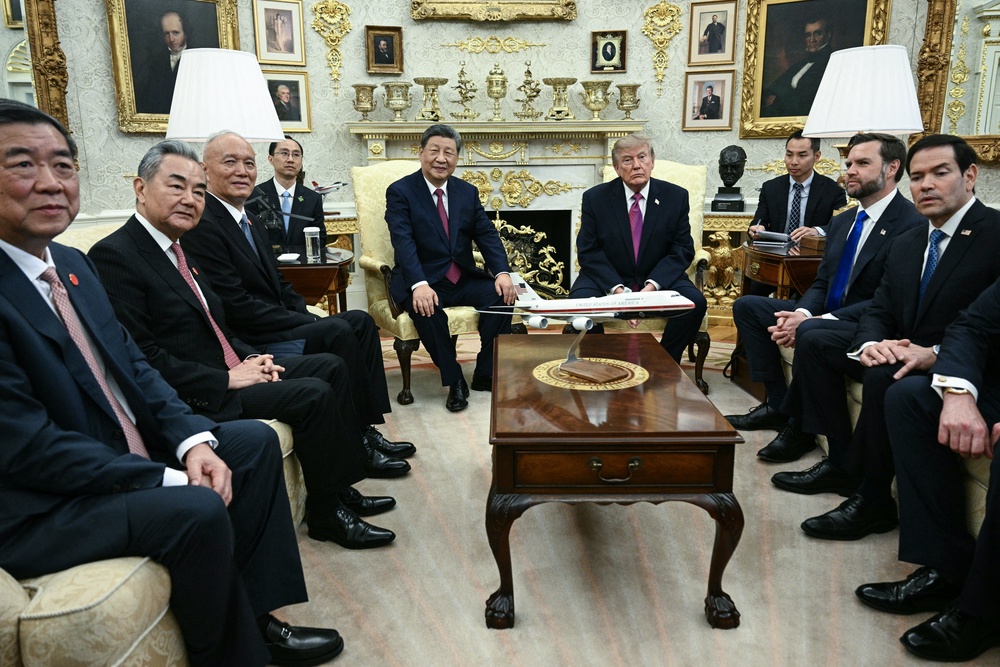
But analysts cautioned that the intense competition between the two countries in AI is likely to limit the scope for anything beyond symbolic agreements.
Mr Xi used his initial address to emphasise that the US has the “capability and responsibility to manage AI for good”.
“China-US cooperation may not solve every problem in the world, but without our cooperation, it would be hard to solve many of the world's problems,” he said.
He voiced hope for a more stable relationship with the US, saying Beijing and Washington should be “partners, not rivals” and that the “historical logic of peaceful coexistence” between the two countries had not changed.
The two are expected to discuss the ongoing Iran war but there has been little sign China is willing to exert pressure on its ally to yield to US demands.
Mr Trump has been warned about the relationship between Tehran and Beijing as the war he started in February continues with no end in sight.
“The president needs to tell Xi Jinping that this is a dangerous alliance,” Jonathan Schanzer, executive director of the Foundation for Defence of Democracies, told Fox News before the visit.
“The Chinese assistance to the Iranian regime has actually expanded on a number of fronts,” he warned, citing the provision of drone parts and motors, dual use chemicals, alleged assistance with targeting and an economic relationship.
Disputes over Taiwan remained the most contentious issue as China claims democratically governed Taiwan as its own. Mr Xi is keen to press Mr Trump to halt arms sales to the democratically governed island.
As expected, the Chinese president pressed Mr Trump on Taiwan on Thursday, saying he hoped the US would "handle the Taiwan question with prudence."
After his May summit with Mr Xi, MrTrump, whose administration in December approved an $11bn arms sale package to Taiwan, said he was holding a second package, worth some $14bn, in abeyance and described it as a "very good negotiating chip".
Craig Singleton of the Foundation for Defense of Democracies think tank said Beijing may believe it has established a new baseline on Taiwan with Mr Trump.
Mr Xi's use of the word "adhere" was revealing because "it implies Beijing believes Washington is already behaving in ways it wants”, he told the Associated Press.
"In the context of the current stand-down on Taiwan arms sales, China may increasingly view that restraint as a new baseline rather than a temporary pause," he said.
"Beijing's objective is to get Trump to absorb Chinese red lines into his own definition of a stable relationship."
Sources told Reuters said that Beijing is offering to help put pressure on Iran in return.
After their previous meeting earlier this year, Mr Trump had said he was holding in abeyance an arms package to Taiwan worth $14 billion and called it a “very good negotiating chip”.
Mr Trump, known to be impressed with ceremony and symbolic gestures, has attempted to reciprocate the grand welcome he received when he made his own state visit to China in May.
On Wednesday evening he greeted Mr Xi with a red carpet on the tarmac at Joint Base Andrews – the first time a US president has welcomed a foreign leader in that manner since President Barack Obama met Pope Francis in 2015.
The Chinese leader’s visit comes at the end of busy week for international diplomacy in the US, with the UN General Assembly still taking place in New York.
Secretary of state Marco Rubio announced the Putin invite after meeting Russia’s outspoken foreign secretary Sergey Lavrov on the sidelines of the event Wednesday, and soon faced international backlash.
“It's clearly, I think, the wrong path to normalise people who are starting wars, who are going against the UN charter, who are killing and giving orders to kill civilians,” the EU’s representative for foreign affairs Kaja Kallas told Sky News in response.
The European Commission also issued thinly veiled criticism of the US invitation.
“Russia is escalating attacks on Ukrainian civilians as we speak. July and August were the deadliest months since the war started,” deputy chief spokesperson Olof Gill said.
“Since 2022, the EU has consistently and forcefully used G20 meetings to condemn Russia's full-scale invasion and to call for it to end.
“What I can say today is that this approach, from the European Union perspective, will continue irrespective of the participants at any G20 meeting.”
The state dinner wrapped up with Mr Xi saying that the two leaders shared a “sincere and indepth exchange”.
Mr Trump will take the Chinese leader on Friday to the US National archives. They would also see "artefacts testifying to the long and cherished relationship" between China and the US and their "cultural exchanges,” he said in remarks welcoming Mr Xi.
Read MoreIran-US war latest: Netanyahu tells UN Iran attack was ‘one of his easiest decisions’
Inside Fox’s ‘break-up’ with Trump and why his most powerful ally is losing patience
A month after Nepal-Tibet floods, families await answers over 50 missing Ukrainians
Netanyahu uses UN speech to blast NYC mayor: ‘You can’t silence me’
Trump offers Xi state dinner guests first-ever tour of ballroom construction site
CNN and MS NOW blocked from covering Xi’s arrival at state dinner, networks say