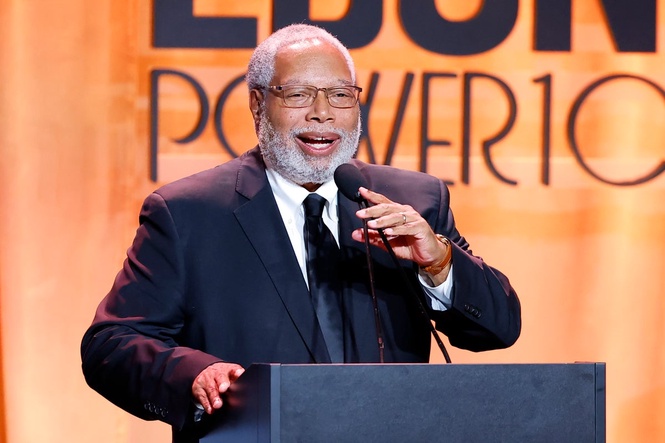
Lonnie Bunch, the first Black secretary of the Smithsonian Institution, has announced that he will retire from the role.
It comes after a turbulent year during which President Donald Trump attempted to reshape how American history is presented across the organization’s museums and wider cultural bodies.
Bunch, who took up the role in 2019, said in a statement issued Tuesday that he will stand down at the close of the year.
He said the decision had been made “with very mixed emotions and heartfelt gratitude.”
The decision follows a White House report published two months ago that attacked officials at the Smithsonian Institution, particularly within the National Museum of American History, describing them as untrustworthy radical activists.
The report prompted fears that Trump intends to replace them.
The review by the White House Domestic Policy Council claimed that the institution failed to present historical events "in a way that is inspiring, unifying, and worthy of our great republic."
Bunch rejected the report, saying it was not a “fair characterization.”
In July, Trump issued an executive order that the Smithsonian Museum of American History post signs telling visitors its exhibits are presenting inaccurate information.
“Smithsonian leadership does not present American history as a shared national inheritance to be taught and celebrated, but instead views American history as a ‘prime tool’ to advance ideas of social justice and the radical transformation of our society,” Trump wrote in the executive order.
And in late August, the administration threatened to cut federal agency support for the Smithsonian.
A letter sent to the institution’s governing board, Interior Secretary Doug Burgum and White House Domestic Policy Council Director Vince Haley wrote that government agencies "cannot in good conscience continue to support the Smithsonian under current leadership by, for example, loaning artifacts for exhibits, enabling procurement processes and making discretionary grants."
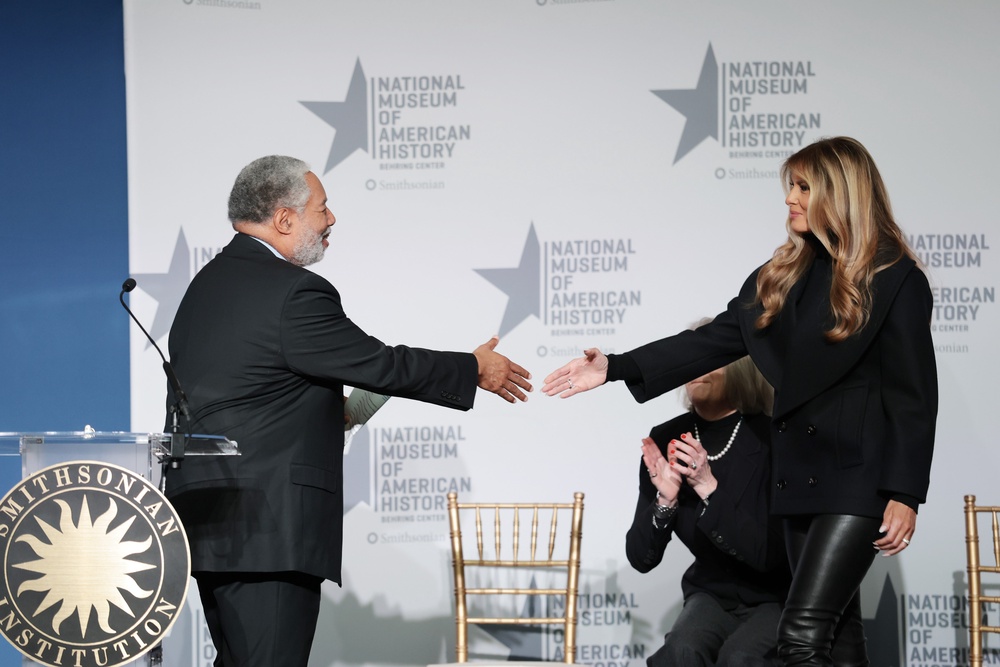
The correspondence alleged that the institution may have breached anti-discrimination laws because of its diversity practices.
Trump cannot easily remove executives at the Smithsonian, unlike his swift intervention at other prominent Washington arts venues such as the Kennedy Center, where an allied board appointed him chair.
Because the Smithsonian functions independently of the executive branch, individual museum directors answer directly to Bunch.
He in turn reports to a Board of Regents comprising Vice President JD Vance, Supreme Court Chief Justice John Roberts, members of Congress from both parties, and citizen regents.
Paying tribute, Roberts, in his capacity as Smithsonian chancellor, said that Bunch had "pursued excellence in the telling of our nation’s story."
Requests for comment sent to the White House were not immediately returned.
Read MoreLonnie Bunch to retire from Smithsonian leadership following clash with Trump administration
Trump claims firefighters carried him away from Ground Zero right after 9/11
After the theft of 3 Renoir paintings from a French museum, here's a look at other famous heists
Trump sets off global panic after map suggests large-scale US takeover
The companies behind data centers are turning to politics as communities fight back
Lewandowski pitched himself to Qatari and UAE officials while Noem’s ‘close’ aide