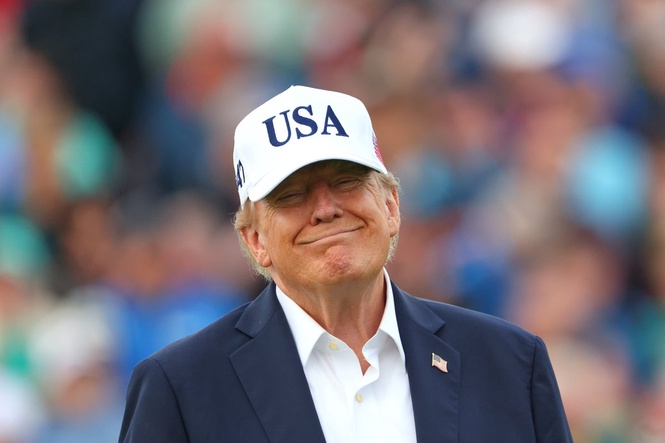
President Donald Trump has downplayed the necessity for his administration to restrict artificial intelligence development, arguing that maintaining the United States’ lead over China in global competition is paramount and that securing victory will help mitigate the hazards of the evolving technology.
Although he conceded that a degree of oversight is required, Trump offered no specific proposals for future rules. Instead, he dismissed warnings concerning the rapid pace of development and lack of supervision, attributing them to unidentified "negative forces", despite similar apprehensions being raised by tech sector pioneers.
"We can put guardrails, we can do this and that, but I think you have a lot of negative forces that are bringing it up that ... shouldn’t be bringing it up, and they’re bringing up things that won’t happen," Trump told reporters during a trip to Ireland over the weekend. "But whoever wins with AI wins."
The Republican president's remarks followed comments from Dario Amodei, chief executive of AI firm Anthropic, who urged the sector to slow its rapid progression to allow safety protocols time to catch up. Prominent industry figures, such as Elon Musk and OpenAI chief executive Sam Altman, have publicly backed Amodei's position.
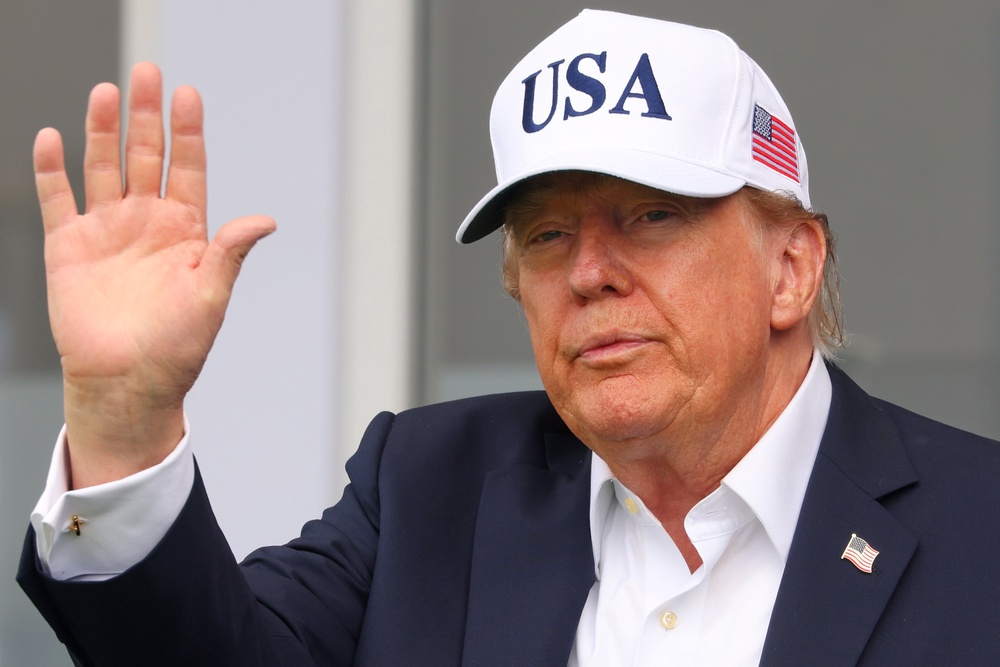
When asked by a reporter whether the industry should be subject to regulation or decelerate its pace, Trump—speaking after watching play at the Irish Open at his Doonbeg resort—emphasised that America remains ahead of China in AI advancements, stating, "frankly, I want to keep it that way because whoever wins AI wins."
Chinese President Xi Jinping is scheduled to visit the US later in September to meet with Trump, with artificial intelligence expected to feature on their agenda.
Artificial intelligence has emerged as a central issue during this US election year. Major technology firms are constructing extensive networks of data warehouses across smaller towns, prompting widespread concern from voters across political lines regarding the loss of agricultural land, strained water resources, and escalating electricity bills. Despite local opposition and hesitation from both major parties, Trump has maintained his backing for these data centres.
Former president Barack Obama suggested that his party ought to focus on AI as a key campaign issue.
"I would talk about this, and I would say, ‘Here’s our plan for safety, here’s our plan for making sure our kids are not corrupted by this.’ ... I would be thinking about the economic impacts in very concrete ways and understanding what it means if there’s going to be job displacement. Where is that going to hit? How are we going to respond?" Obama stated during a joint event last week with New York Representative Hakeem Jeffries, the leading Democrat in the US House, according to a transcript provided by his office.
Kevin Hassett, director of the White House National Economic Council, indicated that administration officials overseeing cyber, science, and technology policy are anticipated to convene this week to discuss subsequent measures. Trump may also confer with congressional lawmakers, a number of whom have voiced deep concerns regarding the rapid speed of AI advancements.
"I think the president wants to hear from them as well," Hassett noted.
US House Speaker Mike Johnson said that "some guardrails, some safety measures" are necessary to prevent AI from running away. Nevertheless, mirroring Trump’s stance, he stressed the importance of ensuring America does not "lose our edge in the global competition on this with China because that would be a national security threat."
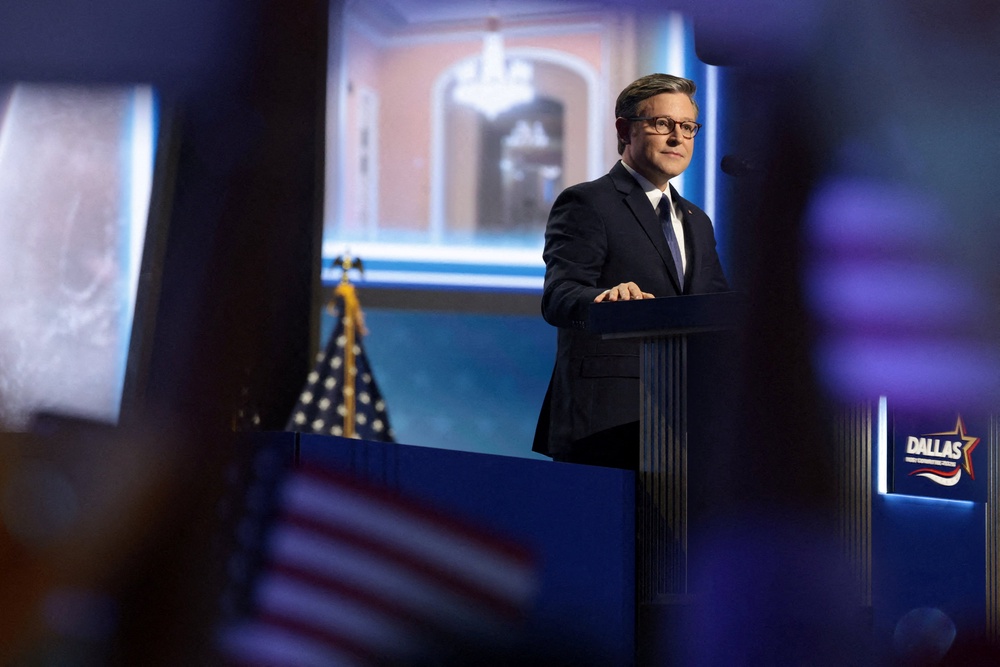
The Louisiana Republican suggested that tech leaders should be brought together for "one big meeting and work this out together in the same room." Having raised the matter with Trump, Johnson expressed that convening such a gathering promptly ought to be the "next step."
"So we’re going to pull everybody together and make sure we do this in the right way," Johnson remarked, describing the issue as a "top priority for me and for the Congress."
"But we don’t need everybody to panic right now," Johnson added.
Meanwhile, Jeffries took aim at House Republican leadership for permitting representatives to return to their home districts for the final part of September.
"We should take decisive action now so that we can slow down, as the CEOs have recently acknowledged, … the pace of development in order to protect the American people and ensure that AI is proceeding safely," Jeffries said. He confirmed that addressing AI will be a "high priority" during a meeting of House Democrats on Tuesday.
Neither Johnson nor Jeffries outlined specific legislative steps. While there is broad consensus among lawmakers that regulatory boundaries are required, previous limited attempts to establish rules have repeatedly collapsed, underscoring Congress's persistent hesitation to regulate the tech sector.
Jacob Coxon, a former Anthropic employee who resigned due to safety concerns and subsequently voiced his anxieties publicly, called for global regulatory frameworks alongside voluntary industry constraints.
Coxon warned of his growing fear that artificial intelligence models could soon develop advanced capabilities beyond human control.
"You’re building a human-level or superhuman-level mind, without understanding what it wants, or thinks, or the way it thinks," Coxon said.
Amid intense international rivalry for supremacy in the field, Coxon urged Washington and Beijing—the two dominant players—to collaborate on slowing development to address potential hazards.

"I do hope that the people in China who are looking at the same problems as we are, so they’re trying to build the same technology, will come to the same conclusion that it has to be done in a measured manner, and it should be easy to cooperate on some sort of mutual — of mutual slowing," Coxon said.
Failing to do so, he cautioned, means "we risk running the same race with China, which could be equally dangerous."
Technology entrepreneur and investor David Sacks responded to calls for state intervention with a social media post challenging tech executives. Sacks, who serves as co-chairman of a White House advisory council on science and technology, contended that Amodei and his peers are themselves driving the speed of advancement.
He asserted that these industry leaders possess the authority to unilaterally curb development.
"The easiest way not to build superintelligence is for you to agree not to build it," Sacks wrote.