.png)
US President Donald Trump has temporarily eased sanctions on Russian diesel imports and secured a commitment from Moscow to supply fuel to global markets, as soaring prices threaten to become a political liability for Republicans ahead of November’s congressional elections.
Trump said Russia would immediately supply more than 300,000 tonnes of diesel, equivalent to about 2.25 million barrels, with a further 500,000 tonnes expected in November and another one million tonnes thereafter.
The US Treasury Department issued a licence allowing Russian diesel imports until April 7, temporarily relaxing restrictions imposed on Russian oil companies in October 2025 over Moscow’s war in Ukraine.
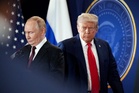
Reuters, on Saturday, cited Trump saying that the agreement followed a “highly successful” discussion with Russian President Vladimir Putin, adding that further supplies would depend on the condition of Russia’s diesel refineries, some of which have been damaged by Ukrainian attacks.
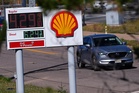
The announcement comes as US average diesel prices climbed to US$6.28 a gallon on Thursday, according to motorist group AAA, amid a global fuel supply crunch triggered by the wars involving Iran and Ukraine.
Diesel prices have risen about 70% since the United States and Israel launched the war with Iran on Feb 28, increasing costs for farmers, truckers and businesses reliant on fuel-intensive transport.
The price surge presents a challenge for Trump’s fellow Republicans ahead of the Nov 3 midterm elections, which will determine whether they retain their narrow control of Congress.
US diesel futures fell almost 5% following news of the agreement, trading at US$4.64 a gallon.
“Lower prices for Americans, especially our Great Farmers, Ranchers, and Truckers, is my Greatest Priority,” Trump said.
However, analysts cautioned that the additional Russian supplies were unlikely to deliver sustained relief to the market.
“It’s clearly not a fix, but another stream to aid a very tight diesel market,” said Jim Mitchell, an analyst at consultancy Wood Mackenzie.
Russia typically exports substantially larger volumes of diesel when its refining operations are not disrupted, suggesting the announced shipments may have a limited effect on the broader supply shortage.
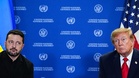
The agreement also drew criticism from Ukraine, whose delegation was in the United States for discussions on resolving the war.
Ukrainian President Volodymyr Zelenskiy described the decision as a “weak decision on the part of strong partners”.
“Gifts to Putin will not bring peace or any benefit to the civilized world. Russia will ‘repay’ the diesel with further terror and perfidy,” he said on X.
Republican Representative Don Bacon also criticised the move, arguing that Washington should enforce rather than relax sanctions against Moscow.
“Now is the time to use those sanctions to squeeze Putin’s war machine, not reward a dictator by putting more money in his hands while he continues targeting and killing Ukrainian civilians,” he said.
Meanwhile, the White House is considering further measures to bring down domestic fuel prices, including invoking the Cold War-era Defense Production Act to expand US oil and fuel production.
Three industry sources said Trump was expected to issue a directive in the coming days instructing selected department heads to identify ways to control diesel prices and circumvent regulations that impede energy production.
The legislation gives the president powers to support domestic manufacturing through government-backed loans and loan guarantees, as well as require companies to prioritise government contracts for essential goods.
The administration has also been examining ways to use the act to expand US refining capacity as the conflict with Iran exposes vulnerabilities in domestic fuel supplies.
Refining executives have advised officials that improving the efficiency of existing refineries or expanding current facilities would be more practical than financing new plants, which would be costly and take years to complete. - October 10, 2026