Iran gains strategic leverage over Trump as the US faces mounting military, economic and political pressures in the conflict and talks ahead
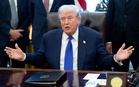
IRAN is now tightening the screws on President Donald Trump as he seeks to avoid a self-inflicted debacle in the United States war against Iran.
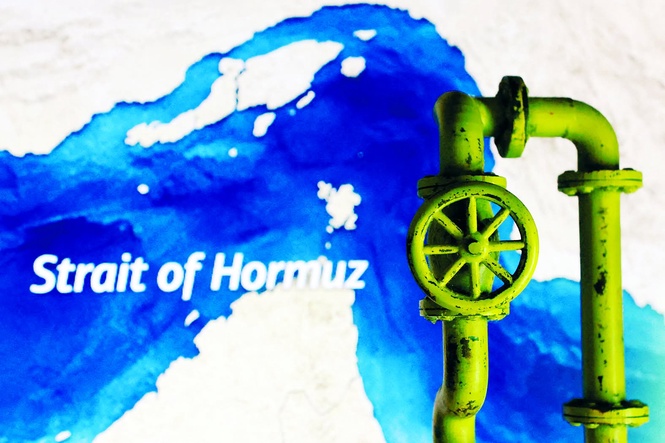
According to the country’s state-run IRNA news agency, Mohammad Baqer Zolqadr, former secretary of Iran’s Supreme National Security Council, “until America corrects its behaviour, The Strait of Hormuz will not open”.
Allowing the Strait to reopen peacefully and on its own terms is just the first corrective measure Iran is insisting on.
Mohammad Baqer said that the US must stop threatening Iran and insulting what he described as the country’s sanctities, end military action against Iran and its allies in Lebanon, the Palestinian territories, Yemen and Iraq, and lift the naval blockade.
His demands also call for US sea and air forces to withdraw from Iran, compensation for damages from two wars, the removal of sanctions against Iran and the unconditional release of frozen Iranian assets.
Trump’s diminished options
Even before the pronouncement of this list of latest Iranian demands, critics of America’s Iran policy have noted that Trump’s aggressive “maximum pressure” strategy and military intervention produced temporary euphoria but has been a strategic and political trap rather than a swift, decisive victory.
They were too kind. This trap could well result in the biggest geopolitical setback for the US for this decade as well as a domestic threat to Trump’s and the Republican party’s fortunes in the coming November elections.
Critical shortcomings in American policy have included:
0 strategic misalignment of ends and means
Shifting objectives: Operational goals drifted across multiple non-congruent targets – from enforcing zero-enrichment nuclear limits to destroying missile infrastructure, severing proxy support and implicitly encouraging regime collapse.
Resilience under pressure: Despite severe damage to physical facilities and leadership targeted in the US-Israeli strikes, intelligence and international assessments indicate that air strikes delayed core enrichment capacity by only months rather than dismantling it outright. Asymmetric persistence: Depriving Iran of high-end conventional assets did not remove its low-cost ability to disrupt maritime traffic in the Strait of Hormuz, forcing the US into an indefinite, expensive commitment to maintain regional air and naval superiority.
0 maritime and economic backlash
Chokepoint disruption: Iranian retaliation and threat posture in the Strait have disrupted energy trade, triggering spikes in global oil prices and freight insurance rates.
Domestic inflationary spillovers: Rising energy costs have directly undermined domestic economic massaging and messaging heading into the mid-term cycle, turning a foreign policy manoeuvre into a consumer-facing economic liability. This alone has become the Achilles heel of Trump’s foreign policy and possibly also a decisive blow against his MAGA agenda.
0 escalation trap and alliance strain
Regional disruption: Counter-strikes targeting logistics hubs and energy infrastructure across Persian Gulf states have alienated key regional allies, burdening host nations and increased US casualty counts.
Diplomatic isolation: Unilateral military moves and the exclusion of allies from high-level talks have weakened international consensus, making sanctions enforcement more reliant on US coercion than multilateral cooperation.
Trump’s options for political and strategic relief
To avoid the Iran war’s ripple effect and mid-term November risks, we have seen the Trump administration reframe the narrative and engage frantically in search of policy pathways to de-escalate hostilities and secure a politically defensible outcome palatable to the American public.
Reframing strategy is now focusing on the following:
0 Declaring “degradation complete”: Framing the tactical destruction of missile sites and nuclear infrastructure as the pre-planned, successful completion of the military mission, justifying an immediate drawdown.
0 Economic pivot: Recentring domestic messaging away from foreign regime transformation and towards lower energy prices, claiming that American military action successfully forced Tehran back to the bargaining table. Whether this may be sufficient to address the criticism from war hawks and peace doves going into the mid-term remains to be seen.
For now, there is little doubt that Iran has the upper hand going into the all important peace agreement negotiations ahead. From an analytical and military-strategic standpoint, the US administration and military have to contend with these key political and strategic outcomes.
- Iran’s structural resilience
Despite intensive air campaigns and high-profile strikes against military and political leadership, Iran’s central government and state system have survived without systemic collapse.
Tehran has also successfully executed a pre-planned, highly decentraliced command-and-control doctrine. By distributing decision-making across regional operational groups, the military demonstrated that state continuity does not depend on a single centralised command node.
- Strategic leverage over global markets and maritime chokepoints
Unable to match the US and Israel in conventional air power, Iran successfully moved the conflict’s primary battleground outside its borders and into global economic systems. By leveraging its position along the Strait of Hormuz, Iran’s capability has turned a geographic chokepoint into a high-value bargaining chip in the current negotiations.
- Survivability of long-range asymmetric strike assets
Prior investments in deeply buried, hardened underground caverns ensured that despite losing conventional surface assets, Iran maintained operational stockpiles of ballistic and cruise missiles as well as long-range strike drones.
At the same time, Iranian strike vectors have remained operational despite adversarial electronic warfare and GPS denial efforts.
In contrast, American long range and interceptor missiles have been so depleted that US military leaders have discouraged further kinetic activity.
Horizontal cost-imposition on regional energy and economic hubs
Iran successfully widened the scope of the conflict to highlight the vulnerability of key infrastructure in the neighbouring Persian Gulf states. These include energy export terminals, desalination facilities, digital infrastructure and logistics hubs.
By demonstrating that Gulf economies cannot maintain uninterrupted, high-tech business operations during an active war, Iran incentivised neighbouring Arab states to prioritise de-escalation, regional diplomacy and neutrality over open integration into anti-Iran military coalitions.
Conclusion
While it remains to be seen whether Trump may be able or willing to engage in even more military action to bring the Iranian government and military to its knees, Tehran has converted foreign military strikes into a powerful domestic and international saga of anti-imperial resistance and territorial defence, consolidating support among its conservative core and active grassroots networks.
What this signifies is that any long-term resolution or security agreement must take place on equal terms. This is likely to ensure the preservation of Iran’s sovereign rights and capabilities, and bring about sanction relief rather than mirror whatever dictated terms are forthcoming from the US.
Lim Teck Ghee’s Another Take is aimed at demystifying social orthodoxy. Comments: letters@thesundaily.com