President Donald Trump has said the U.S. is taking “very seriously” a warning from intelligence officials that Iran is developing plans to detonate a “dirty bomb” in Washington, D.C., targeting his administration over the ongoing war between the two countries.
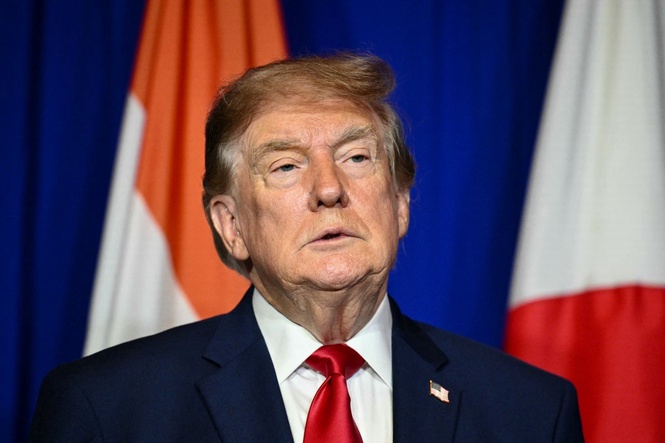
Asked about a report by CNN citing the concerns of seven officials on his visit to the Philippines, the president said that if it proved to be accurate, Iran “will pay a price the likes of which no country has ever paid before. I hope it’s not [true]. But we take it very seriously because they happen to be crazy.”
Iran Foreign Ministry spokesman Esmaeil Baqaei also addressed the report in a post on X, dismissing it a “fabricated media narrative.”
Those reassurances came as Americans took to social media to express their disquiet about the prospect, with some even advocating leaving town. “Booking the next flight to Atlanta and hoping I end up in a good Silo,” wrote DC-based podcaster Saagar Enjeti.
The officials in question had told CNN the plotting they had uncovered was highly specific, including locations and targets, but was not characterized as representing an imminent threat, rather as the regime in Tehran giving itself “options” if the conflict rages on.
The sources said the intelligence had nevertheless inspired a wave of “prudent” contingency planning just in case.
Earlier, White House spokesperson Lauren Bis told The Independent the executive remains “vigilant monitoring any and all potential threats, but at this time there are no credible threats to the homeland.”
A U.S. official added: “Iran is a failed country, weaker than ever before after the United States wiped out their military, sunk their navy, and destroyed their defense industrial base. President Trump and his team are unwavering: Iran will never have a nuclear weapon to threaten the American people and our allies.”
The Independent also reached out to the Department of Defense and was referred to the Office of the Director of National Intelligence, which has yet to comment.
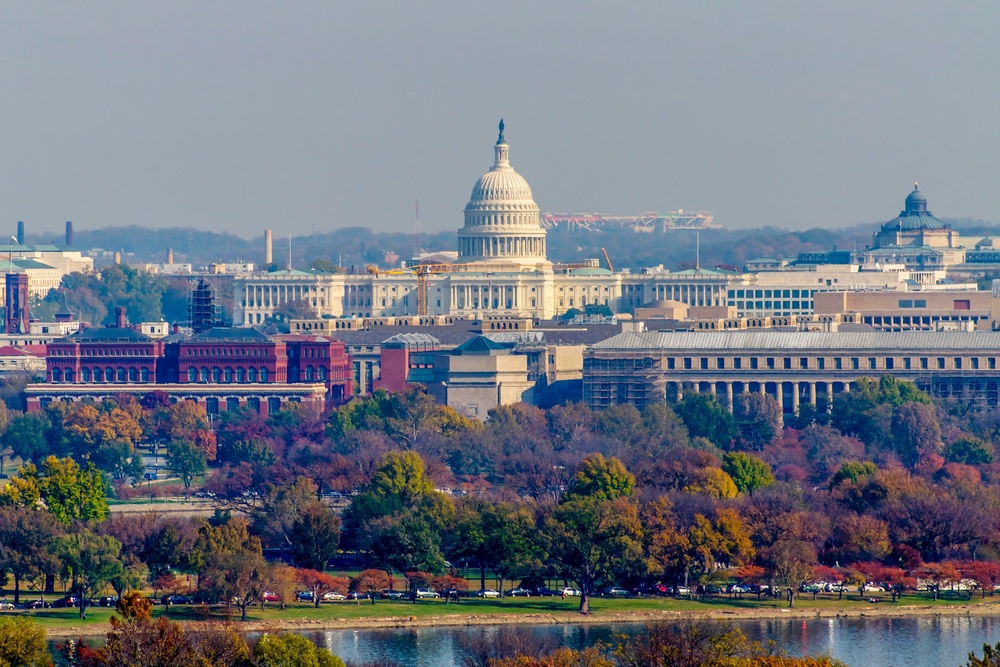
A dirty bomb is a form of chemical weapon that packages radioactive materials inside a conventional bomb. While it can disperse dangerous airborne radiation over short distances, its explosion poses the greater threat to bystanders.
“Any weapon like that is a weapon of terror, not a weapon of precision, just like a suicide bomber blowing themselves up,” one of CNN’s intelligence sources said. “They can make people really sick and certain areas uninhabitable.”
The Iranian Mission at the United Nations in New York said in a statement of its own that Iran “considers the use of chemical weapons under any circumstances to be wholly illegitimate and categorically rejects and unequivocally refutes the false and fabricated allegations circulated in this regard.”
Another source told CNN the Iranian intelligence intercepted had indicated that Iran had already succeeded in stashing bomb-making materials on U.S. soil and that the enemy state would not necessarily need to send an operative into the country to assemble it. Instead, it could work to convince someone already living there to carry out the plot on its behalf.
There was disagreement among the intelligence personnel about how seriously to take the bomb plot but all agreed that Tehran’s capacity to execute it had not escalated but that it had a far greater incentive to act than previously because of Operation Epic Fury.
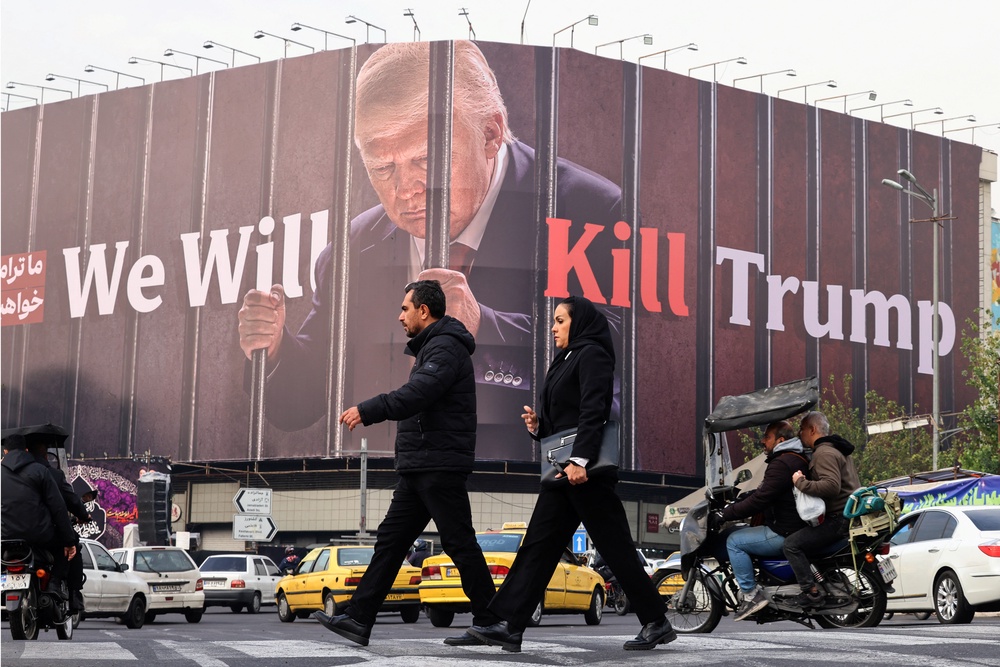
Another area of concern for the officials is the failure for Congress to agree an an extension to a key national security law, Section 702 of the Foreign Intelligence Surveillance Act, which empowers U.S. officials to monitor the phone calls and text messages of foreign nationals and which was stalled this summer amid a dispute over former acting director of national intelligence Bill Pulte.
Attorney General Todd Blanche, Director of National Intelligence Jay Clayton and CIA Director John Ratcliffe wrote to Republican and Democratic lawmakers last week urging them to reauthorize the law, which is seen as an effective tool for intercepting terrorist plotting.
Any delay would “[put] the lives of both Americans in the homeland and our troops stationed abroad at risk in the heightened threat environment,” the trio argued.
Read MoreTrump tells Philippines president he has ‘good genetics’ from dictator parents
Markwayne Mullin blasted for theory from ‘one guy’ that AI is behind tech outages
Gas prices are plummeting but Trump could have helped ‘far earlier,’ expert says
PHOTO ESSAY: As sextortion cases surge, a family mourning their son seeks to protect others
Aviation experts explain why the FAA ground stop was ‘preventable’
Trump issues Iran a stark warning over dirty bomb plot in DC report: Live updates