
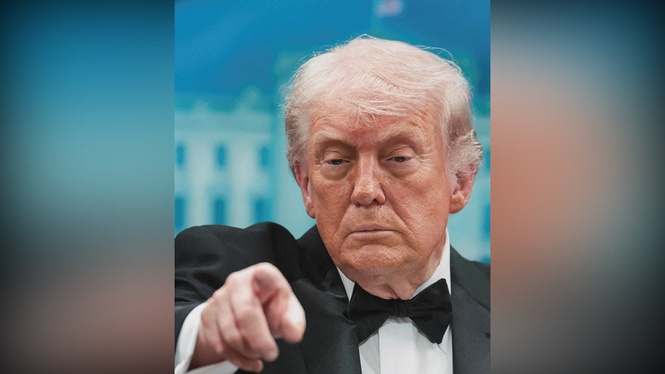
ALTHOUGH the political landscape continues to shift rapidly, it is clear that President Donald Trump – facing what he has repeatedly been proven wrong about Iran’s “surrender” in the war that he, together with Israel’s Prime Minister Benjamin Netanyahu launched – is looking for an exit.
Not just any form of exit but one that he can trumpet to Americans and the world as “a total victory” and the “best ever deal” for the Iranians and the Middle East.
Thus, most recently, while speaking to reporters in the Oval Office about negotiations with the Iranian government to end the war, Trump was asked why it had gone on for longer than four to six weeks. He responded by saying that “he took a break” and “wants the best deal”.
Wearing the Maga gown
Why Trump is looking for the best deal conjures the metaphor of “The Emperor’s New Clothes”. It offers the clearest lens through which to analyse the current optics of the US-Iran conflict.
In this context, the “new clothes” are the proclamations of a “historic victory” and a “best deal” being sold to the domestic public while the underlying reality of the conflict remains fraught with strategic complications.
The elaboration of this analogy can be broken down into three primary dimensions:
The proclamation of “total victory”
Just as the emperor paraded to display non-existent finery, the administration’s rhetoric focuses heavily on the degradation of Iranian capabilities – specifically the destruction of its leadership, navy and missile manufacturing sites during Operation Epic Fury.
As the Emperor struts around proclaiming total victory, he reminds the awestruck Maga parade crowd of his ability to reduce Iran to the “Stone Age” and warns that an entire civilisation – one of the oldest in the world – could “die tonight” and “never be brought back again”.
The optics: To the supportive media and the domestic base, the narrative is one of a “short, decisive war” that achieved what previous administrations could not.
The reality: While military strikes have been extensive and have devastated Iran’s military and public infrastructure, the “clothes” of a stable, post-conflict Middle East remain invisible to observers. The closure of the Strait of Hormuz and the resulting higher energy prices have not only unsettled some participants in the parade and reduced the crowd size but also suggest that it may be counterproductive to stage another parade in a situation that is far from settled, regardless of the triumphalist framing.
The narrative of the “best deal”
The administration’s shift towards a “best deal” to exit the war is being framed as a masterful tactical pivot by his courtiers and breathless admirers from his country’s learned class.
The spin: The domestic audience is told that the US is negotiating from a position of absolute strength, having “neutralised” the adversary. His war minister, leading the prayers at the beginning of the parade, warns of the need “to destroy the enemy as viciously as possible” and reminds the parade crowd that “we negotiate with bombs”.
The friction: In reality, the “deal” is being mediated by third parties like Pakistan and Oman amid a deepening impasse. The quiet, desperate nature of these back-channel negotiations, contrasting with the loud, triumphalist rhetoric at the Maga parade, highlights the emperor’s reliance on the intermediaries whom his rhetoric overlooks or gives little credit to.
The emperor’s court (the supportive media) reinforces the idea that any ceasefire is a strategic concession by Iran while critics argue the administration is searching for an off-ramp from a conflict that has become more economically and diplomatically expensive than initially promised.
The role of the “weaver” (media and rhetoric)
In the original fable, the weavers convinced the emperor that only the “unfit” or “stupid”“ could not see the clothes.
The echo: In the current political climate, the framing of the Iran conflict has adopted a “with us or against us” tone. Questioning the success of the campaign or the feasibility of the exit strategy is often characterised by supportive outlets as “weakness” or “partisan bias”.
“Are you so blind that you cannot see the incredible fabric and stitching in the Maga/Iranian gown that he is wearing”, asks the most popular media network while covering the parade live.
Meanwhile, the most enthusiastic paraders are calling for even more “surgical strikes”, including on civilian infrastructure deemed as “collateral necessity” to help maintain the illusion of the new clothes.
The audience: Continuing work and rhetoric creates a feedback loop where the domestic base sees a parade of strength, even as international allies decline to join the parade.
As the Maga strategists and weavers continue to laud the “genius” of their king and emperor and the brilliance of his “Art of the Deal” strategy as one of inevitable success, there is an urgent need for more children’s voices to emerge and expose the nakedness and the human and socio-economic costs of the conflict and his reign.
NGOs, think-tanks and independent media staying out from the parade should lend their dissident voices and concerns even if a little late.
Lim Teck Ghee’s Another Take is aimed at demystifying social orthodoxy. Comments: letters@thesundaily.com