A federal court ruling on Donald Trump’s global tariffs, which found that the president “exceeded his authority” when he imposed his so-called “Liberation Day” levies last month, was temporarily halted on appeal.
Trump’s deputy chief of staff, Stephen Miller, accused the court of a “judicial coup,” while White House spokesman Kush Desai savaged the court’s decision in a statement, saying it was not for “unelected judges to decide how to properly address a national emergency.”
The U.S. Court of International Trade’s ruling also struck down the tariffs imposed by Trump on imports from Mexico, Canada, and China, supposedly aimed at combating fentanyl and drug trafficking from those countries.
In New York, Wall Street opened slightly higher on the news, although across the Atlantic, the FTSE in London remained largely flat, indicating that more uncertainty may be expected by traders. As the trading day continued, the Dow Jones also leveled out.
The bombshell decision, which undermined major elements of Trump’s trade policy, arose in response to a lawsuit in which the attorneys general of twelve states and several small American companies urged the court to strike down the import taxes on the grounds that Trump had exceeded his authority.
Read More
Key Points
- Appeals court temporarily halts ruling against Trump tariffs
- US court rules Trump 'exceeded his authority' on tariffs
- White House officials blast tariff judgement as a ‘judicial coup’
- Former Trump adviser says it's 'dangerous' for president to impose taxes unilaterally
- Analysis: Legal ruling against Trump’s tariffs were inevitable
Our live coverage has ended. Here's a full breakdown:
00:09
,
Gustaf Kilander
US court rules Trump 'exceeded his authority' on tariffs
07:20
,
Angus Thompson
A federal trade court on Wednesday blocked President Donald Trump from imposing sweeping tariffs on imports under an emergency-powers law.
The ruling from a three-judge panel came after several lawsuits arguing Trump has exceeded his authority, left U.S. trade policy dependent on his whims and unleashed economic chaos.
Tariffs must typically be approved by Congress, but Trump has says he has the power to act because the country’s trade deficits amount to a national emergency.
He imposed tariffs on most of the countries in the world at one point, sending markets reeling.
In an unsigned opinion released Wednesday, the judges ruled the tariffs will be “vacated,” and they “permanently enjoined” the government from enforcing them.
What did the court say?
07:25
,
Andrew Feinberg, Gustaf Kilander
The court noted that Trump’s tariffs exceed the authority Congress granted to presidents under his cited International Emergency Economic Powers Act, a 1977 law which lays out how the executive can impose import taxes in limited circumstances pursuant to a national emergency.
The judges said Trump’s “Liberation Day” tariffs, which set a 10 per cent baseline tax on all imports and even higher taxes on imports from nearly every one of America’s trading partners, “exceed any authority granted to the President by IEEPA to regulate importation by means of tariffs.”
They also rejected Trump’s use of the emergency powers to tax Mexican, Canadian and Chinese imports because those tariffs don’t specifically “deal with an unusual and extraordinary threat with respect to which a national emergency has been declared,” as required by law.
The court rejected the Trump administration's arguments that claimed the president had broad authority in the current situation to impose tariffs under his emergency powers.
“An unlimited delegation of tariff authority would constitute an improper abdication of legislative power to another branch of government,” the judges noted, noting that “any interpretation of IEEPA that delegates unlimited tariff authority is unconstitutional.”
White House blasts 'unelected judges' over major ruling
07:27
,
Angus Thompson
A White House spokesperson, Kush Desai, savaged the ruling in a statement in which he claimed that the court had not disputed the fact that “foreign countries’ nonreciprocal treatment of the United States” had “ fuelled America’s historic and persistent trade deficits”.
He said that had in turn “created a national emergency that has decimated American communities, left our workers behind, and weakened our defense industrial base.”
It’s not for “unelected judges to decide how to properly address a national emergency.
“President Trump pledged to put America First, and the Administration is committed to using every lever of executive power to address this crisis and restore American Greatness,” he said.
Five other legal challenges to Trump’s tariffs are pending
07:44
,
Tom Watling
As news breaks that a US court has ruled Donald Trump’s tariffs illegal, we bring you news that at least five other legal challenges to the tariffs remain pending.
Oregon Attorney General Dan Rayfield, a Democrat whose office is leading the states' lawsuit, called Trump's tariffs unlawful, reckless and economically devastating.
“This ruling reaffirms that our laws matter, and that trade decisions can’t be made on the president’s whim,” Rayfield said in a statement.
Oregon led a coalition of 12 states that asked the court last week to issue a permanent injunction that would halt Trump’s tariffs.
How are the Asian markets reacting?
07:47
,
Tom Watling
Asia’s markets were the first to react to the overnight news that the US Court of International Trade had ruled against Donald Trump’s widespread tariff action.
Japan's Nikkei 225 index jumped 1.5 per cent to 38,263.36. America's largest ally in Asia has been appealing to Trump to cancel the tariffs he has imposed on imports from Japan and also to halt the 25 per cent tariffs on steel, aluminium, and autos.
The ruling also pushed the dollar sharply higher against the Japanese yen. It was trading at 146.06 yen early Thursday, up from 144.87 yen late Wednesday.
Australia's S&P/ASX 200 gained 0.3 per cent to 8,418.90.
In South Korea, which, like Japan, relies heavily on exports to the US, the Kospi surged 1.4 per cent to 2,707.77. Shares also were helped by the Bank of Korea's decision to cut its key interest rate to 2.5% from 2.75 per cent, to ease pressure on the economy.
US futures jump after court rules against Trump
07:53
,
Tom Watling
Below, you can read a full breakdown of how the markets reacted in the US and abroad to the news that Donald Trump’s tariffs have been found illegal by an American court.
Analysis: Legal ruling against Trump’s tariffs were inevitable
08:19
,
David Maddox
Political editor David Maddox writes:
While Keir Starmer and the rest of the world’s leaders were rapidly trying to respond to the “liberation day” tariffs imposed by Donald Trump earlier this year, calmer, more measured voices in Washington were warning that the US president would not be able to go through with them.
Never mind that Trump came within hours of having his own Liz Truss moment with a meltdown on the bond markets before treasury secretary Scott Bessent persuaded him to suspend the tariffs just in time. It is understood that this was only achieved because Bessent’s co-conspirator managed to distract Trump’s tariff guru Peter Navarro and keep him away from the president long enough.
The real issue, as pointed out by the Heritage Foundation’s trade expert Andrew Hale, was that Trump never had the monarchical powers to impose these tariffs without legislation from Congress. The US Constitution, with its checks and balances, specifically prevents presidents from acting like tyrants on a whim.
Trump was relying on the emergency powers act which does not even mention the word “tariffs” within it. Added to that it is hard to justify why Canadian maple syrup, Scotch whisky or foreign films should constitute a national emergency.
So the legal ruling yesterday - now subject to appeals - was inevitable and is likely to be upheld in higher courts, probably all the way to the Supreme Court.
What this means though is that the series of trade negotiations, including the one already signed by the US and UK, are in chaos. Do the terms Trump imposed even still apply? It seems not.
In the best-case scenario for Starmer, the UK now has better trading terms with the US minus the 10 per cent tariffs.
But the reckless shock tactics on the global trading system initiated by Trump has now only led to more uncertainty and confusion with this legal ruling.
What is the Court of International Trade?
08:33
,
Rachel Clun
Unlike the Supreme Court, many people won’t have heard of the United States Court of International Trade until very recently, thanks to its ruling over the president’s tariffs.
Here’s a bit about the court, what it does, and who runs it.
The Court of International Trade, established in 1890, has federal jurisdiction to resolve disputes over U.S. customs and international trade laws.
It can also decide on civil action against the U.S. government, its officials and agencies, on cases focused on customs or international trade – as seems to be the case in this latest judgement.
The court is led by a chief judge and has nine judges in total, appointed by the president. Most cases are heard by a single judge.
Of the current judges, four were appointed by Barack Obama, three were appointed by Trump and two were appointed by Joe Biden. However, no more than five judges can be from the same political party.
Court ruling throws Trump’s trade policy ‘into turmoil’
08:49
,
Rachel Clun, AP
The court ruling overturning Donald Trump’s tariff policies will cause headaches for companies and countries trying to navigate the on-again, off-again tariffs, a former U.S. trade official said.
Wendy Cutler, who is now vice president at the Asia Society Policy Institute, says the court's decision "throws the president's trade policy into turmoil".
"Partners negotiating hard during the 90-day tariff pause period may be tempted to hold off making further concessions to the U.S. until there is more legal clarity,” she said.
"Likewise, companies will have to reassess the way they run their supply chains, perhaps speeding up shipments to the United States to offset the risk that the tariffs will be reinstated on appeal."
Trump does have the power to impose tariffs, but it’s limited
09:05
,
Rachel Clun, AP
In its ruling, the trade court noted that the president does have some powers to impose tariffs – they’re just more limited than the powers he exercised.
Under the Trade Act of 1974, the president can impose tariffs to address trade deficits, but that law restricts tariffs to 15 percent and only for 150 days with countries with which the United States runs big trade deficits.
Professor of trade policy at Cornell University Eswar Prasad said that for now, the trade court's ruling "destroys the Trump administration's rationale for using federal emergency powers to impose tariffs, which oversteps congressional authority and contravenes any notion of due process”.
"The ruling makes it clear that the broad tariffs imposed unilaterally by Trump represent an overreach of executive power,” Prasad said.
U.K. government cautions court ruling is just the 'first stage' proceedings
09:19
,
Rachel Clun, Reuters
The British government has cautioned that the court ruling blocking president Donald Trump’s tariffs was “only the first stage of the legal proceedings”.
Trump unveiled a new trade deal with Sir Keir Starmer earlier this month, but that deal was based on negotiating down the tariffs that have since been struck down by the trade court.
A U.K. government spokesperson said: "These are matters for the United States to determine domestically and we note this is only the first stage of legal proceedings.
"We were the first country to secure a deal with the US in a move to protect jobs across key sectors, from autos to steel, and we are working to ensure that businesses can benefit from the deal as quickly as possible."
Lib Dems urge Starmer to summon U.S. ambassador
09:37
,
Rachel Clun
Liberal Democrat leader Ed Davey has urged Sir Keir Starmer to summon the U.S. ambassador to clarify what the court ruling means for the recent trade deal the U.K. made with Donald Trump.
“ The levels of chaos from Trump’s economic policy is putting Liz Truss to shame,” he said.
Watch: Trump laments Qatar luxury airplane gift ‘much too big’ for his own use
09:53
,
Rachel Clun
Gold price dips as risk appetite improves
10:08
,
Rachel Clun
Gold prices dipped as the appetite for risk improved following the trade court’s decision to overturn Donald Trump’s tariffs.
Prices dipped slightly to $3,304.6 an ounce, down from the $3307.40 - $3309.40 an ounce at close on Wednesday.
Gold bullion is seen as a safe haven investment and prices have soared since Donald Trump announced high tariffs on most global trading partners.
Asian shares and US futures jumped after court ruling
10:25
,
Associated Press
Asian shares advanced and U.S. futures jumped after a federal court blocked President Donald Trump from imposing sweeping tariffs on imports under an emergency-powers law.
In the early hours of Thursday the future for the S&P 500 was up 1.6 percent while that for the Dow Jones Industrial Average gained 1.3 percent.
Japan's Nikkei 225 index jumped 1.6 percent to 38,324.19. American's largest ally in Asia has been appealing to Trump to cancel the tariffs he has ordered on imports from Japan and to also stop 25 percent tariffs on steel, aluminum and autos.
Elsewhere in Asia, Hong Kong's Hang Seng added 0.3 percent, while the Shanghai Composite index gained 0.5 percent. Australia’s S&P/ASX 200 gained 0.3 percent.
Analysis: The UK-US trade deal has been thrown into chaos by Trump tariff ban - where do we go from here?
10:39
,
David Maddox
Political Editor David Maddox writes:
In their haste to be seen as Donald Trump’s closest buddies, there is now a serious question mark over whether Sir Keir Starmer and his government should have shown more patience in getting a “great and beautiful” trade deal with the US.
The deal, which was symbolically the first post-“Liberation Day” agreement signed by President Trump with any country, was put in place to reduce the impact of the tariffs the US president had imposed.
But while Sir Keir and the rest of the world’s leaders were rapidly scrambling to respond, calmer, more measured voices in Washington were warning that the US president would never be able to go through with them.
Now, it seems they were right, with the US Court of International Trade ruling that Trump “exceeded his authority” when he imposed his sweeping levies on countries across the world and has blocked the move.
Full story: Stock markets rise after Trump tariffs blocked by court
10:56
,
Karl Matchett
Business and Money Editor Karl Matchett reports:
The US stock market is set to rise on Thursday after President Trump’s sweeping global tariffs were blocked by the federal court.
Ahead of trading, US futures show a 1.5 per cent climb for the S&P 500, while the Nasdaq is pushing closer to 2 per cent since the news was announced.
Overnight stock markets in Asia rose on the news, with the Nikkei 225 and Hong Kong’s Hang Seng up 1.9 per cent and 1.35 per cent respectively.
However, European markets have not taken the news quite as positively, with the UK’s FTSE 100 flat in morning trading, the FTSE 250 up only 0.25 per cent and in Europe, the CAC 40 in France and Dax in Germany up by 0.6 and 0.5 per cent respectively, as of 10am BST.
Read the full report below:
Trump administration orders swathe of companies to halt China exports
11:12
,
Rachel Clun, Reuters
The Trump administration has ordered a host of U.S. companies to stop exporting goods to China without a license and revoked licenses already granted to certain suppliers, said three people familiar with the matter.
The new restrictions - which are likely to escalate tensions with Beijing - appear aimed at choke points to prevent China from getting products necessary for key sectors, one of the people said.
Products affected include design software and chemicals for semiconductors, butane and ethane, machine tools, and aviation equipment, the people said.
Many companies received letters from the U.S. Department of Commerce over the last few days informing them of the new restrictions.
Former Trump adviser says it's 'dangerous' for president to impose taxes unilaterally
11:29
,
Rachel Clun
A former economic adviser to Donald Trump’s campaign said he agrees with the court’s decision to overturn the president’s tariff policies.
Stephen Moore, an economist who advised Trump during his 2016 campaign, told BBC Radio 4’s Today program it was dangerous for a president to impose taxes unilaterally.
“I have to say I’m a big Trump supporter, but I have to agree with the court on this one,” he said.
Moore said Congress was the branch of government that was supposed to make laws and change tax policies.
"I think it's dangerous for the country to have any president assert the authority to impose taxes on American citizens,” he said.
"It's not a healthy thing for the president to have that kind of unilateral authority.”
China says protectionism ‘benefits no one’ in response to court ruling
11:47
,
Rachel Clun
China’s foreign ministry said Beijing hopes to continue to work “constructively” with the U.S. and develop stable bilateral relations.
But foreign ministry spokesperson Mao Ning also hit out at the Trump administration’s decision to revoke Chinese student visas as “fully unjustified”.
“This politically motivated and discriminatory move exposes the U.S. hypocrisy over freedom and openness. It will further damage the image and reputation of the U.S. itself,” Mao said.
Asked for China’s response to the trade court ruling that Trump’s tariffs were an overstep of the president’s authority, Mao said China had already made it’s position clear.
“Tariff and trade wars have no winners. Protectionism benefits no one and will get nowhere,” she said.
But asked whether the move to cancel student visas would affect China-U.S. trade relations, Mao said its position remains consistent.
“We hope the U.S. will work with China in the same direction, do more constructive things, and contribute more to the sound, steady and sustainable development of bilateral relations,” she said.
FTSE 100 flat, other Europe markets only slightly up
12:07
,
Karl Matchett
Business and Money Editor Karl Matchett reports:
While US futures show the S&P 500 heading upwards when the markets open this afternoon, the same trajectory hasn't been followed in Europe.
The Stoxx 50 is up 0.6 per cent and France's CAC 40 is up 0.7, but it's pretty much flat across Germany (0.2pc), Spain (0.1pc) and the UK (0pc).
The FTSE 250 is up 0.3 per cent and the Aim is up 0.4, but the FTSE 100 is trading broadly flat.
The FTSE 100 has some individual winners on the day of course, with airline Easyjet (2.67pc) the biggest riser ahead of financials Standard Chartered (2.5pc), Prudential (1.8pc) and Pershing Square Holdings (1.7pc), but a huge 11.2 per cent drop for Auto Trader Group - and it was around 14 per cent down earlier this morning - is weighing heavily against that.
White House officials blast tariff judgement a ‘judicial coup’
12:23
,
Rachel Clun
The White House has attacked the trade court judgement overturning president Donald Trump’s tariffs.
Trump’s deputy chief of staff Stephen Miller reacted to the ruling on X, calling it a “judicial coup” that was out of control.
The judicial coup is out of control. https://t.co/PRRZ1zU6lI
— Stephen Miller (@StephenM) May 28, 2025
White House spokesperson, Kush Desai, savaged the ruling, saying it was not for “unelected judges to decide how to properly address a national emergency”.
Desai claimed in a statement that the court did not dispute the fact that “foreign countries’ nonreciprocal treatment of the United States” had “ fuelled America’s historic and persistent trade deficits”.
Those trade deficits, he said, had “created a national emergency that has decimated American communities, left our workers behind, and weakened our defense industrial base.”
Comment: Who’ll draw first blood in the tariff wars: Trump or the US courts?
12:38
,
Mary Dejevsky
If there was one difference between Donald Trump’s first term in the White House and his second, it was said to be his lessons learned. Nowhere was this more apparent than in the speed of his appointments and the torrent of executive orders he issued in his first hours.
Suddenly, with yesterday’s ruling from the US Federal Court of Trade, rejecting Trump’s imposition of new trade tariffs, and Musk’s announcement that he has left the administration, the Trump system, such as it was, seems in disarray more profound than his usual impression of chaos. Whether these developments mean that Trumpism 2.0 has hit its limits is another matter.
Read Mary Dejevsky’s full analysis below:
Elon Musk officially announces departure from Trump’s government
12:57
,
Gustaf Kilander
Elon Musk announced his departure from the government on Wednesday after leading President Donald Trump’s efforts to slim down the federal bureaucracy, sharing the news on his social media site X.
“As my scheduled time as a Special Government Employee comes to an end, I would like to thank President @realDonaldTrump for the opportunity to reduce wasteful spending,” he wrote.
His departure, which comes as his term as a special government employee was set to end this week, comes just a day after he slammed the main legislation to push forward Trump’s agenda.
Read the full report below:
Trump rejects claim he's 'chickening out' on tariffs
13:23
,
Rachel Clun, AP
Donald Trump has bristled at the acronym Wall Street is using for his tariff policies.
The president's tendency to levy extremely high import taxes and then retreat has created what's known as the "TACO" trade.
The acronym, coined by The Financial Times' Robert Armstrong, stands for "Trump Always Chickens Out” and has become popular among traders.
Trump was visibly offended when asked about the phrase Wednesday. He said it's not "chickening out," it's negotiation.
“We have an end date of July 9th, you call that chickening out?” he said.
July 9 is the deadline when the pause on the high reciprocal tariffs ends.
Watch: Trump reacts to Wall Street 'TACO' code
13:40
,
Rachel Clun
Trump administration signals it may use administrative process against Harvard
13:52
,
Reuters
The Trump administration signaled on Thursday it might back off plans to immediately revoke Harvard University's ability to enrol foreign students because of several concerns, including its alleged failure to police antisemitism on campus, and would instead employ a lengthier administrative process.
According to a court filing, the U.S. Department of Homeland Security sent Harvard a notice of intent on Wednesday to withdraw the university's certification under the federal Student and Exchange Visitor Program. Harvard has 30 days to respond.
The notice came ahead of a scheduled court hearing on whether to extend a temporary ban on the revocation announced by U.S. President Donald Trump's administration last week.
Trump's economic adviser said three trade deals nearly done
14:00
,
Rachel Clun
Kevin Hassett said three trade deals were nearly done and more were underway despite the trade court ruling overturning Donald Trump’s tariffs.
"There are many, many deals coming. And there were three that basically look like they're done," the White House economic adviser said in an interview with Fox Business Network.
Hassett said there were three deals ready for Trump's review at the end of last week.
Trump's economic adviser blasts 'activists judges' over trade court ruling
14:06
,
Rachel Clun, Reuters
White House economic adviser Kevin Hassett dismissed the trade court ruling overturning Donald Trump’s tariffs.
Speaking in an interview with Fox Business Network on Thursday, he said he was confident the administration would win its appeal.
The administration's view is that numerous countries will open up their markets to American products in the next month or two, Hassett said.
"If there are little hiccups here or there because of decisions that activist judges make, then it shouldn't just concern you at all, and it's certainly not going to affect the negotiations," Hassett said.
U.S. economy shrank by 0.2 percent in first three months of the year
14:13
,
Rachel Clun, AP
The U.S. economy shrank at an annual pace of 0.2 percent in the first three months of the year, the first time the American has gone backwards in three years.
U.S. gross domestic product fell due to a surge in imports as companies in the United States hurried to bring in foreign goods before the president imposed massive import taxes.
Imports grew at grew by 42.6 percent, the fastest pace since the third quarter of 2020, and shaved more than 5 percentage points off GDP growth.
The January-March drop in the nation's output of goods and services reversed a 2.4 percent gain in the fourth quarter of 2024. The Commerce Department also says that consumer spending also slowed sharply.
And federal government spending fell at a 4.6 percent annual pace, the biggest drop in three years.
Which tariffs did the court block?
14:27
,
AP
The court’s decision blocks the tariffs Trump slapped last month on almost all U.S. trading partners and levies he imposed before that on China, Mexico and Canada.
On April 2, Trump imposed so-called reciprocal tariffs of up to 50% on countries with which the United States runs a trade deficit and 10% baseline tariffs on almost everybody else. He later suspended the reciprocal tariffs for 90 days to give countries time to agree to reduce barriers to U.S. exports. But he kept the baseline tariffs in place. Claiming extraordinary power to act without congressional approval, he justified the taxes under IEEPA by declaring the United States’ longstanding trade deficits “a national emergency.”
In February, he’d invoked the law to impose tariffs on Canada, Mexico and China, saying that the illegal flow of immigrants and drugs across the U.S. border amounted to a national emergency and that the three countries needed to do more to stop it.
The U.S. Constitution gives Congress the power to set taxes, including tariffs. But lawmakers have gradually let presidents assume more power over tariffs — and Trump has made the most of it.
The tariffs are being challenged in at least seven lawsuits. In the ruling Wednesday, the trade court combined two of the cases — one brought by five small businesses and another by 12 U.S. states.
The ruling does leave in place other Trump tariffs, including those on foreign steel, aluminum and autos. But those levies were invoked under a different law that required a Commerce Department investigation and could not be imposed at the president’s own discretion.
Wall Street opens up after court blocks Trump tariffs
14:35
,
Oliver O'Connell
In New York, Wall Street's main indexes opened higher on Thursday after the federal court’s ruling against most of President Donald Trump's tariffs, which the White House is appealing.
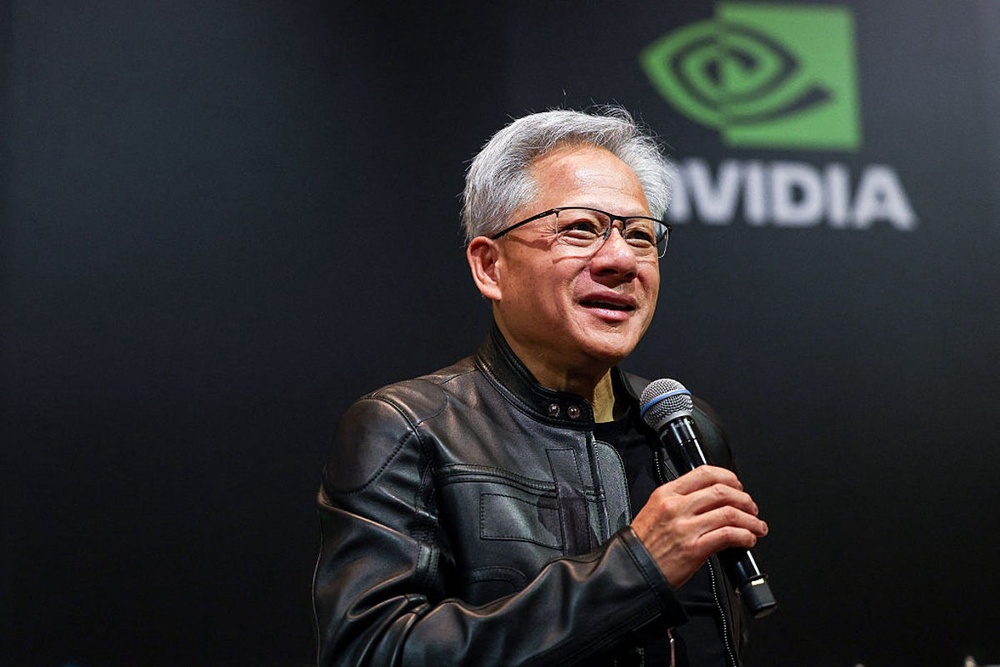
Helping lift the market was AI bellwether Nvidia, which reported a 69% surge in quarterly sales, boosting sentiment.
The Dow Jones Industrial Average rose 91.3 points, or 0.22%, at the open to 42190.02. The S&P 500 rose 51.4 points, or 0.87%, at the open to 5939.96, while the Nasdaq Composite rose 288.5 points, or 1.51%, to 19389.392 at the opening bell.
70% of small businesses say tariffs are already increasing costs
15:02
,
Oliver O'Connell
More than 70 percent of small and mid-sized businesses have already experienced increased operational costs due to Trump’s tariffs, a new poll has found.
The findings of the HSBC survey, shared with Axios, gathered responses from over 5,700 companies across 13 countries. This included around 1,000 US businesses with international operations and revenues ranging from $50 million to $2 billion.
The survey found that 72 percent of companies are already seeing cost increases from tariffs, with 77 percent expecting further rises by year’s end, Axios reports.
Erin Keller reports.
Watch: White House economic advisor remains steadfastly optimistic about tariffs
15:17
,
Oliver O'Connell
In light of the court’s tariffs decision, Kevin Hassett, the White House director of the National Economic Council, remained wildly optimistic this morning on Maria Bartiromo’s Fox Business show, Mornings with Maria.
The host alluded to the phrase “TACO” (Trump Always Chickens Out) that has been popularized on Wall Street regarding the tariffs.
Hassett responded to Bartiromo: “President Trump has a hat which is the accurate response to what that person said, which is 'Trump always wins.' A lot of people are wearing that hat, and 'Trump was always right.' But Trump does always win these negotiations.”
Kevin Hassett on tariffs: "President Trump has a hat which is the accurate response to what that person said, which is 'Trump always wins.' A lot of people are wearing that hat, and 'Trump was always right.' But Trump does always win these negotiations." pic.twitter.com/VFFSI2GR8B
— Aaron Rupar (@atrupar) May 29, 2025
Trump tariffs brought China to table and halted India-Pakistan conflict, says US official
15:33
,
Oliver O'Connell
Donald Trump’s Secretary of Commerce, Howard Lutnick, claimed that the president’s tariffs helped broker a fragile ceasefire between India and Pakistan earlier this month by offering trade incentives. He warned that limiting executive power could jeopardize regional security.
White House officials told the US Court of International Trade to uphold Trump’s import tariffs on almost all major countries, arguing that overturning the levies would weaken Washington’s ability to negotiate trade deals globally and undermine their strategic use as diplomatic tools.
Maroosha Muzaffar reports.
Markets lifted as chipmaker Nvidia becomes world's most valuable company
15:50
,
Oliver O'Connell
Nvidia shares have opened almost six percent higher as stock markets begin trading in the US on Thursday, following yet another stellar quarterly report from the chipmaker.
Following strong overnight trading and another late surge pre-markets, it equates to around a $185bn (£137bn) rise in the value of the company overnight - taking the total market capitalisation to around $3.48 trillion (£2.58tn) to usurp Microsoft as the world’s most valuable public listed business once again.
Karl Matchett reports from London.