
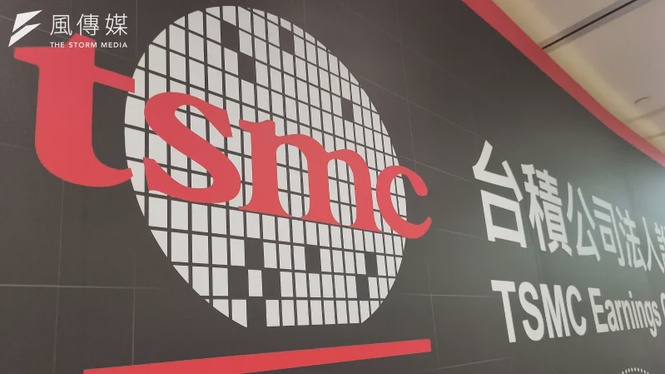
Taiwan occupies the most coveted position in the global AI supply chain. TSMC manufactures the advanced chips that power every major AI system, from Nvidia's data center GPUs to the custom silicon of Amazon, Google, and Microsoft. South Korea's SK Hynix has seized the high-bandwidth memory market that makes modern AI accelerators viable at scale. When the world's largest technology companies commit trillions to AI infrastructure, both countries have become irreplaceable.
But the question neither government has fully answered is the more consequential one: who, beyond the flagship companies, actually benefits?
Taiwan's Dual Economy and the AI Divide
Both Taiwan and South Korea share a structural reality that their AI-era headlines tend to obscure. In Taiwan, small and medium-sized enterprises employ approximately 9.19 million people — 79.8% of the total workforce — and contribute more than 40% of GDP. Yet these firms operate in a fundamentally different economic universe from TSMC, Foxconn, or Quanta.
South Korea's figures illuminate the same divide in sharper relief. According to OECD data, Korean SMEs employ more than 80% of the country's workers but generate productivity at roughly one-third the rate of large corporations. AI adoption tracks the same gap: companies with more than 250 employees report adoption rates of 63.3%, while firms with 50 to 249 employees lag at 27.4%.
The result is a dual-layer economy — world-class technology champions generating extraordinary revenue at one end, and a vast employment base of smaller enterprises struggling with aging workforces, skill shortages, and intensifying competition from China at the other.
What South Korea's AI Voucher Program Proved
South Korean President Lee Jae-myung is pursuing an ambitious response. At an AI summit in San Francisco in July, he announced plans to open South Korea's AI ecosystem to global partners, with Samsung, SK Group, and U.S. technology firms simultaneously unveiling combined AI-related commitments of $950 billion. The government has separately outlined more than $576 billion in planned investment across chips, physical AI, and data centers, with a declared goal of ranking among the world's three leading AI powers.
Political scientist Joseph Yi of Hanyang University, writing in Nikkei Asia, compared Lee's approach to former President Park Chung-hee's industrial strategy — calling it an "AI-era Park Chung-hee coalition." In the 1960s and 70s, Park channeled state capital into steel, petrochemicals, shipbuilding, and electronics, creating the chaebol conglomerates that reshaped South Korea's economic trajectory. Lee is executing a structural analog for the AI age.
Yet South Korean policymakers are grappling with the same hard limit: making Samsung and SK Hynix stronger is necessary but not sufficient. The government's AI Voucher Program — which subsidizes AI adoption costs so that smaller firms can identify solutions suited to their own operations — points toward a more inclusive model. More than 1,000 SMEs that participated in the scheme recorded average productivity gains of 37.6% in 2020; by 2023, that figure had risen to 45%.
The lesson is this: the most economically significant impact of AI may not reside in the most advanced chips. It may reside in a manufacturer catching equipment failures earlier, a logistics firm optimizing its delivery routes, or a trading company automating documentation and compliance. Multiplied across hundreds of thousands of enterprises, those gains compound into a national productivity transformation.
The Question Taiwan's AI Strategists Are Not Asking
Taiwan's public debate about AI remains almost entirely focused on TSMC's leading-edge processes, CoWoS packaging capacity, Nvidia GPU allocations, and the AI server assembly volumes flowing through Foxconn, Quanta, and Wistron. These achievements are consequential. But they represent only one dimension of a two-dimensional problem.
The question conspicuously absent from national strategy discussions is this: what do Taiwan's 9.19 million SME workers actually receive from the AI revolution?
If the dividends accrue primarily to TSMC shareholders, technology sector compensation, and government tax revenue, Taiwan ends up with prosperity that is highly concentrated — and self-reinforcing in that concentration. Well-capitalized corporations gain first access to AI talent, computing resources, and automation tools. Smaller firms, constrained by capital and data infrastructure, fall further behind. The productivity gap widens.
The worst-case scenario is a Taiwan that hosts the world's most advanced semiconductor fabs while large portions of its broader economy continue operating on spreadsheets, paper records, and the tacit knowledge of experienced workers approaching retirement.
China's Ascent Leaves No Room for Complacency
The urgency of this challenge is compounded by China's manufacturing trajectory. The competitive advantages Taiwan's SMEs have historically leveraged — accumulated technical expertise, dense supply chain networks, quality reliability — are under sustained pressure as Chinese firms advance into electric vehicles, batteries, industrial drones, machinery, shipbuilding, and mature-node semiconductors.
Joseph Yi uses the phrase "industrial rot" to name the risk that emerges when semiconductor profits mask stagnation elsewhere. A country can simultaneously host world-leading chip manufacturers and watch its broader industrial base quietly erode under competitive pressure it is too distracted to address. Taiwan's tooling companies, plastics manufacturers, component suppliers, and business service providers face variants of this pressure today. TSMC's success does not shield them.
TSMC's revenue lifts GDP. The productivity of 9.19 million SME workers determines what most Taiwanese people actually earn.
The Missing Half of Taiwan's AI Strategy
The policy implication is straightforward. Taiwan's AI strategy must evolve from "how many AI chips can we manufacture for the world" toward "how do we use AI to raise productivity across the whole economy."
A 50-person machine-tool manufacturer does not need to train a large language model. It needs AI-assisted production scheduling, predictive maintenance, inventory optimization, and defect detection. A 30-person trading firm needs AI to streamline quotations, documentation, and client communications. Accounting practices, logistics operators, construction firms, healthcare providers, and retailers all contain workflows that AI can materially transform — at a fraction of the capital cost of a new fab.
Taiwan can draw directly on South Korea's AI Voucher experience: a program in which government subsidizes adoption costs, allowing individual firms to identify solutions matched to their own operations. Complementary measures could include shared AI platforms designed around the needs of specific industrial clusters, structured partnerships between universities, research institutes, and traditional manufacturers, and retraining subsidies for workers in sectors undergoing automation.
There is also a fiscal logic. The AI and semiconductor boom is already expanding Taiwan's tax base significantly. Reinvesting a portion of those revenues into SME AI transformation is not redistribution in the conventional sense — it is a compounding bet on national productivity. Each SME that raises its efficiency by 20% or 30% contributes to a decade of sustained wage growth. The payoff dwarfs a one-time cash transfer.
TSMC's Triumph Must Become Taiwan's Triumph
In the AI era, the metrics of national competitiveness — GPU allocations, fab capacity, data center investment, technology company valuations — are seductive. They are also incomplete. A nation's long-term competitive position is determined by the productivity of its whole economy, not its most celebrated enterprise.
Taiwan has demonstrated an exceptional capacity to build world-class companies. The harder challenge — and the one that will define whether the AI era genuinely transforms living standards for most Taiwanese — is diffusing that technology and the wealth it generates across the broader society.
TSMC can manufacture the world's most advanced AI chips. Foxconn, Quanta, and Wistron can assemble the servers. But if a decade from now the 9.19 million people employed by Taiwan's SMEs remain trapped in low-productivity, low-wage work, facing labor shortages and Chinese competition without the tools to respond, Taiwan will have completed only half an AI revolution.
The measure of success is not a leading-edge node. It is a machine-tool factory in Changhua, a component supplier in Taichung, a logistics company in Taoyuan — each more productive, more competitive, and better able to pay decent wages because AI reached them too.
When that happens, we can say TSMC's AI dividend has finally become Taiwan's AI dividend.
Social Media Links & Editor Tag - Penny