
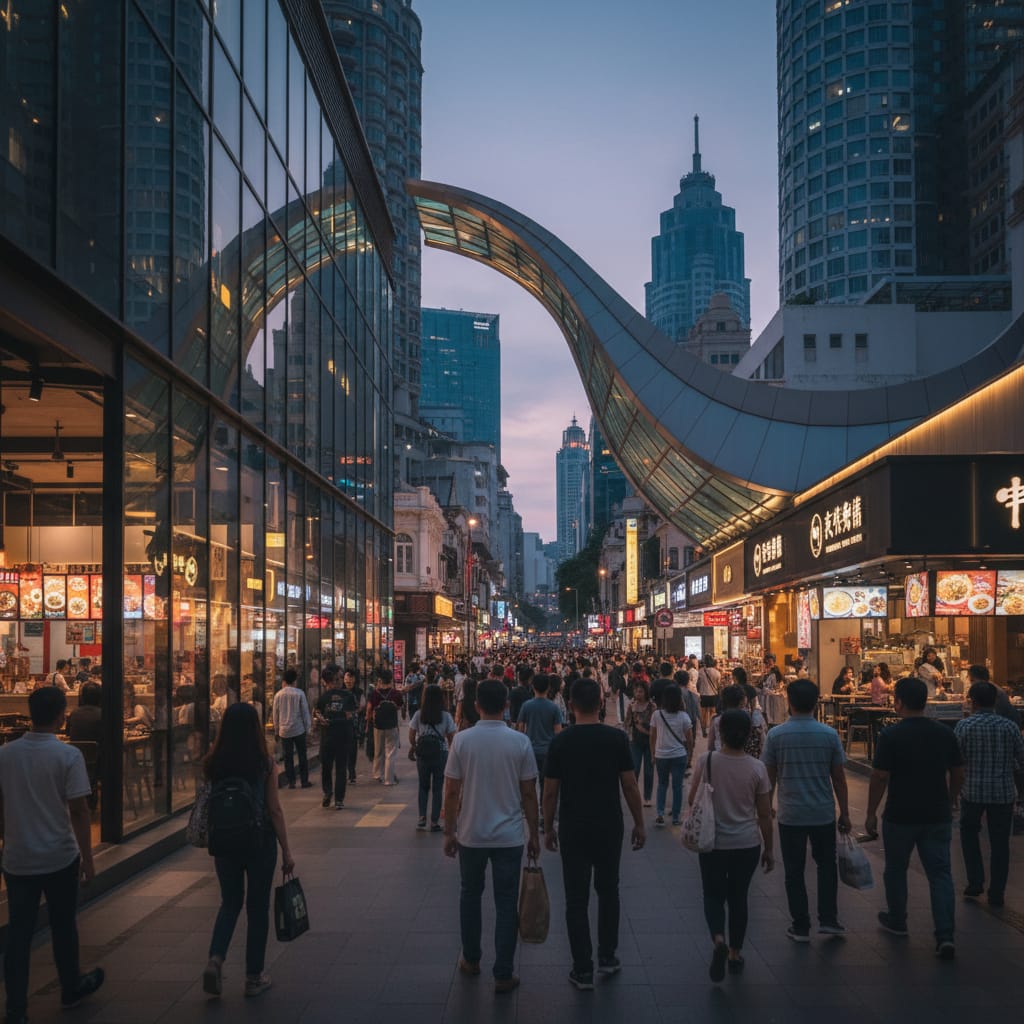
"The Culinary Tsunami: Mainland Waves on Malaysian Shores”
A culinary tsunami is sweeping across Malaysia. Fueled by visa‑free entry, Mainland Chinese investors are flooding the food and beverage sector, reshaping neighborhoods and threatening to drown out local flavors.
Visa‑Free Floodgates Open
The visa‑free policy has become a wide‑open sluice gate. Mainland entrepreneurs surge through it like a river breaking its dam, planting bubble tea stalls, hotpot restaurants, and noodle shops in every corner. Their signboards glow like lanterns carried by the current, signaling a new tide of commerce.
Old Currents: Mixue, Lanzhou Ramen, Bingxue
This wave did not begin yesterday. Chains like Mixue, Lanzhou Ramen, and Bingxue were the early ripples, testing the waters long before visa‑free travel. They proved that Malaysian palates could be enticed by snow ice desserts and hand‑pulled noodles. These pioneers are the seasoned sailors who set sail before the storm, anchoring the fleet that now follows.
Singapore’s Chinatown: A Warning Beacon
Across the straits, Singapore’s Chinatown offers a cautionary tale. Mainland businesses nearly engulfed the district, their presence like a rising tide threatening to wash away heritage shops and dialect associations. If Singapore’s Chinatown was almost submerged, Malaysia’s own Chinatowns—Petaling Street, Penang, Johor Bahru—may soon feel the same undertow.
Sri Petaling Kopitiams Swept Aside
In Kuala Lumpur’s Sri Petaling, the tsunami is already breaking. Traditional kopitiams, once the anchors of community life, are being uprooted. Investors pay two or three times the rental, their money a tidal wave drowning modest local earnings. The frothy laughter of teh tarik, the fiery dance of cha kui tiao, and the comforting embrace of wantan mee are fading like incense smoke in the wind.
Mainland Chinatown Emerges
Losing the Local Soul
For residents, the danger is cultural erosion. Teh tarik is more than a drink; it is the frothy laughter of mamak stalls. Cha kui tiao is not just noodles; it is the fiery rhythm of night markets. Wantan mee is the Sunday morning embrace of comfort. If these flavors vanish, the neighborhood’s heartbeat risks being drowned beneath foreign waves.
A Fairer Tide
Yet the tsunami need not be destructive. If Mainland businesses employ local workers, source supplies from Malaysian vendors, and compete on fair terms, the tide can become a river of renewal. Imagine dumpling shops hiring local youths, hotpot restaurants buying vegetables from Cameron Highlands, bubble tea chains renting at sustainable rates. Then the wave becomes a bridge, not a flood—a confluence of rivers where both sides drink from the same stream.
Between Flood and Fusion
The arrival of Mainland Chinese food chains is both danger and opportunity. It threatens to wash away kopitiams and beloved flavors, yet it also carries the possibility of collaboration. Malaysia must decide whether to build levees of regulation or bridges of cooperation.
For in every flood lies the chance of renewal, and in every wave the possibility of harmony—if only the currents are steered with wisdom.
moykokming@gmail.com
Moy Kok Ming (moykokming@gmail.com) is a content creator under the Newswav Creator programme, where you get to express yourself, be a citizen journalist, and at the same time monetize your content & reach millions of users on Newswav. Log in to creator.newswav.com and become a Newswav Creator now!
The User Content (as defined on Newswav Terms of Use) above including the views expressed and media (pictures, videos, citations etc) were submitted & posted by the author. Newswav is solely an aggregation platform that hosts the User Content. If you have any questions about the content, copyright or other issues of the work, please contact creator@newswav.com.