.png)

By Datuk Seri Ti Lian Ker
TUN Dr Mahathir Mohamad now says he has “failed to unite the Malays”. But the larger tragedy is not merely the failure to unite Malays, but it is his failure to unite Malaysians.
He had 22 years as Prime Minister during his first tenure, followed by another 22 months after the 2018 election.
Few leaders in modern history were given such a long and dominant opportunity to shape a nation’s identity, institutions and direction.
Yet instead of building a stronger Malaysian identity that transcended race, his politics repeatedly revolved around dividing the country into “Malays” and “non-Malays”, “pendatang” and “Bumiputera”, insiders and outsiders.
For decades, Malaysian politics under Mahathir’s influence normalised the idea that every national issue had to be viewed through a racial lens.
The supposed economic cooperation became a competition - Malay versus Chinese.
Political inputs are seen as criticisms and attacks on Malay rights and powers.
Institutional weaknesses were framed as threats from non-Malays rather than a recognition of failures of governance. Instead of reducing racial anxieties, the political culture became increasingly dependent on them, and the Chinese became the “bogeyman” to unite Malays during his tenure.
Even after returning to power in 2018 under the banner of reform and a “New Malaysia”, the old narrative remained unchanged.
Rather than steering the country away from racial politics, he continued speaking almost exclusively about Malay unity, Malay dominance, Malay threats and Malay survival.
He shortchanged Datuk Seri Anwar Ibrahim as the incoming Prime Minister for a second time by organising a “Malay Unity” government via his failed Sheraton Move.
The first was when he sacked Anwar as the Deputy Prime Minister and expelled him from Umno, leading to the biggest divide among Malays in our political history.
In fact, the majority of the Malays turned against him in the 1999 general election.
Ironically, many of the divisions among Malays today were also consequences of political fractures that happened under his own leadership.
Umno split under his tenure. Semangat 46 emerged from the crisis of the late 1980s.
Later came Bersatu, Pejuang and various Malay-centric alliances that further fragmented the Malay political landscape. Even his critics now openly argue that he himself contributed significantly to Malay disunity.
A generation of Malaysians grew up under a political environment where racial suspicion became institutionalised.
Non-Malays were often reminded that they were tolerated rather than fully embraced as equal stakeholders in the nation.
At the same time, Malays were constantly told they were under existential threat despite holding political dominance for decades.
That formula may have secured political longevity, but it also left behind deep psychological and societal divisions.
Malaysia today still struggles with the same racial insecurities because the country never truly moved beyond race-based politics during the years when it mattered most.
The opportunity to create a genuinely united national identity existed, and no leader had more power or time to pursue it than Mahathir.
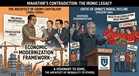
His legacy, therefore, is not merely one of economic modernisation or mega-projects.
It is also the legacy of a nation conditioned to think of itself through racial fault lines first, and as Malaysians second. – May 8, 2026
Datuk Seri Ti Lian Ker is a former Senator, deputy minister and MCA vice-president
The observations reflect the writer's personal insights and do not necessarily represent the official stance of The Vibes.com