

Tun Dr. Mahathir Mohamad, a figure whose deceptive legacy in Malaysian politics oscillates between praise and controversy, has reignited a divisive discourse on identity politics, this time targeting Chinese language signage in public spaces. The former Prime Minister’s assertion that the prevalence of Chinese signboards in Kuala Lumpur shopping complexes undermines Malaysian identity has sparked widespread criticism, including a pointed rebuttal from Miri MP Chiew Choon Man.
A Grudge Born of Declining Influence?
Tun Mahathir’s recent remarks seem less about national identity and more about a personal battle to maintain relevance. His contentious statements often serve to polarize rather than unite, suggesting an enduring grudge against a populace that he perceives has "dethroned" him. His critics argue that this rhetoric stems from an inferiority complex tied to his Indian roots and his persistent need to out-Malay even the "purest" Malays to cement his political persona.
Instead of fostering unity, Tun Mahathir has often exploited racial and cultural tensions to position himself as a populist leader. Observers note that his actions do little to address pressing national concerns, focusing instead on creating unnecessary controversies that serve as distractions from his diminishing influence and a legacy increasingly seen as divisive.
Unity in Diversity: A Rebuttal from Miri MP
Chiew Choon Man, a PKR lawmaker and MP for Miri, countered Tun Mahathir’s claims by highlighting the positive role of Chinese language signage in Malaysia’s multicultural framework. According to Chiew, these signboards are not an erosion of identity but a testament to Malaysia’s rich cultural tapestry and the contributions of its Chinese community to the nation’s economy.
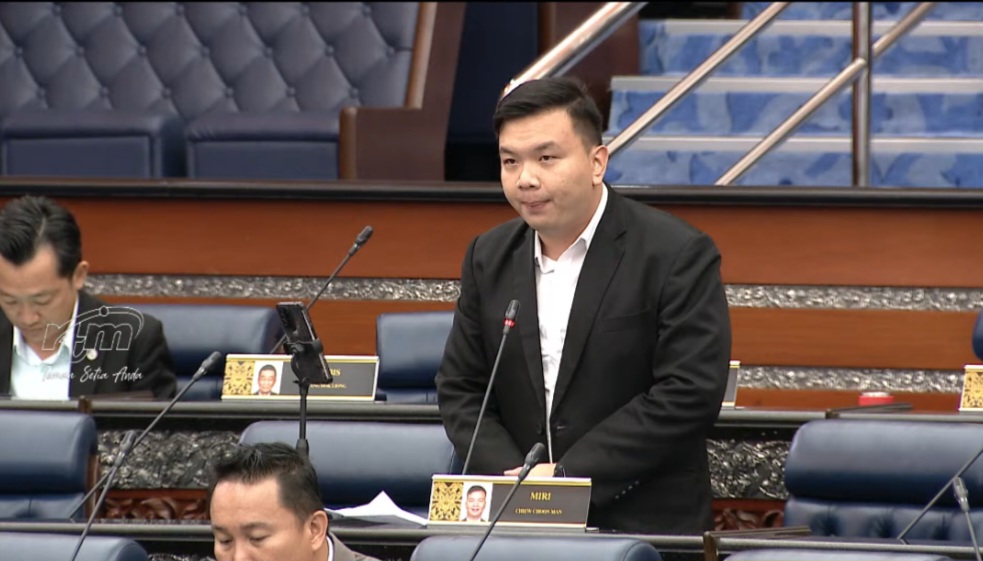
“Malaysia is built on a foundation of cultural coexistence. Chinese businesses, and the visibility of their language, reflect the vibrancy and success of these enterprises. They do not pose a threat to our identity but showcase the strength of our multicultural society,” Chiew said.
He further emphasized that while Malay remains the national language, the use of multiple languages in public spaces is indicative of Malaysia’s globalized and inclusive nature, much like how English is widely accepted in other countries.
A Nation Divided by Ego?
Mahathir’s critics argue that his rhetoric is less about national interest and more about personal grievances. His inability to gracefully step back has made him a divisive figure, drawing fire for what many perceive as attempts to punish Malaysians for rejecting his leadership. By perpetuating identity-based debates, he undermines efforts to build a united Malaysia.
At a time when the nation faces challenges requiring collective resilience, Mahathir’s focus on superficial issues like signboards seems out of touch. Malaysia's strength lies in its diversity where a richness that should be nurtured, not exploited for political gains. As leaders like Chiew Choon Man call for unity, Mahathir’s divisive approach risks leaving him on the wrong side of history.
In the end, Mahathir's enduring pursuit of attention might only serve to cement his controversial legacy as a leader who, in his twilight years, chose to divide rather than unite.
By: Kpost
Information Source: Sinardaily
Kpost is a content creator under the Newswav Creator programme, where you get to express yourself, be a citizen journalist, and at the same time monetize your content & reach millions of users on Newswav. Log in to creator.newswav.com and become a Newswav Creator now!
The User Content (as defined on Newswav Terms of Use) above including the views expressed and media (pictures, videos, citations etc) were submitted & posted by the author. Newswav is solely an aggregation platform that hosts the User Content. If you have any questions about the content, copyright or other issues of the work, please contact Newswav.