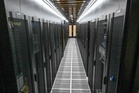
KUALA LUMPUR: Global turbine shortages are adding another hurdle to Malaysia’s efforts to meet the growing electricity needs of its expanding data-centre industry, said Investment, Trade and Industry Minister Datuk Seri Johari Abdul Ghani.
He said the government was pursuing a broader mix of energy sources, including renewables and battery storage, to strengthen electricity supply as demand from data centres and other industries continued to grow.
“Today, there is a slight delay because of turbine shortages all over the world. While waiting for the turbines to come for Tenaga Nasional Bhd (TNB), we are also developing our renewable energy, such as solar, batteries and hydro,” he said at AWS Cloud and AI Day in Kuala Lumpur today.
Johari said Malaysia could also explore using more of its natural gas domestically to generate electricity for data centres, rather than relying entirely on exports.
He said the growing demand for electricity presented an opportunity to create an additional domestic market for the country’s gas resources, which are currently exported under long-term supply agreements.
“Instead of selling the gas to other countries, we can sell it domestically. If we can use some of the gas we export to generate power for data centres, why not?” he said.
However, Johari stressed that the expansion of data centres must not compromise electricity supply to existing industries, which remain central to the country’s economic activity.
“We have to make sure that data centres do not take power away from the 27 or 28 industries that we have.
“These are the industries that we consider the pillars of our economy, and we need to protect them,” he said.
The minister emphasised that data centres were important infrastructure for the next phase of industrial development, particularly as businesses increasingly adopt artificial intelligence, robotics and other advanced technologies to improve productivity.
Malaysia has approved 117 data-centre projects, comprising 55 operational facilities, 19 under construction and 16 that have yet to begin construction.
Another 27 projects are at various stages of development and are expected to use off-grid electricity arrangements.
The projects could require between 23,000 megawatts (MW) and 23,500MW of electricity when fully developed, Johari said.
He said the government would be selective in approving further projects, with electricity and water availability among the key considerations.
The government has yet to decide on 24 new data-centre applications as it assesses whether electricity supply can accommodate the 117 approved projects without affecting other industries.
Johari said TNB would be consulted on supply adequacy and reserve margins before further approvals were considered.
“If we do not have sufficient power, we will look at off-grid options. For example, investors can bring in solar with battery storage,” he said in his recent parliamentary remarks.
Johari said investors must also demonstrate their ability to meet the electricity commitments associated with their projects.
Data-centre operators would be required to pay for the full electricity capacity allocated to them, even if they did not consume all of it.
Johari reiterated that data-centre investors would be required to provide at least 30% local content, covering areas such as consultancy, construction, engineering and procurement.
“When they come to build data centres, we require 30% local content. That means they have to use our consultants, contractors, engineers and procurement managers, and give Malaysian companies priority,” he said.
Johari said foreign investment was important because Malaysia could not finance all the infrastructure development on its own.
“The investors bring the capital, and we host them. We also benefit from the investment.”
He said the government wanted to ensure that these investments generated wider economic benefits, including opportunities for Malaysian businesses to participate in supply chains and develop capabilities in technology-related fields.
In H1’26, Malaysia approved RM218.5 billion in investments, an increase of 11.7% from the corresponding period last year.
Data-centre and cloud-computing projects accounted for RM95.8 billion, or about 44% of total approved investments, according to the Malaysian Investment Development Authority.
At the event, Johari officiated the launch of Amazon Web Services’ (AWS) Semarak AI Malaysia programme, which aims to equip government officers, businesses, students and communities with the tools and skills to develop their own AI solutions.
Under the programme, AWS is investing to provide its Amazon Quick AI tool up to 445,000 government officers.
GovTech Malaysia’s GovHub initiative, powered by AWS’s Kiro, will begin with a 500-developer pilot in 2026, with a target of reaching 4,000 developers by 2028.
The programme also includes a collaboration involving GD XCHANGE and VSTECS to provide eligible small and medium enterprises (SMEs) with six months of complimentary access to Amazon Quick and Kiro.
The initiative aims to onboard 10,000 SMEs by 2028.