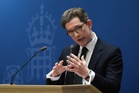
The UK has entered a "new era of national security" with a level of threat from foreign states last seen during the Cold War, the head of MI5 has warned.
Speaking after his annual speech at MI5 headquarters in London, Sir Ken McCallum said the security service was directing more resources to keeping Britain safe now than in the Cold War, warning that essential services such as banking, flights, and healthcare were at risk of being disrupted by adversaries, including Iran and Russia.
And he warned about the growing threat of artificial intelligence provoking real fear that terrorists could use the technology for warfare, and that new bioweapons could be developed.
Putting the public on guard, Sir Ken warned: “We have again entered a new era of national security”.
He called for a “whole-of-society effort” to face threats to national infrastructure, warning that hacks could disable people’s banking services, drones could disrupt flights, and cyber-attacks on hospitals could impact health treatment.
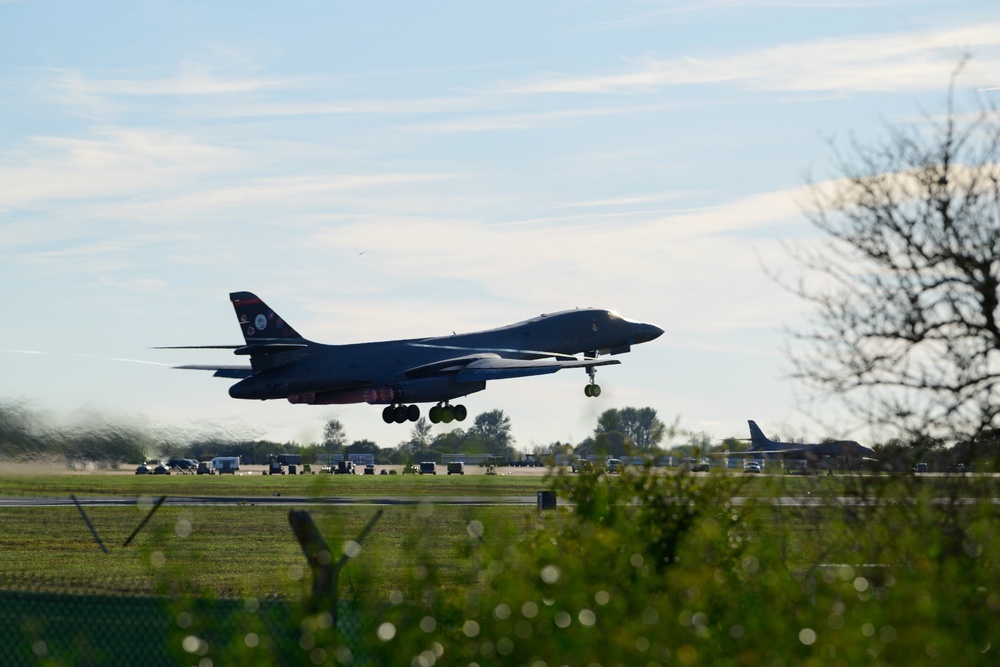
The MI5 director general said that the suspected terror plot against RAF Fairford in Gloucestershire, which prime minister Andy Burnham said was "almost certainly” directed by Iran’s Islamic Revolutionary Guard, was “not unique in the UK”, with Iranians seeking to expand their hybrid campaign against Britain this year.
In the past twelve months, MI5 investigations have led to more than 50 arrests in Iran-linked operations in the UK, and its state threats caseload has quadrupled in the past decade, he said.
Sir Ken added: “You might be surprised to know that in 2026, MI5 is devoting more resource to countering state threats than during the Cold War.”
He said that there have been dozens of arrests under the National Security Act in the three years since it came into force, with cases linked to Russia, Iran and China.
“Anyone tempted by apparently easy cash from shady overseas taskmasters might want to bear this in mind,” Sir Ken warned.
He said that Russia remains “aggressor number one”, with Russian military and intelligence services “once again escalating their attempts at hybrid warfare” citing a cyber-attack on Polish energy infrastructure and an attempt to use a drone to blow up a cargo plane in Germany.
Sir Ken also called out Iranian use of “criminal proxies to try and intimidate oppositionists, Iranian media organisations and Israeli sites”.
Addressing journalists after his speech, Sir Ken said: “The Iranians in the UK are principally using a modus operandi of hiring criminals to do their biding. Their level of capability is really a function of the sophistication level of those criminals”. But he warned that the UK should be readying itself for more aggressive plots from the Iranian security services.
Speaking about the ongoing threats from terrorism, Sir Ken said that MI5 is still having to respond to attempts from radicalised Islamists to carry out mass casualty attacks in the UK. And an increase in extreme right-wing terrorism, with a growing number of cases where “extremist versions of anti-immigration and anti-Muslim grievance are tipping into terrorist intent”.
He cited a case where, a few months ago, MI5 was investigating a radicalised extreme right-wing 13-year-old in the UK. This investigation “generated insight that enabled one of our international partners to prevent a lethal attack on their soil”, Sir Ken said.
Sir Ken also announced that MI5 has launched an AI Threat Assessment Centre (AITAC) this year, which will produce assessments of the risks posed by the new technology.
Readying the public against the impacts of the threats faced in 2026, Sir Ken said: “Our interconnected financial systems, energy grids, supply chains and manufacturing bases, designed during simpler times for maximum efficiency, are vulnerable to malicious disruption and coercion.
“We’ve seen hackers attacking energy and water infrastructure, including in the US. European defence companies targeted by arson attacks and even violent intent. Here in the UK, a destructive cyber attack on an energy generator.
“It would be comforting to think of all of this as someone else’s problem. But a hack of your banking app could lock you out of your accounts. A drone on an airport runway could leave you stranded far from home. A cyber-attack on your local hospital could delay your treatment”.
Asked whether Britain will be able to get back to a less fractious time, Sir Ken said: “Our planning assumption is not that this is a temporary blip, and we will all be back to normal by next Christmas.
“We are planning on the basis that, in effect, the period of comparative geopolitical stability following the end of the Cold War has sadly ended and we are back in a more contested era now. We are planning on the basis that these risks will endure."
Read MoreAI could give terrorists access to bioweapons if guardrails fail – MI5 chief
Miliband acknowledges ‘difficult’ relations between US and Ukraine’s allies
Zelenskyy says Ukraine received no intelligence from partners on incoming missile strike on Kyiv
Andy Burnham will be the man to take Britain back into the EU, Neil Kinnock says
Handyman accidentally made mustard gas and caused university gym evacuation
Royals to meet survivors to mark disaster’s 60th anniversary