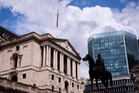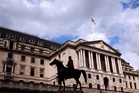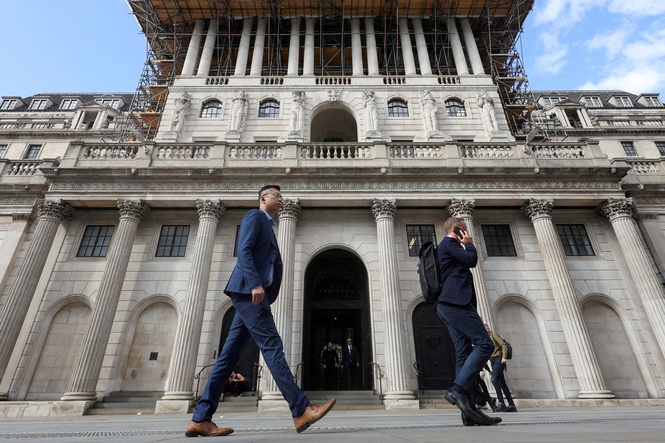
The Bank of England has hiked interest rates to four per cent from 3.75 per cent, marking the first rise in more than three years.
The forecast showed that inflation will rise to a peak of around five per cent next year, compared with a previous prediction of 3.2 per cent.
Rate-setters tightened monetary policy in a bid to tackle rising inflation in the UK economy. This is the first time that the central bank increases borrowing costs since August 2023.
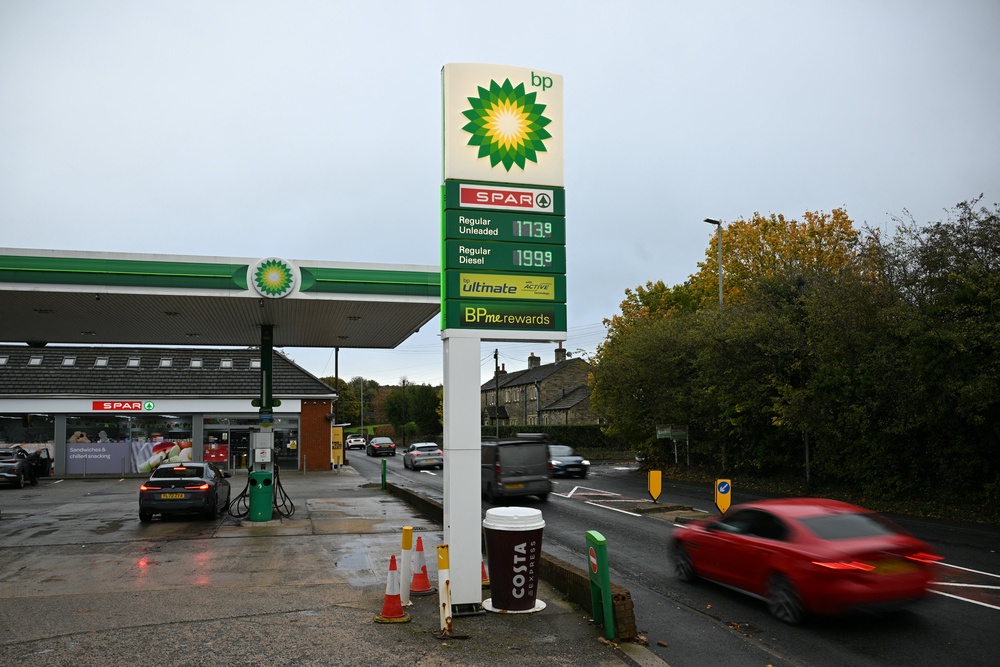
The conflict in the Middle East has helped push CPI further away from the Bank’s two per cent target rate, with a surge in petrol and diesel prices a major driving force.
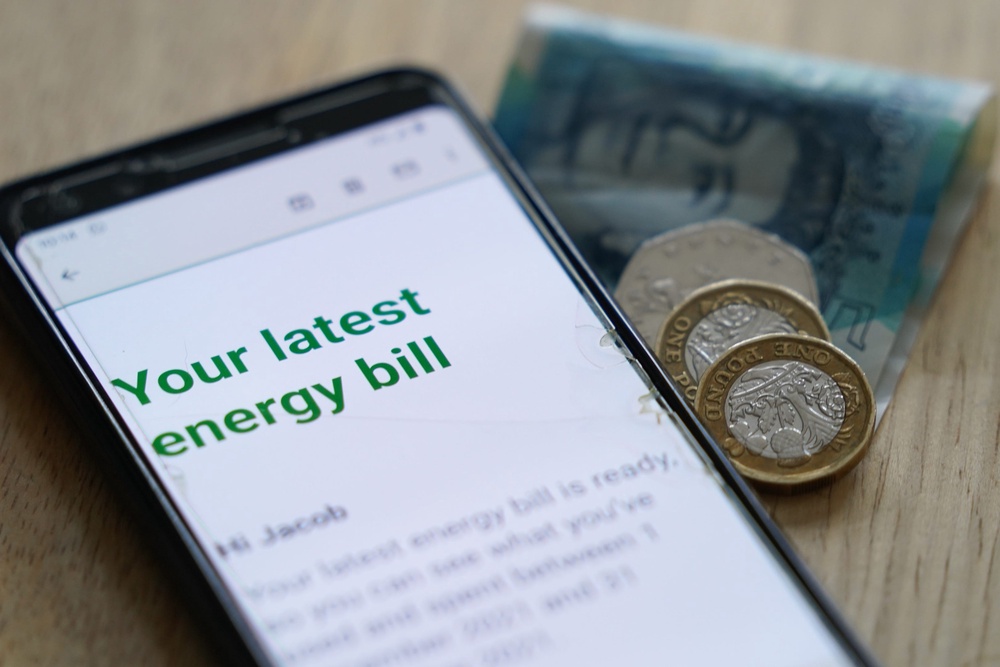
And inflation is expected to be pushed higher this winter after Ofgem’s energy price cap rose by 3.6 per cent for a typical household on October 1 and is forecast to jump by a further 22 per cent in January.
Nathan Emerson, chief executive at Propertymark, said: “While these decisions are never straightforward, the Bank of England must carefully balance the need to control inflation against the wider impact that borrowing costs can have on households.”
Key Points
- Bank of England confirms hike to 4% in first rise since 2023
- Expert analysis from our Business and Money Editor
- Analysis: What does the rates increase mean for households?
- UK's midcap index at record high
- Bank of England have a balancing act ahead, Propertymark CEO says
'Path ahead remains uncertain,' JP Morgan strategist says
14:00 , Maryam Zakir-HussainScott Gardner, investment strategist at JP Morgan Personal Investing said: “The path ahead remains uncertain with much depending not only on how oil trades but also on natural gas prices which have risen sharply over the past few months.
“The energy price cap is expected to rise significantly again in January, delivering another blow to household finances. Worryingly, there are tentative signs of second round inflation effects in the UK economy as we have seen an acceleration in goods and services inflation.
“The Bank will be wary of this but also conscious of being too aggressive with rate hikes which could stunt the positive UK economic growth we’ve seen of late.
“There is a further question mark over how much the Bank’s actions can combat inflation when this latest bout is being driven by global energy prices and the instability in the Middle East."
There is a 'significant amount of inflation pressure in the pipeline,' Andrew Bailey says
13:45 , Maryam Zakir-HussainThe Governor of the Bank of England has said it was “encouraging news” to see oil and gas prices fall during the US midterm elections but that it would not have changed the central bank’s decision to raise interest rates.
Andrew Bailey said: “We’ve seen encouraging news in the past 48 hours.
“But there is already a significant amount of inflation pressure in the pipeline.”
He said Ofgem’s household energy price cap is still likely to surge from January because it is based on the prices of wholesale oil and gas from recent weeks.
Mr Bailey said: “The best thing that can happen is to resolve the conflict in the Middle East; there’s no question about it.”
Director of the National Institute of Economic and Social Research responds to hike
13:30 , Maryam Zakir-HussainDavid Aikman, director of NIESR, said: “Today’s widely-expected rate rise from the Bank of England is an important step in responding to what increasingly looks likely to be another prolonged rise in the cost of living with the Bank’s own forecasts suggesting inflation will be around 5 per cent by the middle of next year.
“But the energy shock has persisted for longer than we expected and growth has been stronger, leaving less spare capacity in the economy. With signs that household and firms’ inflation expectations are not consistent with the 2 per cent target, we now judge that the Monetary Policy Committee looks behind the curve.
“While the outlook depends crucially on what happens in the Middle East – which is beyond the control of the Bank of England – it looks likely that inflation will rise well above 4 per cent early next year, a key period for pay settlements. Acting decisively in the coming months is key to reducing the risk that the current bout of high inflation becomes embedded.”
Chief economist at Santander reacts to interests rates hike
13:15 , Maryam Zakir-HussainFrances Haque, Chief Economist at Santander UK said: "The key question is whether today's decision is a precautionary move or the start of further increases from the MPC. With energy prices facing further increases, inflation expectations rising and wage growth stagnating at levels above those consistent with the 2% target, it certainly looks as if further hikes will feature in 2027.
“However, the question about how the economy reacts to all of this will be critical; the resilience it has shown so far has been remarkable, but the tension is mounting. For the time being, homeowners should prepare for borrowing costs to remain elevated.”
13:00 , Maryam Zakir-HussainAnna Macdonald, investment strategy director at Hargreaves Lansdown said: "The BoE needs to stop inflation becoming embedded through 'second-round effects', such as higher wage demands feeding into business costs and then further price rises.
“It’s also hard to square a 'breathing room' Budget with higher interest rates taking some of that room away. Measures intended to ease pressure on household finances can feel less generous if borrowing costs rise at the same time.
"That said, a change in Bank Rate doesn't feed straight through to every borrower."
Household energy bills set to be a particular driver of inflation
12:49 , Maryam Zakir-HussainThe projected rise in the cost of living comes despite efforts from the government to support households in last week’s budget.
Bank research indicated that measures from the Budget, such as the removal of VAT from household electricity bills, are likely to reduce the inflation rate by around 0.25% in the second quarter of next year.
The inflation spike is primarily driven to higher energy prices, linked to the intensification of the conflict in the Middle East in recent months.
Household energy bills are set to be a particular driver of inflation, with expectations that regulator Ofgem will increase its price cap for household bills by almost 25% to an average annual bill of £2,150 in January.
Today's hike is not likely to be the last increase, governor says
12:34 , Maryam Zakir-HussainAll members of the nine-person Monetary Policy Committee (MPC) voted for a hike – although one member, Catherine Mann, preferred a bigger jump of 0.5 percentage points.
The MPC said it needed to take action to control rising inflation in the UK economy, which was being pushed higher by the impact of the US and Israel’s ongoing conflict with Iran on global energy and fuel prices.
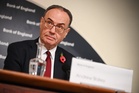
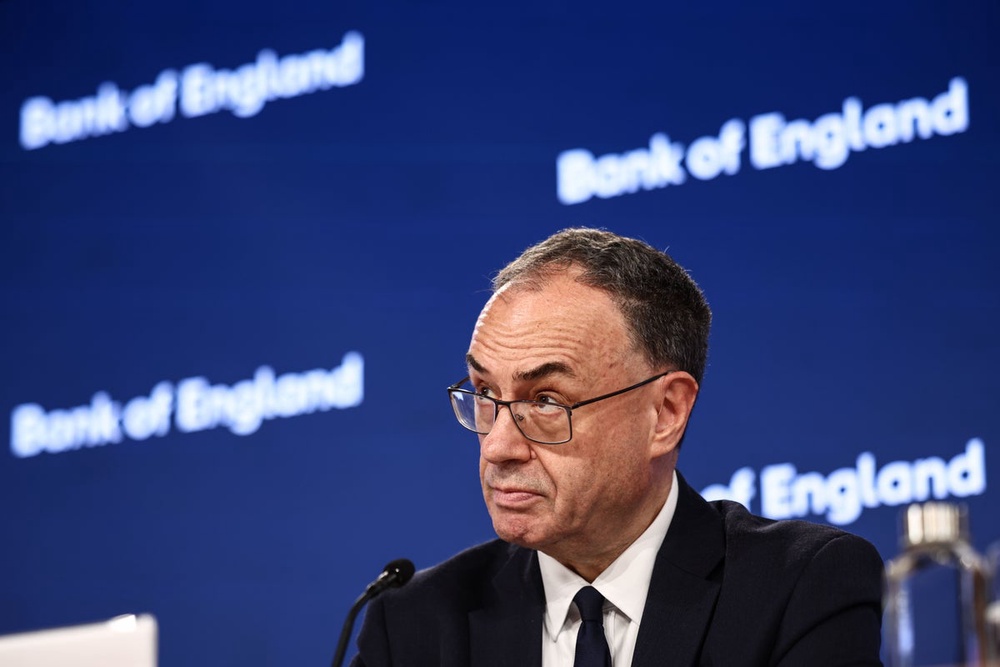
Governor Andrew Bailey said: “There is now enough inflationary pressure in the pipeline caused by the rise in energy prices, that an increase in Bank rate is warranted.
“Today’s increase shouldn’t be seen as the first in an inevitable long sequence of hikes.
“But, unless the conflict in the Middle East is resolved, neither does it seem likely to be the last increase.”
Economist calls interest rate an 'act of economic self-harm'
12:24 , Maryam Zakir-HussainTheo Harris, economist at NEF, said:“Raising interest rates risks damaging the economy while doing little to fight the inflation we face, which is driven by international fossil-fuel prices.
“This act of economic self-harm is the result of inflation management having been entirely outsourced to the Bank of England, with the interest rate as its only tool.
“It should be a top priority for the government to move towards better coordination of monetary and fiscal policy with the Bank, otherwise the prime minister will find that his ambitions are continually undermined by unnecessarily high borrowing costs."
Analysis: What does the rates increase mean for households?
12:17 , Karl MatchettOur Business and Money Editor writes:
For households, there are two immediate considerations that could change: one on your mortgage, one on on your savings.
If you have a fixed-term mortgage on your home, then all is as-you-were, that's the point of them - but if you are on either your bank's SVR or a tracker mortgage, then rate rises are incoming and your monthly repayments will go up.
As Rob Morgan, chief investment analyst at Charles Stanley Direct points out, "households with tracker mortgages or coming off a fix will be facing the full force of the storm."
However, he also points out that "those with more cash than borrowing are in a better position to weather this difficult period" and that's because the other side of the interest rates see-saw is that when the BoE increases them, you can earn more on your cash.
It's really important to ensure you are earning above the rate of inflation on your savings, and lots of places are offering 4.5 per cent and higher even before this announcement.
Chase have already confirmed their easy access account is immediately going up to 4.75 per cent, for example - and others will follow as the underlying rate on easy access accounts typically tracks the base rate, at least in part.
Not all banks share the extra income equally though, so check yours now and make sure your savings are in the best spot.
Bank of England have a balancing act ahead, Propertymark CEO says
12:13 , Maryam Zakir-HussainNathan Emerson, CEO at Propertymark: “While these decisions are never straightforward, the Bank of England must carefully balance the need to control inflation against the wider impact that borrowing costs can have on households.
“Last week’s Autumn Budget acknowledged several important consumer concerns, including rising energy costs and the ongoing challenges facing many first-time buyers.
“Measures aimed at addressing some of these pressures are focused on stability, particularly where they could help improve access to homeownership and ease the long-term financial burden on households. Over the coming months, much will depend on how inflation and consumer confidence evolve.”

Analysis: Margin of agreement 'even bigger than anticipated'
12:05 , Karl MatchettOur Business and Money Editor writes:
The hike is as expected - but the margin of agreement is even bigger than anticipated.
A vote of 8-1 clearly signals this was a required step from the BoE, but the single vote wasn't for a hold, it was for a double bump, straight up to 4.25 per cent.
The committee are keeping the wording in place for taking each vote as it comes and not pre-empting future rate rises, and added there "remains limited evidence of knock-on effects on other prices and wages" from inflation caused by the Iran war.
Bank of England confirms hike to 4% in first rise since 2023
12:03 , Maryam Zakir-HussainThe Bank of England has hiked interest rates to four per cent from 3.75 per cent, marking the first rise in more than three years.
Rate-setters tightened monetary policy in a bid to tackle rising inflation in the UK economy. This is the first time that the central bank increases borrowing costs since August 2023.
UK's midcap index at record high ahead of Bank of England rate call
11:53 , Maryam Zakir-HussainBritain's midcap FTSE 250 index hit a record high and the blue-chip FTSE 100 rose to a near three-month peak on Thursday, boosted by bank stocks ahead of the Bank of England's policy decision.
The FTSE 100 index (.FTSE), opens new tab rose 0.5% to 10,888.64 points by 1034 GMT, while the FTSE 250 (.FTMC), opens new tab climbed 0.6% to its all-time high.
It comes as the Bank of England is widely expected to deliver a 25-basis-point hike later today, its first rate increase in three years, as inflation pressures linked to the US-Israeli war on Iran mount
Ben Nichols, CEO of RAW Capital Partners has said there will not be be a direct and immediate reaction on mortgage rates from a hike today.
“This was widely expected. Inflation is creeping ever higher, driven largely by energy prices and the conflict in the Middle East, and there is still some volatility in the bond market, so the Bank had to act. But there is no need to blow this base rate hike out of proportion; lenders priced this in many weeks ago, so today's decision will not necessarily translate into any further upward movement in fixed-term rates.
"More positively, the longer-term economic outlook seems to have improved slightly, and with the Budget having come and gone, there is a little more stability across the property and mortgage markets. This ought to provide greater certainty, allowing borrowers to move ahead with a little more confidence. As lenders, we have to be ready to respond in kind, supporting brokers and borrowers through pragmatism, flexibility and, when necessary, speed."
Expert analysis from our Business and Money Editor
11:17 , Karl MatchettAnother vote to hold would be nothing short of shocking today, so beyond the actual lifting of the Bank Rate to four per cent, there are a few things we need to watch out for.
Firstly will be the vote numbers.
Analysts have been split over the past few weeks, on whether we'd get a 6-3 or a 7-2 - but more seem to be leaning towards the latter.
The tone around the votes, the reasons laid out by the MPC members, will be just as key: it won't just be about why they are raising them today, but about the risks they see in the coming months regarding inflation and the wider economy.
Today's outcome won't just shape a hiked base rate, it will also impact the pound and the bond markets.
Millions in UK set for higher mortgage costs next year as interest rate rise imminent
10:45 , Maryam Zakir-HussainHouseholds in Britain are bracing themselves as the Bank of England is looking set to raise interest rates - and it will mean millions of households face higher mortgage costs next year.
The Monetary Policy Committee (MPC) meet to vote on Thursday, with analysts widely set on expecting a hike from 3.75 per cent to 4 per cent - the first time the Bank would have raised rates in more than three years.
And with 2.3m households in the UK set for a mortgage renewal across the course of 2027 - nearly half a million homes more than did so this year - it will mean a particularly big jump for those who secured five-year fixes in the first half of 2022, just as interest rates started to run higher in the wake of Russia’s invasion of Ukraine.
Millions in UK set for higher mortgage costs next year as interest rate rise imminent
What will the rates hike mean for homeowners?
10:27 , Maryam Zakir-HussainJinesh Vohra, chief executive officer of free mortgage app Sprive, said: “With the Bank of England widely expected to raise the base rate, homeowners face the prospect of another increase in borrowing costs at a time when household budgets are already under pressure. This will be particularly unwelcome for the millions facing the end of a fixed-rate deal over the coming year, who could find themselves refinancing onto significantly more expensive mortgages.
“While lenders are competing hard for business, homeowners shouldn’t assume that competition alone will protect them from higher mortgage costs. Those coming to the end of a fixed deal need to start reviewing their options early, rather than leaving it until the last minute and risking being pushed onto a more expensive rate.
“It’s also a reminder that homeowners need to look at what they can control. Overpaying, even by relatively small amounts, can reduce the outstanding mortgage balance and the interest paid over the life of the loan. For households already feeling the squeeze, finding extra money each month isn’t always realistic. That’s why using cashback from everyday shopping to make additional mortgage payments can be a useful way to chip away at the balance without putting further pressure on monthly budgets.
“Homeowners can’t control the Bank of England’s decisions or where mortgage rates go next, but they can take steps to make their mortgage more manageable. The sooner they start, the more they could save over time.”
November rate hike looks like a 'done deal,' economist says
10:20 , Maryam Zakir-HussainAlexander Harvey, UK economist for Oxford Economics, said a November rate hike looks to be a “done deal” for the committee, which will be responding to higher oil and gas prices.
“So far, two factors have been central to the MPC’s decision-making since the outbreak of the conflict in the Middle East: the scale and duration of the energy price shock, plus the extent of any second-round inflation effects from elevated energy prices,” he said.
“These factors will continue to dominate the outlook for Bank rate.”
He said the key thing economists will be looking out for is any signal from the Bank as to where interest rates could go from here, with the financial markets expecting further hikes into 2027.
What could happen if BoE increases interest rates?
10:18 , Maryam Zakir-HussainCommenting on the expected interest rates hike, Ellie Henderson, an analyst for Investec, said: “We imagine that many committee members’ patience with the recent rise in inflation has worn thin.
“The longer energy prices remain elevated, the greater the risk that a temporary price shock becomes more permanent; a ‘risk management’ hike could guard against this.”
She cautioned that producers might “not be willing or able to shoulder the burden of higher energy prices for much longer” and that this could push up prices in shops.
Pound hits post-Brexit high ahead of BoE interest rates decision
10:16 , Maryam Zakir-HussainThe Bank of England is expected to hike interest rates for the first time in more than three years, economists have said, as mortgage holders face a further squeeze.
Rate-setters are widely expected to tighten monetary policy in a bid to tackle rising inflation in the UK economy.
Traders in the financial markets are predicting that rates will increase to 4 per cent from 3.75 per cent when the Bank’s Monetary Policy Committee (MPC) announces its decision today.
This would be the first time that the central bank increases borrowing costs since August 2023.