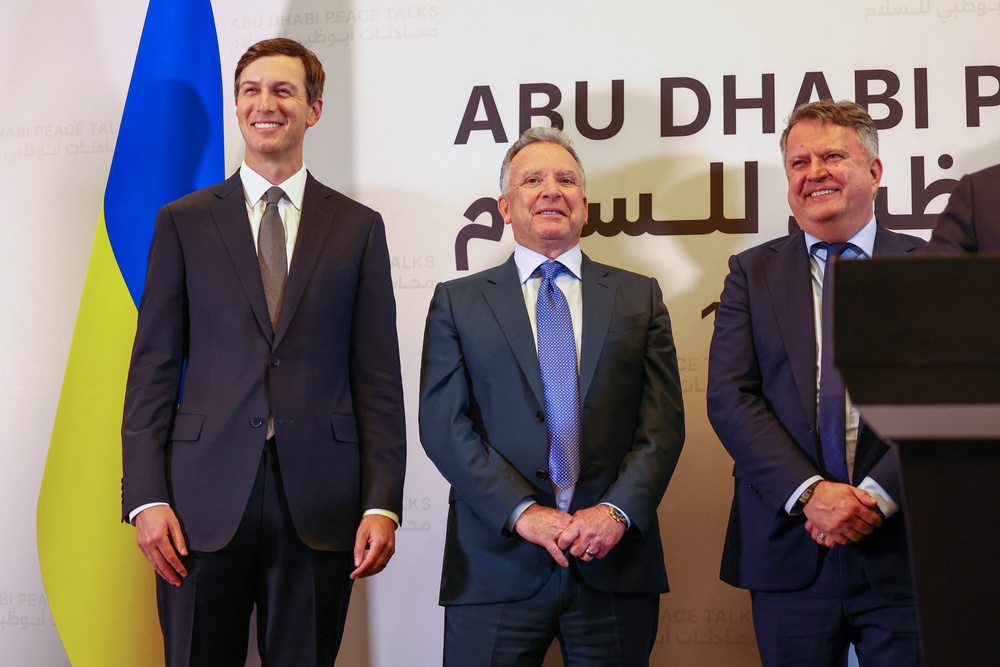
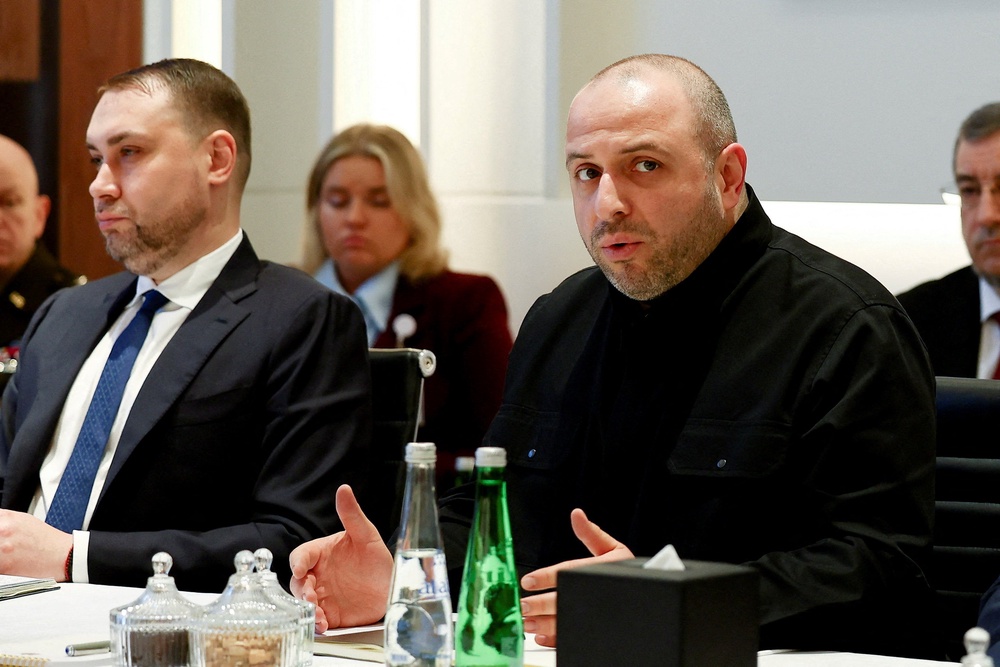
Negotiators for Russia and Ukraine emerged from a second day of US-brokered talks in Abu Dhabi on Wednesday confident about progress towards a long-awaited peace deal, despite lingering differences over territory.
Russia’s chief negotiator Vladimir Medinsky said that mutual understanding had been achieved on some issues and that more talks would be held, adding that the two sides had agreed on a large-scale prisoner swap.
Ukrainian negotiator David Arakhamia said that there was “good momentum” towards reaching a solution by the end of this year, but that Europe should also be represented in future discussions.
This week’s talks in the United Arab Emirates marked a restart for diplomacy some nine months after delegations last met in Geneva to discuss peace terms.
Ukrainian president Volodymyr Zelensky voiced concerns in February that Kyiv was being asked “too often” to make concessions as Moscow stuck to its maximalist demands for land in Ukraine’s mineral-rich east.
The last year has seen Ukraine test Russia’s resilience with expanded strikes on major businesses and energy infrastructure across the border, piling pressure onto the Kremlin to end what has become a costly and gruelling attritional conflict.
But Moscow has benefited from concessions from an increasingly favourable United States, which temporarily waived sanctions in October and cut a deal to facilitate the export of Russian diesel.
US president Donald Trump had tried to orchestrate an ‘energy ceasefire’ between the two sides to rein in attacks on oil refineries and keep down global prices lifted by his own war with Iran.
But when Russia apparently ignored the truce last month, Ukraine restarted its attacks on Russian infrastructure and drew Trump’s ire.
Kyiv subsequently reported difficulty with its Starlink communications service and officials said they were no longer receiving reliable US warnings of incoming Russian attacks.
The White House said there had been no changes to intelligence sharing with Ukraine, and tensions since appear to have calmed: by the end of October, the US had approved the sale of 500 much needed Patriot interceptor missiles to Ukraine.
But in comments to NBC’s Meet the Press, Zelensky acknowledged that Ukraine would not be able to “prevail” if the United States “officially” takes Russia’s side in the conflict.
President Trump has positioned himself as a key mediator in the conflict since returning to office last year. But he has fairly consistently argued that Ukraine will have to give up land to end the nearly five-year war.
In an interview with 60 Minutes only on November 9, Trump said he expected a peace deal, but that Ukraine was “going to end up with a little bit [of a] different shape”.
“I believe that that war is going to end and it's going to end soon. And the only reason it's going to end is because of me,” he said, assessing that the biggest obstacle to peace was “the hatred between Zelensky and [Russian president, Vladimir] Putin”.
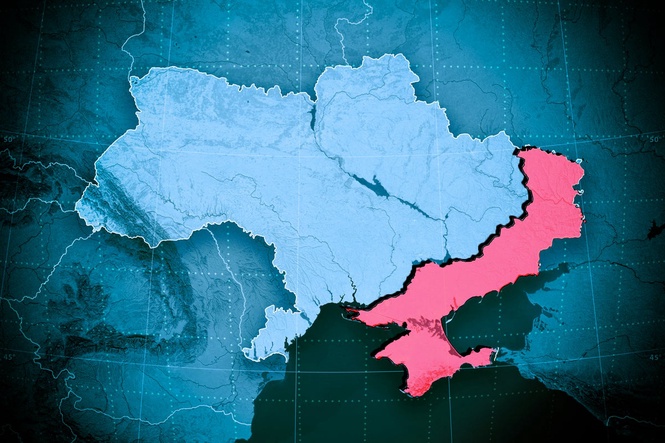
But when negotiators met in Geneva, it was territory that emerged as the major sticking point. Russia held firm on its demand that Ukraine cede the remaining 20 per cent of the eastern region of Donetsk.
The frontlines have moved since those talks in February. Russia then had claimed 43,585 sq miles of land, according to analysis by the Institute for the Study of War. Today, that figure has shrunk marginally to 43,527 sq miles.
Assessed Russian advances - land where Russian forces have operated in or launched attacks but do not control - sat at 1,465 sq miles in February, and are now down to 1,448 sq miles.
And assessed Ukrainian counteroffensives - “territory where Ukrainian forces are reportedly or assessed to be conducting counteroffensives or counterattacks” - has swollen from 23,089 sq miles in February to 27,113 sq miles in November, according to the same source.
Changes on the battlefield are reflected in changes in technology and tactics behind the scenes. Russia went into the war with the range advantage, hosting stockpiles of ballistic missiles and access to long-range Shahed drones as early as summer 2022.
Those Iranian-made drones can travel up to 2,000km with a 50kg warhead.
That advantage gave Moscow the ability to thrash morale in Ukraine’s major cities, destroy warehouses full of munitions, and devastate energy infrastructure deep behind enemy lines.
But Ukraine today says its weapons are destroying targets some 1,750km away - up from 630km in 2022.
Kyiv says its strategy of targeting Russian energy facilities is aimed at sapping a key source of Russia’s war funds and showing Russians the conflict started by Moscow is closer to home than ever. In these objectives, it has been effective.
As of November 10, analysts estimate that around 30 per cent of Russia’s total oil-processing capacity has been knocked offline or disrupted. That figure is a jump from a fifth - 20 per cent - reported only in June.
“This level of disruption is unprecedented in the history of the Russia-Ukraine conflict,” the IEA said over the summer.
Read MoreUkraine and Russia agree to large-scale prisoner exchange after second day of talks
Even Trump’s own MAGA voters think they were the biggest midterms losers, poll finds
As higher prices seep into broader economy, Fed officials consider faster hikes
Democrats lash out at no-show colleagues after Hegseth survives impeachment push
Scottish DJ named as victim of Krakow shooting that killed six
Austria tightens laws against spying to protect the international organizations it hosts