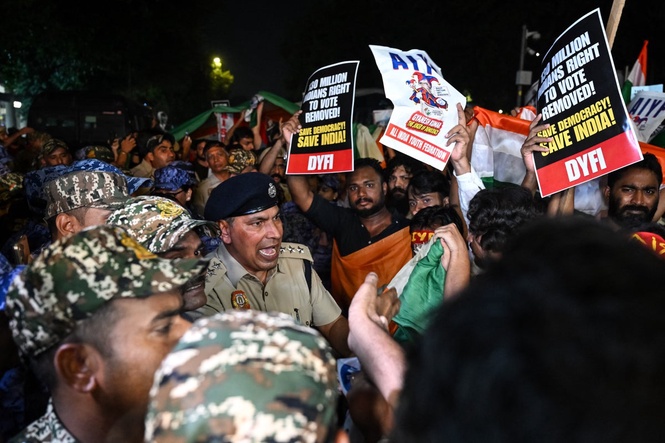
UN experts have urged Indian authorities to stop using excessive force against protesters and called for an independent investigation into the crackdown on demonstrations over a revision of voter lists.
They said that police used batons against unarmed students, restricted access to protests and allegedly subjected demonstrators to ill-treatment.
“Despite the non-violent nature of the assemblies, law enforcement agencies have reportedly deployed force against unarmed students, including lathicharges, and have prevented thousands from joining the protests,” the two dozen experts said. “We call on the authorities to immediately cease the use of excessive force, rescind blanket assembly bans and refrain from the misuse of digital surveillance, including through biometrics and internet disruptions.”
The protesters, led by the youth-led movement Cockroach Janata Party, opposition parties and student groups, are demanding the resignation of chief election commissioner Gyanesh Kumar over the alleged removal of some 130 million names from voter lists. They allege the revision could disenfranchise eligible voters, particularly poor and homeless people and the Muslim minority, and benefit prime minister Narendra Modi’s BJP party.
The election commission and the BJP deny the allegations, saying the revision targets ineligible voters and that those wrongly removed can appeal.
“This crackdown reflects a broader, troubling pattern,” the experts said in their statement. “We have repeatedly alerted the Indian authorities to undue restrictions on peaceful assembly, excessive use of force, arbitrary detentions, enforced disappearances, and the targeting of student activists, amongst others.”
India’s government previously said police acted within the law and dismissed criticism from the UN as interference in its internal affairs.
The government also rejected outright the demand for Kumar’s resignation. “There’s no chance of chief election commissioner Gyanesh Kumar resigning,” Ramdas Athawale, one of Mr Modi’s ministers, said.
Human rights groups, including Amnesty International and Human Rights Watch, also condemned the crackdown.
The protests saw more than 7,000 people, including journalists, lawyers, and human rights defenders, detained in the capital Delhi and many allegedly had their phones seized and protest-related material deleted.
The UN experts expressed concern over reports of sexual and gender-based violence directed at the protesters. They also criticised the imposition of restrictions on public gatherings, transport, and the internet.
“These actions violate India’s core international legal obligations, including the rights to freedom of peaceful assembly, freedom of expression, liberty, security of the person, and right to defend human rights” the experts said.
“The government must guarantee non-recurrence and uphold the democratic right of students and others to assemble and express grievances. Particular attention must be paid to the gender-specific impact of restrictions on peaceful assembly and reprisals against protesters.”
Read MoreWombs of Debt | The dark human cost behind the world’s sugar industry