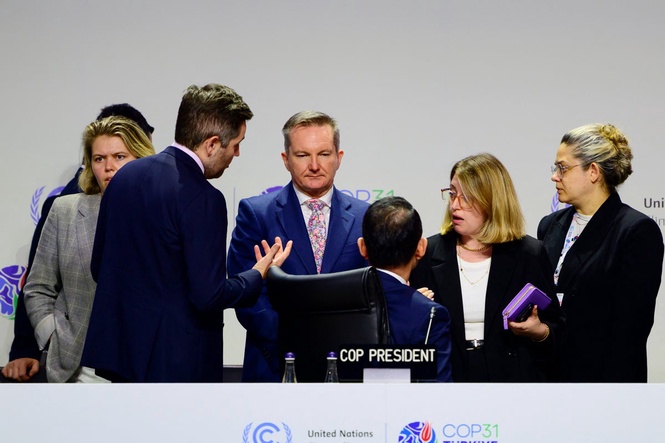
Disagreements over whether to explicitly name the fossil fuels driving global warming led to the breakdown of United Nations climate talks in Turkey on Sunday, leaving delegates without an overarching deal.
Expectation levels were already low heading into the fortnight of negotiations, but disputes regarding financial support and the explicit inclusion of fossil fuels—the main cause of climate change—proved irreconcilable.
The summit, designated as COP31, pressed ahead without adopting a primary resolution known as a cover decision.
Delegates nevertheless secured minor progress on specific technical elements of the climate problem, continuing discussions even after the main resolution failed.
Under UN rules, any approved pact requires near-unanimous consensus.
The 27-nation European Union and several individual governments stated they could not accept the final draft submitted by the joint Turkish and Australian leadership because it omitted fossil fuels.
A considerably larger collection of nations argued that reaching a consensus was more critical, reluctantly accepting the decision. Russia and Saudi Arabia actively lobbied to exclude fossil fuels from the text.
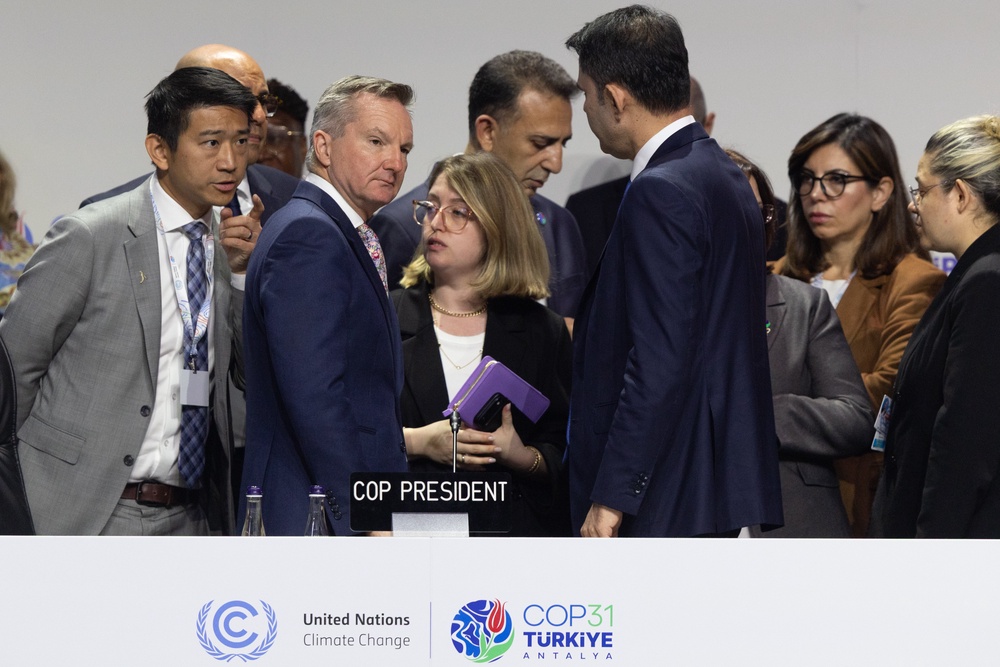
"It’s unconscionable that we would have a climate act that makes no reference to fossil fuels," Irish Climate Minister Darragh O’Brien said on behalf of the EU at the negotiations, which ran nearly 48 hours past schedule in the Turkish resort town of Antalya.
For most of the first 25 years of United Nations climate conferences, official outcomes avoided explicit references to fossil fuels until a shift three years ago.
At that summit in the oil-rich United Arab Emirates, a landmark agreement called for "transitioning away from fossil fuels," though explicit mentions have been absent since.
The Turkish-Australian draft referenced the Dubai deal in full, but that failed to satisfy many countries and environmental organisations.
Compounding the divide was draft language setting explicit goals for industrial carbon capture and storage, which critics and activists argued would work against efforts to lower total emissions.
"The failure of this COP to deliver ambitious, fair, science-based outcomes falls squarely on the shoulders of richer nations, petrostates, and the disgracefully incompetent duo of the Turkish and Australian COP presidents," said Rachel Cleetus of the Union of Concerned Scientists.
As the compromise collapsed during the plenary session, Turkish Environment Minister Murat Kurum, the president of COP31, was absent, leaving Elchin Allahverdiyev of Azerbaijan to announce the outcome.
"Unfortunately, we were unable to reach agreement on a cover decision. And that’s disappointing, very disappointing," said Australia’s Chris Bowen, the president of negotiations under the joint leadership.
Bowen insisted the Dubai agreement's call to shift away from planet-warming coal, oil, and gas remains active, adding: "Transition away from fossil fuels in the real world is happening. It’s happening. It’s happening at speed and it’s irreversible."
Read MoreCOP31 climate talks close to final deal, says summit president
Climate crisis and El Niño fuelled Indonesia’s wildfires, scientists find
Cop31 ends with no deal as longest climate summit ever collapses into disarray