
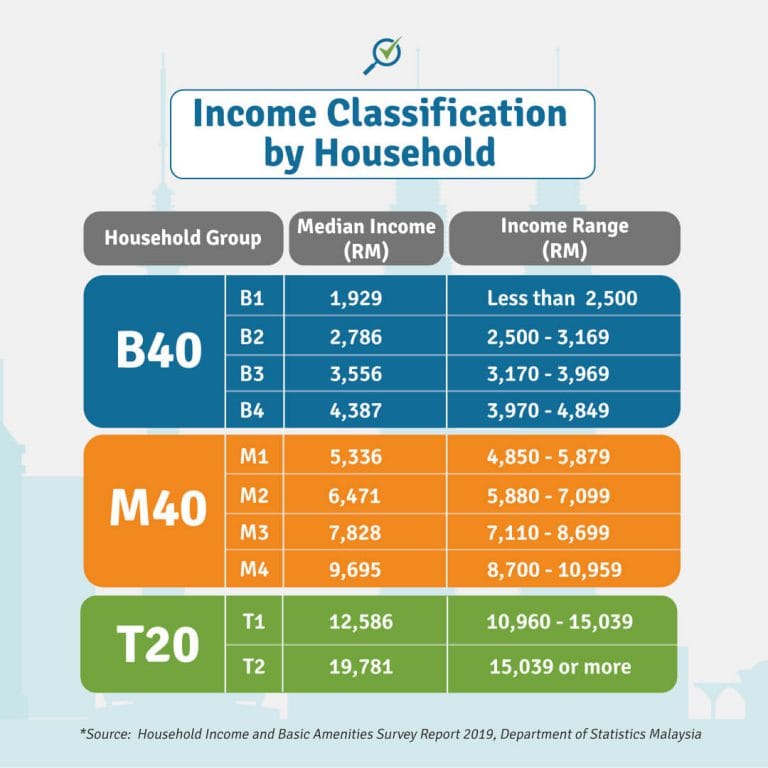
In bright corporate offices across Kuala Lumpur, middle-class parents stare quietly at monthly spreadsheets, performing a delicate mental arithmetic that millions of Malaysians know all too well. Between hefty mortgage payments, rising childcare expenses, insurance premiums, and daily groceries at local supermarkets, the month-end balance leaves virtually zero room for error. For decades, the nation’s M40 (Middle 40%) demographic has occupied a frustrating socioeconomic middle ground consistently earning too much to qualify for B40 welfare targeted handouts, yet feeling thoroughly crushed under the weight of urban inflation and heavy tax burdens. Often dubbed the "squeezed sandwich generation," middle-income wage earners have long voiced a quiet resentment over being the financial backbone of public revenue while watching social safety nets bypass them completely. However, as Prime Minister Datuk Seri Anwar Ibrahim unveiled Budget 2027 in Parliament, a quiet shockwave reverberated across group chats and office lunch tables nationwide. In a historic departure from traditional welfare design, the federal government officially announced that the expanded Sumbangan Asas Rahmah (SARA) Madani framework will extend direct cash-equivalent aid to non-STR recipients aged 18 and above, formally including millions of M40 citizens for the very first time. This unexpected policy shift marks a deep psychological and institutional threshold in Malaysian governance. For the first time in modern economic history, middle-income professionals will receive direct MyKad-credited financial relief meant specifically to cushion day-to-day living costs. As everyday workers evaluate what this shift truly means for their wallets, questions emerge about whether this inclusion represents a permanent transformation of state protection or a temporary response to growing urban economic anxiety.
Redefining Safety Nets, Middle-Class Realities, and Economic Redistribution
To appreciate the institutional significance of extending SARA Madani to the middle class, one must analyze the shifting dynamics of domestic inflation. While macro-level indicators suggest stabilizing consumer price indices, the real-world cost of living in major urban centers like Petaling Jaya, Johor Bahru, and Penang has surged significantly over recent years. Middle-income households who do not qualify for statutory welfare programs yet lack the financial buffer of the T20 upper tier have borne the brunt of fuel subsidy rationalization and service tax adjustments. By expanding the total allocation for Sumbangan Tunai Rahmah (STR) and SARA to a record RM16 billion, Putrajaya explicitly recognizes that financial vulnerability is no longer confined strictly to low-income brackets.
Under the newly announced 2027 framework, Malaysian adults aged 18 and above who are not existing STR recipients a group heavily encompassing the M40 segment will receive RM100 in SARA Madani assistance on two separate occasions. According to official projections highlighted by Astro Awani, this expanded safety net will reach approximately 13 million Malaysians nationwide. While an aggregate RM200 cash-equivalent credit may seem modest to higher earners, its symbolic weight is profound: it represents an explicit acknowledgment by the state that the middle class requires active protection against systemic market pressures.
Equally significant is how this financial assistance is structurally delivered and integrated into local economies. Rather than distributing unrestricted physical cash, the SARA Madani system channels credit directly into recipients' MyKads, which can then be used at thousands of participating retail outlets and supermarkets, as detailed by SoyaCincau. Furthermore, the government has expanded SARA usability to cover fresh produce across 216 FAMA farmers' markets (Pasar Tani) and local Tamu markets, as reported by The Star. This design ensures that state allocations directly stimulate domestic agriculture and local retail ecosystems while guaranteeing that assistance goes directly toward basic household nutrition.
From a broader policy stance, economists observe that integrating the M40 into direct assistance programs reflects a global shift toward universal social protection principles. Broadening aid eligibility reduces the political friction often caused by rigid economic classification systems, where missing an arbitrary income threshold by a few ringgit forfeits all government support. As covered in analyses by Harapan Daily, combining M40 cash support with enhanced Rahmah Sales (Jualan RAHMAH) funding allocated RM750 million to run discounted basic goods markets across all state constituencies creates a dual-layered defensive cushion for middle-income consumers.
Nevertheless, structural analysts caution that direct cash-equivalent transfers cannot serve as a standalone cure for middle-class economic stress. While MyKad credit offers welcome relief at the checkout line, long-term middle-class stability depends on fundamental structural economic progress: sustained high-value job creation, affordable housing developments, comprehensive healthcare cost containment, and wage growth that outpaces urban inflation. For the M40, receiving state aid for the first time is a reassuring step, but ensuring their long-term purchasing power remains the ultimate metric of success.
What Do You Think? I’d Love to Hear Your Opinion in The Comments Section.
The expansion of SARA Madani to include Malaysia’s M40 middle class represents a milestone shift in national welfare history, breaking down long-standing barriers that once left working professionals out in the cold. By extending direct assistance to 13 million citizens, the government has sent a clear message that every taxpayer’s struggle in an inflation-weary world is seen and validated. As these MyKad-credited disbursements roll out to supermarket registers and local farmers' markets, middle-income families will experience a novel relationship with state welfare one where they are recognized not merely as taxpayers, but as active beneficiaries of shared national prosperity.
AM World (tameer.work88@gmail.com) is a content creator under the Newswav Creator programme, where you get to express yourself, be a citizen journalist, and at the same time monetize your content & reach millions of users on Newswav. Log in to creator.newswav.com and become a Newswav Creator now!
The User Content (as defined on Newswav Terms of Use) above including the views expressed and media (pictures, videos, citations etc) were submitted & posted by the author. Newswav is solely an aggregation platform that hosts the User Content. If you have any questions about the content, copyright or other issues of the work, please contact creator@newswav.com.