

Have you ever read about the difficulties with Chinese schooling online? Or have you browsed TikTok to see videos of Chinese parents assisting their kids with their homework? These circumstances are probably all too familiar to you if you live in China.
Education has historically been seen as being essential to the prosperity of both households and society in China. But in recent years, the topic of overeducation has drawn considerable attention and spurred contentious online discussions. The issue, which was formerly primarily present in higher education, has now spread to the elementary and secondary school grades, increasing the academic strain on both children and their families.
As we all know, China has one of the largest populations in the world, which makes competition for education particularly fierce. Families generally believe that education is the key to their children's future success and that children need to pass the Gaokao exam to secure a "ticket" to a top university. Many parents even start preparing their children for the college entrance exam as early as primary school, resulting in many Chinese children being deprived of their childhood and burdened with intense academic pressure.
The pressures of modern life are causing increasing levels of stress in both adults and young people. In an attempt to prepare their children for the intense competition, some schools and parents instinctively adopt strict training methods. However, the results of such approaches can be counterproductive. A visit to students who are either about to take or have already completed their college entrance exams reveals a common pattern: physical weaknesses requiring several months of rest in the countryside, stomach problems due to long-term stress, palpitations, dizziness, and severe insomnia. As a consequence, their academic performance is often subpar. In such physical conditions, with reduced judgment and slower reactions, it becomes challenging to excel in the examination hall.
So, what do individuals who have personally experienced Chinese education think about this issue? We interviewed a student from China and a teacher who has been teaching in a Chinese public primary school for thirty years. We asked them a few questions to learn about their opinions regarding this phenomenon.
First, when I asked the student, Jiang, how she felt about her experience with Chinese education, she said, “It's very depressing and confusing. The constantly changing grades make me feel breathless, and I find myself compelled to sacrifice my physical and mental health, time, and freedom to achieve better grades and secure a job in the midst of millions of students. Educators refer to this as pursuing a 'better future'.” She also shared an example involving her friend: “ My friend used to be a typical example of what I consider to be excessive education. She attended 'Hengshui Middle School,' where, according to her, students were only allowed to take a shower once a month, had just five minutes for meals, and almost no recess time between 5 a.m. and the evening during their study sessions. Even during breaks, going to the toilet was not permitted. The school would punish and criticize students for small actions, such as picking up a dropped pen in class. She had sleepless nights during that time, and her description of it was, 'I never want to go back there in my life'.”
Finally, when I asked her whether she believes that excessive education has an impact on the physical and mental health and happiness of Chinese students, she replied with frustration: “Almost all Chinese students subjected to excessive education end up sacrificing their well-being. They feel that their lives become stagnant, focused solely on intellectual growth while lacking broader knowledge beyond textbooks. This makes them highly susceptible to developing psychological issues during adolescence.”
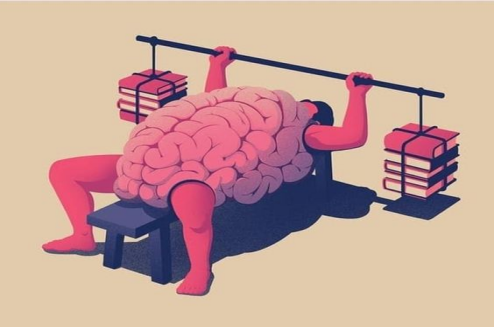
In this educational system where students experience immense pressure, what are the feelings of teachers regarding the situation? Are they taking measures to improve it? Wei Man, an English teacher with 30 years of experience in China's public primary schools, states, ”I believe the essence of over-education in China can be summarized in two aspects. First, it involves pushing children beyond their capabilities in order to outshine their peers and gain an advantage in academic and social competition. Second, it emphasizes excessive exam-based education in subjects like language, mathematics, and English, while undermining the quality of education in areas such as music, physical education, and aesthetics. This utilitarian approach compromises the holistic development of students.“
He further explains that in schools, teachers of subjects like language, mathematics, and English often overshadow educators in fields like music, sports, and aesthetics. Additionally, parents send their children to language, mathematics, and English training courses, as well as various competitive training programs during school breaks, often disregarding their children's emotional and physical development needs. This approach significantly restricts students' creative thinking and diverse development. The current policy of university admissions solely based on college entrance exam scores forces students to invest a substantial amount of time in studying and repetitive exam preparation, solidifying rote learning. Teachers, due to their exam-focused teaching, may inadvertently neglect nurturing students' creative abilities.
At the same time, we also interviewed two students from Malaysia to gather their perspectives on the issue of over-education, with the intention of comparing them with those who have experienced Chinese education. They mentioned that over-education is rare in Malaysia, and most families prioritize their children's physical and mental well-being. Schools in Malaysia typically emphasize multi-language education (proficiency in Chinese, Malay, and English), community activities (focusing on teamwork and leadership development as essential life skills), and offer a wide range of non-major subjects (such as science, business, accounting, economics, art and design, auto mechanics, catering, and more).
When asked whether they have Chinese friends and if they have noticed any differences in education between Chinese students and those in their own country through their interactions and observations, one of the students responded, 'I believe that Chinese students often measure their academic achievements by the duration of their studies, relying heavily on homework and exams as their primary learning methods, even continuing late into the night after school, though this may not apply to all students. In Malaysia, most schools close in the afternoon, allowing students to have more flexibility with their free time.
After comparing the two interviews, we can see that there is indeed a gap between Chinese education and that of other countries. Students in China are burdened with the pressure of education that is impossible to breathe, and the solution to this problem requires government policy adjustments, a change in parental mindset, and innovations in educational institutions, where students are encouraged to develop their own hobbies and innovations instead of just pursuing grades. Education gives students a promising future and should not be a mountain that weighs them down.
Yihui Zhong is a content creator under the Newswav Creator programme, where you get to express yourself, be a citizen journalist, and at the same time monetize your content & reach millions of users on Newswav. Log in to creator.newswav.com and become a Newswav Creator now!
The User Content (as defined on Newswav Terms of Use) above including the views expressed and media (pictures, videos, citations etc) were submitted & posted by the author. Newswav is solely an aggregation platform that hosts the User Content. If you have any questions about the content, copyright or other issues of the work, please contact Newswav.