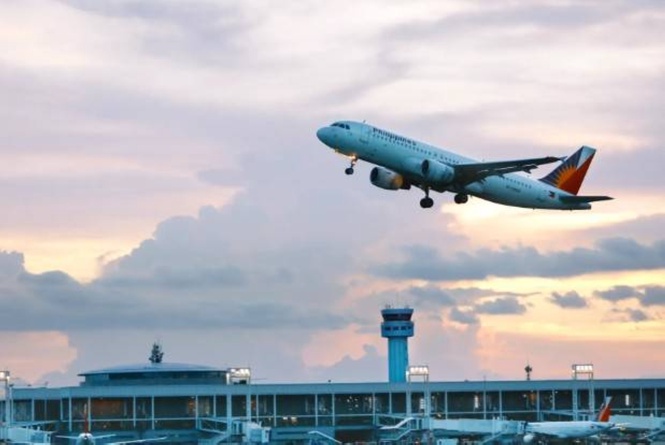
MANILA, Philippines — The Department of Transportation (DOTr) is accelerating the expansion and rehabilitation of the country's major airports—aiming to accommodate larger aircraft, increase passenger capacity, and ultimately help bring down airfares.
Saying that most of these projects have been targeted to be completed next year, DOTr Secretary Giovanni Lopez said these were all possible in compliance with the directive of President Ferdinand Marcos Jr. for the agency to take concrete steps toward making travel more affordable and convenient for both Filipinos and tourists across the archipelago.
Lopez stressed that extending airport runways is now a top priority, enabling the landing of bigger planes capable of carrying more passengers—a move that directly translates to lower ticket prices.
"As a policy, for all our new airports, we now set the minimum runway length at 2,100 meters. That way, the runway is already primed for large aircraft. And when planes are bigger, fares tend to go down," the DOTR chief said.
Among the projects that are near completion is the Busuanga Airport in Coron, Palawan—one of the nation's premier tourist destinations. The department targets finishing its 2,100-meter runway by the first quarter of 2027, he said.
Beyond the runway, the airport's passenger terminal building will also undergo a major expansion.
According to Civil Aviation Authority of the Philippines (CAAP) Deputy Director General Danjun Lucas, the terminal's seating capacity will be boosted from the current 300 to 1,500.
Lopez has directed CAAP to construct a so-called Modular Passenger Terminal Building next year—a modern, cost-efficient approach that promises both durability and environmental sustainability.
"This involves a new innovation—what we call a modular terminal building. Modular in construction, but built to high standards: sturdy, eco-friendly, more affordable, and faster to complete," Lucas explained.
As for Siargao Airport, the DOTr and CAAP are pushing forward with runway extension plans despite significant geographical constraints—mangrove forests on one side and mountainous terrain on the other.
Preliminary studies indicate that an additional 500 to 700 meters of runway length will be required for the expansion, according to the transportation department.
While the long-term solution takes shape, the top DOTR official ordered CAAP to implement an interim measure: the installation of portable runway lights. This will allow flights to depart Siargao even after sunset, effectively extending operational hours and enabling more flights for travelers.
"More flights to a destination naturally drive fares down—it's basic supply and demand," Lopez said.
Meanwhile, the Laguindingan Airport—the gateway to Cagayan de Oro and neighboring provinces—is also being expanded. Originally designed for 1.6 million passengers annually, it now handles over 2 million.
Aboitiz InfraCapital Inc., the airport's private concessionaire, aims to boost its capacity further—from 3.9 million to 6.3 million passengers, according to DOTr.
At the same time, it said that work is being fast-tracked on the Bukidnon Airport, which will finally give the province direct air connectivity. Currently, travelers must fly into Laguindingan and endure a three-hour land trip to reach Bukidnon.
The airport is expected to be completed by December 2026—initially capable of accommodating turboprop aircraft—with the extended runway slated for completion by the second quarter of 2027, Lopez said.
He looks ahead to 2027 as a ‘banner year’ for the DOTr, when a wave of transportation projects is set to come online, “bringing immense convenience to passengers and tourists alike, while giving a significant boost to tourism and the national economy.”