The United States has suspended a visa-free entry program that allowed pre-screened Chinese tourists to visit the Northern Mariana Islands, a US Pacific territory next to Guam, citing the risk of Chinese espionage near American military sites, people smuggling, and birth tourism.
The move, announced by the Department of Homeland Security (DHS) in a Federal Register notice published on October 27 and signed by Homeland Security Secretary Markwayne Mullin, took effect at 2 p.m. EDT on October 30. Local tourism officials warn it could deal a heavy blow to an island economy that still depends on Chinese visitors.
DHS Cites Espionage Risks Near US Bases
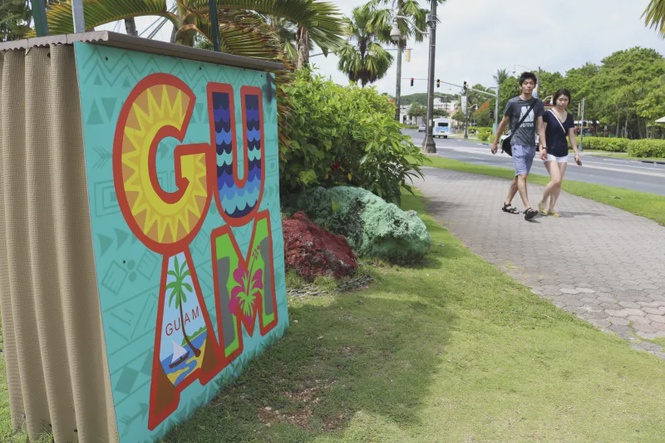
The Northern Mariana Islands, a self-governing US commonwealth of 14 islands in the western Pacific, are best known for Saipan, Tinian, and Rota. Guam, a separate US territory just to the south, hosts major American air and naval bases, while the Pentagon is restoring a World War II era airfield on Tinian. Together, the islands sit at the heart of US military planning for the western Pacific, including any crisis in the Taiwan Strait.
That geography drove the decision. The program at issue, the Economic Vitality and Security Travel Authorization Program (EVS-TAP), took effect on February 20, 2025, and let Chinese nationals who passed advance security screening visit the Northern Marianas without a US visa for up to 14 days. In fiscal year 2025, more than 3,000 Chinese nationals used it, according to the notice.
DHS concluded that the volume of visa-exempt entries "presents unacceptable security and law enforcement risks." The notice states: "One significant national security concern is that EVS-TAP may be exploited to facilitate PRC espionage and intelligence" gathering aimed at sensitive US defense infrastructure in the region. "The Indo-Pacific region and the security of Guam and the CNMI are of vital strategic importance to the United States," it adds, using the abbreviation for the Commonwealth of the Northern Mariana Islands.
The notice also warns that Chinese nationals "have the ability to illegally travel from the CNMI to Guam aboard smuggling vessels," citing prosecutions in 2024 and February 2025. Chinese nationals already on the islands may complete their authorized stays, and DHS said it will review the program with the State and Interior departments. DHS followed up with a press release on October 29 describing the program as a birth tourism loophole that threatened national security.
Georgetown Scholar Backs Closing The Side Door
Gregory Brown, an adjunct professor at Georgetown University, told Nikkei Asia that the suspension is a reasonable response to the security concerns. He said the program let Chinese travelers skip the State Department interview that visitors of other nationalities must go through, and that the system had already been abused.
Prosecutors in 2024 and 2025 won convictions against smugglers who moved Chinese nationals from the Northern Marianas to Guam, Brown said, and some of those migrants were later found in or near US military facilities. With the Pentagon rebuilding the Tinian airfield, he argued, Washington cannot restore a military base while leaving the side door unlocked.
Brown also cautioned that how Washington explains the decision matters. If residents feel the federal government made the decision on their behalf without consulting them, he said, Beijing will be glad to exploit that narrative. He urged Washington to pair the suspension with economic support, such as helping the islands open new air routes and stepping up tourism marketing in Japan, South Korea, Taiwan, and the Philippines to reduce reliance on China.
Tourism Officials Warn Of A Devastating Hit
The Marianas Visitors Authority, the territory's tourism bureau, said it was deeply concerned. Acting board chair Vicky Benavente said visitors from China made up more than 20% of total arrivals to the islands in fiscal year 2026. With air seat capacity, arrivals, and marketing budgets at a fraction of their boom-era levels, she said, "Suspending EVS-TAP without a viable replacement will be devastating."
The China market has already shrunk dramatically. Before the COVID-19 pandemic, Chinese travelers accounted for roughly 40% of arrivals, with about 234,000 of 660,000 visitors in 2017, according to the South China Morning Post. The islands are also still recovering from Super Typhoon Sinlaku, which tore through the Northern Marianas in April.
Governor David Apatang had urged lawmakers to keep EVS-TAP, calling it "critical" to the local economy.
Birth Tourism Gives Washington A Second Reason
Beyond espionage, DHS listed immigration enforcement as a core reason for the suspension. The notice says EVS-TAP may allow foreigners "to engage in birth tourism" and secure US citizenship for "children with no lasting ties" to the United States.
Birth tourism refers to traveling abroad to give birth so a child gains citizenship in the country of birth. Under the US Constitution, people born in the United States generally become citizens at birth, and the same rule applies in the Northern Marianas under the territory's covenant with Washington. The US Supreme Court struck down President Donald Trump's executive order limiting birthright citizenship on June 30, and the administration has since turned to visa policy to curb birth tourism.
Births on the islands to mothers visiting as tourists peaked at about 580 in 2018 and fell to around 47 in 2025, the South China Morning Post reported. Supporters of the suspension say the loophole still needed closing. Senator Mike Lee, a Utah Republican who had pressed DHS to act, wrote on X: "America is not a nursery for the CCP to steal citizenship."