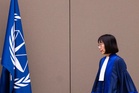
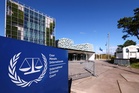
A senior lawmaker in Japan's governing Liberal Democratic Party has accused his own government of responding too feebly to US sanctions on the Japanese judge who presides over the International Criminal Court, warning that silence would cost Japan the credibility it claims on the rule of law.
Gen Nakatani, a three-time head of Japan's defense establishment who now co-chairs a cross-party parliamentary league on human rights diplomacy, made the case at the Foreign Correspondents' Club of Japan in Tokyo on September 4, under a title that left no ambiguity: "Japan's Weak Response to U.S. Sanctions."
The Trump administration designated ICC President Tomoko Akane on August 18 together with Abdoulaye Seye of Senegal, a senior trial lawyer at the court, acting under an executive order signed in February 2025, according to Human Rights Watch. Al Jazeera reported that the designations followed the court's arrest warrant for Israeli Prime Minister Benjamin Netanyahu and its earlier examination of US forces in Afghanistan, and that Prime Minister Sanae Takaichi called the move "very unfortunate" before drawing criticism from opposition parties, rights groups and members of her own party.
Lawmakers Ask Tokyo To Shield Companies From US Sanctions
The sharpest of the league's demands concerns Japanese business. Nakatani said the group was preparing to tell Chief Cabinet Secretary Minoru Kihara on September 15 that the government should state plainly that Japanese companies are under no legal obligation to comply with the US measures.
That request sits on top of a resolution the league adopted on August 24, which condemned the US decision in the strongest terms available to it and called on the prime minister and foreign minister to lodge a formal protest, demand the sanctions be withdrawn, and ensure Akane keeps access to her funds.
Nakatani Calls The Designation A Sanction On Japan
Japan is the single largest contributor to the ICC's budget, and Akane took her seat on a Japanese nomination. For an ally to place her in the same category as a terrorist, Nakatani said, is something a country that professes the rule of law cannot let pass, and Tokyo has a duty to protect its own nationals.
He argued that punishing a judge for performing judicial duties is illegitimate on its face, and that the American objective is to disable the court itself, the last line of defense against impunity for genocide and war crimes. The wider design, he said, is to chill international criminal justice by putting every ICC staff member, cooperating government and private firm on notice. Having worked on Japan's 2015 peace and security legislation, he rejected the premise that Tokyo must choose between the alliance and the law.
Europe Spoke Up While Tokyo Held Back
"Silence in the face of an attack on the rule of law also means losing the fundamental values of the alliance," Nakatani said, noting that France, Germany and the Netherlands had backed the court and Akane while Japan lagged.
Akane has made a similar appeal herself. "Japan has long made the rule of law a cornerstone of its diplomacy," she said at an August press conference reported by Al Jazeera, urging Tokyo to help keep other states from abandoning the court. Human Rights Watch has described the designations as an affront to victims and an attempt to shield American and Israeli officials.
Nakatani wants Japan to return to the values diplomacy of the first Abe government and to coordinate with other middle powers. He also pointed to a gap at home, noting that Japan has still not acceded to the Genocide Convention and should join it and pass the implementing legislation. "Now is the time for politics to step up," he said. "Prime Minister Takaichi needs to explain this properly to Mr. Trump and gain his understanding."
Taiwan Has No Court To Appeal To
Nakatani also condemned China's maritime expansion and Russian President Vladimir Putin's visit to the Northern Territories as unlawful, and said he could not understand the US president's conciliatory posture toward North Korea.
That reading carries directly to Taipei. Taiwan is not a party to the Rome Statute and, shut out of the UN system, has no route to become one, leaving it reliant on the norms Nakatani was defending rather than on any tribunal it can petition. The episode also tests a question Taiwan asks constantly, which is how far a US ally will go in public when Washington moves against an institution that ally helped build.
Original Article In Chinese:中谷元氏、米国のICC赤根所長制裁に「日本政府の対応は不十分」 撤回要求を訴え