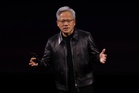
WASHINGTON, D.C. — The United States announced tougher export control measures on artificial intelligence (AI) chips on Monday (Tuesday in the Philippines), after a scandal ensnaring Nvidia co-founder Jensen Huang exposed a loophole allegedly exploited by Chinese companies.
The news came as the chip titan was about to report its first earnings since Huang’s departure as CEO, with investors questioning if the AI boom can hold strong.
Under Washington’s new rules, data centers anywhere in the world will need a US license to provide large volumes of computing power from advanced chips to companies headquartered in China, Macao or other countries under US arms embargoes.
The rules also require licenses to ship advanced chips to Singapore, Malaysia, Thailand, Indonesia and Brazil — countries the US commerce department says present a “higher-than-normal risk of diversion” of the chips.
These changes are a response to a loophole that allowed Chinese firms to rent AI computing power from data centers in Southeast Asia and elsewhere that run on US hardware not available for export to China.
While this loophole has been known to authorities, the revelation of Huang’s extramarital affair with a woman suspected of being a Chinese spy has drawn intense scrutiny to the practice.
The woman, Alice Huang, is a former executive of Megaspeed — a Singapore-based cloud computing firm under US criminal investigation for allegedly helping Chinese companies procure advanced Nvidia AI chips in violation of export controls.
Huang stepped down last week after at least two extramarital affairs were revealed in media reports.
Facing criticism, the US Commerce Department said on Monday it would close a loophole that had drawn concern from US authorities.
The move “is designed to ensure that existing restrictions on access to sensitive American technology cannot be circumvented through remote computing arrangements involving data centers in third countries,” the department’s Bureau of Industry and Security said in a statement.
It weighed on Nvidia’s shares, which shed 4 percent on Monday, extending a slide since the scandal erupted.
‘Business-as-usual’ unlikely
Nvidia stock has lost more than a quarter of its value over the past month, as doubts grow about the health of the AI investment boom.
The results will be the first presented under chief financial officer, Colette Kress, who is serving as interim CEO.
“If they try to keep a business-as-usual tone in the call, I think that it probably wouldn’t be well received,” said Jacob Bourne of Emarketer.
Investors will be watching for signs of whether Kress will slow Huang’s aggressive investment strategy, which saw him commit tens of billions of dollars to AI companies.
Analysts said they would also be eyeing Nvidia’s guidance on future sales, along with its chip sales in Asia, particularly Singapore.
That could ripple across the AI investments propping up the US economy — with Nvidia backing major labs including Anthropic, the maker of the Claude chatbot, which is expected to begin trading on Wall Street on Thursday.
Tech firms dragged Asian stock markets down again on Tuesday as the fallout from the Nvidia crisis rattles trading floors, with the new US moves on chip controls adding to uncertainty.