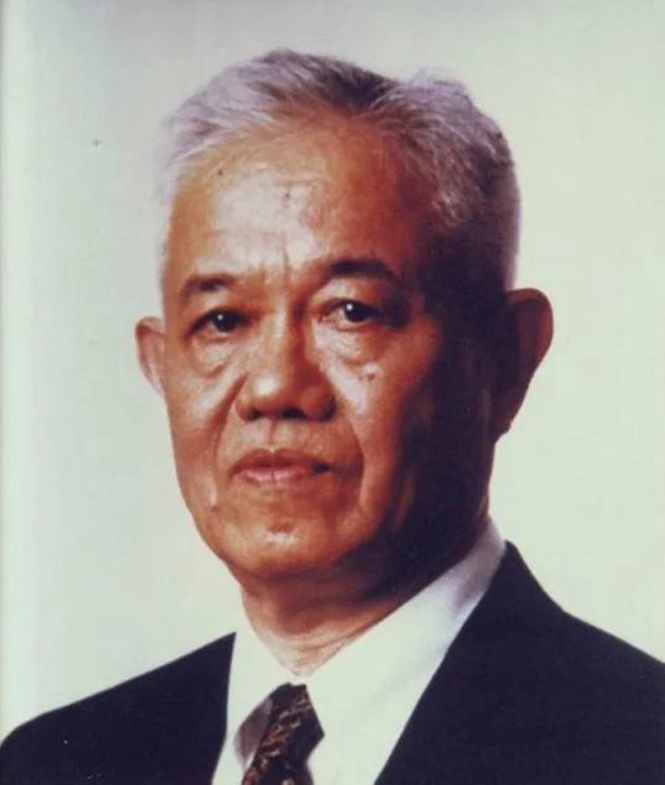
BUSINESS groups and regulators on Friday mourned the passing of economist and technocrat Cesar E.A. Virata, who held the posts of prime minister and minister during the first Marcos administration and was an active member of the private sector until his death at 95.
His passing was announced by Rizal Commercial Banking Corp., where he was a director and corporate vice-chairman. No cause of death was disclosed.
The Makati Business Club described Virata as “one of the most influential technocrats in the business and political force,” a progressive leader who valued technological advancement and economic development for social progress.
The Management Association of the Philippines (MAP), meanwhile, said Virata embodied the highest standards of professional management and public service throughout his lengthy career.
It added that as a statesman, he showed outstanding stewardship of the Philippine economy, driven by professionalism, managerial skill, and a steadfast sense of duty to the country.
“PM Virata will forever be remembered by the MAP as a paragon of statesmanship and management excellence for nation-building, and as a Filipino whose deep love of country was reflected in a lifetime of service,” the business group said.
In 1981, the MAP presented Virata with the “MAP Management Person of the Year” award, honoring his management career in both the public and private sectors.
The Foundation for Economic Freedom (FEF), where Virata was an adviser, said “His legacy lives on in the institutions he helped build.”
“The University of the Philippines named its College of Business Administration the Cesar E.A. Virata School of Business in recognition of his contributions as an alumnus, professor, dean, and public servant,” it noted.
The naming came with controversy, however, as students, faculty and other members of the UP community protested Virata’s having been part of the Marcos dictatorship. UP ultimately affirmed its decision.
“The Philippines has lost a formidable economic mind and a lifelong servant of public institutions,” the FEF also said. “His career testified to the importance of expertise, discipline, and public service in nation-building.”
The Securities and Exchange Commission (SEC), meanwhile, cited Virata’s role in helping build the Philippine capital market.
SEC Chairperson Francis Lim said Virata’s contributions included helping establish institutions and market infrastructure that supported the development of a deeper and more modern Philippine capital market.
Virata was an incorporator of the Philippine Stock Exchange and a leading proponent of the country’s fixed-income trading platform, Lim said in a statement.
“Minister Virata devoted his life to public service and to strengthening the Philippine economy and financial system. For the Philippine capital market, his legacy is especially enduring,” Lim said.
“His contributions reached beyond policy and government — they helped shape the financial institutions and markets that continue to serve the Philippine economy today,” he added.
The SEC expressed its condolences to Virata’s family and loved ones, describing his contributions as extending beyond government policy to the financial institutions and markets serving the Philippine economy.
The Department of Finance also condoled with Virata’s family and loved ones, saying “we honor his service to the nation.”