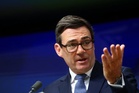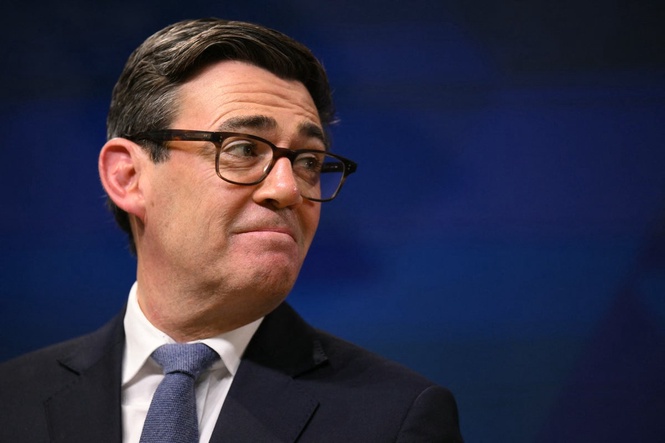
Keir Starmer originally ruled out a youth mobility scheme as part of his “reset” of UK-EU relations. Then he offered 30,000 places a year. The British offer went up to 50,000, and then 80,000. Finally, the day before the Brussels summit on Friday, Andy Burnham conceded 100,000 places. “We sit on our hands and they cave in the end, same as always,” one anonymous EU diplomat told the Financial Times.
In return for this concession, Burnham was ambushed on the day of the summit, with the EU insisting that the three deals, on youth mobility, food exports and carbon markets, were conditional on a fourth, on tuition fees for EU students, that has not yet been agreed.
Ministers sent out to sell the deal insisted until they were blue in the face that the three deals would stand even if the tuition fees issue remained unresolved after six months. Lucy Powell, the education secretary, said that “of course” the government was prepared to say no if it didn’t like the terms of a tuition-fee deal.
But there is nothing in the text of the joint statement published on Friday that commits the EU to implementation. The two sides merely “aim to” apply the agreements by certain dates.
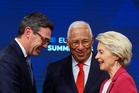
No wonder Burnham’s cheerful affability took on a bruised tone at the news conference to announce the reset, despite Alberto Costa, president of the European Council, telling him, “You are always welcome in the European Union,” and Ursula von der Leyen, president of the European Commission, addressing him as “dear Andy”.
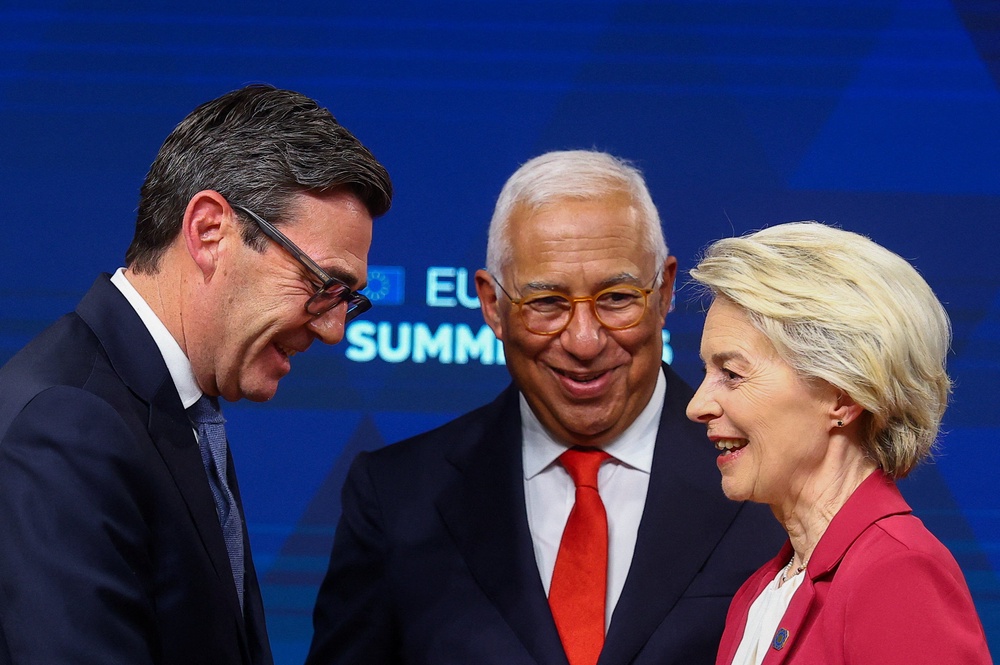
If he didn’t know before, he has learned what every prime minister knows, which is that negotiating with the EU is asymmetrical. They hold all the cards.
That does not mean the summit was a failure. It worked well as part of Burnham’s grand plan, which is to unite the left in Britain and keep the right divided. Left and right are defined for these purposes as pro and anti-EU.
He can live with hostile headlines in the Daily Mail (“Ambushed”) and The Sun (“Grand Theft EU”) while other right-wing newspapers can be read either way – The Times (“Burnham ‘is determined to rejoin EU’”) and The Daily Telegraph (“Burnham open to rejoining EU”).
Those headlines keep the Labour, Liberal Democrat and Green coalition together, happy with a softer Brexit for now and the hope of reversing it altogether for the future. While the right stays divided, with Nigel Farage sounding unconvincingly apocalyptic and Kemi Badenoch not saying very much at all.
Badenoch’s quietness may be a clue as to how the European argument will develop, because this week has seen an acceleration of a trend: the emergence of a “third way” of former Remainers who think that we should stay out for the foreseeable future.
It was striking that Jonathan Reynolds, the business secretary, was among the ministers selling the EU deal. He was asked on Friday if he thought Britain would rejoin in his lifetime and said he couldn’t answer that question because he didn’t know how the EU would evolve. Given the possibility of Marine Le Pen winning the French presidency next year, this seemed a reasonable point to make.
Le Pen’s prospects are closely linked to the French crisis of low growth and high debt, which itself is part of a wider economic malaise in Germany and across the continent. This makes the argument that a closer relationship with the EU single market is a magic lever for growth harder to make. Burnham described this week’s deal as “the single biggest growth measure that we could take in this parliament”, and yet the Treasury’s own modelling suggested that it would add just 0.24 per cent to GDP per person by 2040.
Jeremy Hunt, the utterly reasonable former chancellor, pointed out that, although the estimate that Brexit has already cost 6-8 per cent of GDP is “a thorough piece of work”, it implies that if we had stayed in the EU we would have outperformed the eurozone by an “implausible” amount.
He is joined by pro-EU former prime ministers David Cameron and Tony Blair arguing that we should stay out for now and focus on making our economy stronger as it is. I detect a mood among many Labour MPs and former Labour advisers against attempting to rejoin. They agree with Jim Murphy, the former cabinet minister and leader of Labour in Scotland, who said on Newsnight this week that it was very difficult to leave the EU; it will be even more difficult to rejoin.
This centrist bloc of opinion that was in favour of staying in when we were in but prefers to stay out now that we are out could be the battleground on which the next election will be fought – which will not be before Christmas, by the way.
Burnham’s openness to rejoining the EU has helped him to unite the left, and it may help him to win the next election – as long as he doesn’t mean it.
Read MoreAndy Burnham can find a clever way to make reparations work
The Brexiteers are getting back together – we can’t fall for their nonsense again
Poor Andy Burnham has just reminded us how exhausting ‘Eurowangling’ really is