
Last Friday night, Britain opened its wallet for Pudsey. Children wore yellow spots and headbands to school, colleagues sold cakes and families gave what they could. That generosity deserves celebrating.
This year’s Children in Need appeal raised almost £40m to support children and young people across the UK. It showed how readily people give when they can see who needs help and what their money can achieve.
The compassion and generosity of the British public does not stop at our borders. Comic Relief has long brought the country together to support people facing poverty and hardship both here in the UK and around the world. And we donated more than £446 million to the Disasters Emergency Committee's Ukraine appeal, helping families they will never meet.
But willingness to donate does not necessarily translate into support for government spending overseas. In March 2025, YouGov found that 65 per cent of Britons supported the government cutting aid to 0.3 per cent of GDP to fund greater spending on defence.
Charity appeals – such as the Independent’s 2026 Christmas fundraiser, to help lift young people out of homelessness – are powerful because they bring people together around a shared cause and show the difference their generosity can make. Government investment in overseas health programmes is less visible and understandably faces greater scrutiny when household budgets are stretched and public services are under pressure. The argument that Britain should look after its own first has an obvious appeal.
But looking after our own is precisely why we cannot afford to ignore health beyond our borders.
As a healthcare professional involved with Healthy World, Secure Britain campaign, I want children here to grow up safe and healthy. Their protection depends partly on what happens elsewhere: whether an outbreak is detected early, whether vaccination keeps a disease in check, and whether health workers have the resources to respond.
Measles is one reminder of how closely connected our health is to that of other countries. The disease can be brought into Britain through international travel, putting children at risk, particularly those who are not fully vaccinated. Protecting children here means maintaining strong vaccination programmes at home, while supporting efforts to control outbreaks elsewhere.
Children overseas deserve the chance to grow up healthy in their own right. Helping them can also protect families here. That connection gets lost when aid is presented as money we can no longer afford to give away.
Some of the most important work in global health is also the least visible. When vaccination programmes prevent an outbreak, or early intervention keeps a child out of hospital, there is no moment to capture on camera. The success is simply that children stay healthy and get on with growing up.
Yet we have ample evidence of what can be achieved.
The global under-five mortality rate has more than halved since 2000. Better healthcare, vaccination, nutrition and living conditions have helped millions more children survive. International funding has supported that progress alongside the work and investment of countries themselves.
Gavi, the Vaccine Alliance, backed by Britain and other donors, estimates that vaccinations it supported between 2000 and 2025 will avert more than 23 million future deaths. Behind that number are children growing up, parents spared bereavement and families able to plan a future.
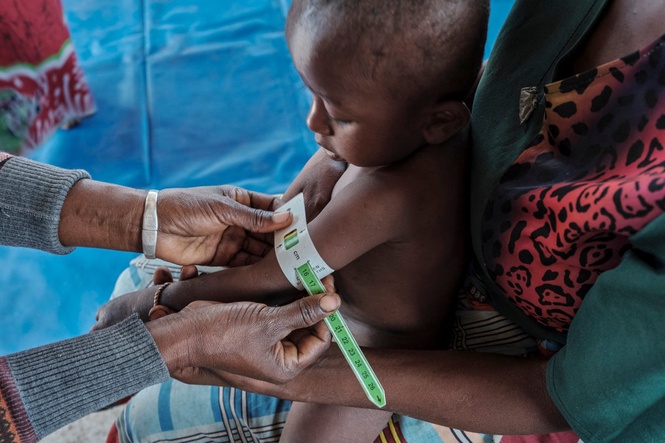
There is still an enormous amount to do. An estimated 4.9 million children died before their fifth birthday in 2024. Leading causes include pneumonia, diarrhoea and malaria – diseases we know how to prevent or treat.
Reliable public funding allows health services to plan, buy vaccines at scale and reach children who would otherwise miss out. It helps keep laboratories running and trained staff in place between emergencies. Those services cannot be switched on overnight when a crisis reaches the headlines.
The millions donated to Children in Need are a reminder of Britain's extraordinary generosity. But protecting children, at home and abroad, requires more than charitable donations. It requires sustained investment in the health systems that prevent disease from spreading in the first place.
Ministers may believe that cutting overseas aid will make Britain safer. Yet diseases do not respect national borders, and the next pandemic will not wait for us to rebuild the defences we have dismantled. Looking after our own means looking after the health of others, too.
Professor Damian Roland is a consultant in paediatric emergency medicine. His piece was written in collaboration with GP and health influencer Dr Arshad Rizvi
This article has been produced as part of The Independent’s Rethinking Global Aid project
The PM is right to start a conversation about the EU despite the dangers ahead
Germany’s long overdue #MeToo moment exposes an uncomfortable truth
If the UK wants to know what a spot in the EU is worth, look at Ukraine
US deportees in South Sudan went hungry as guards pocketed money from relatives, families say