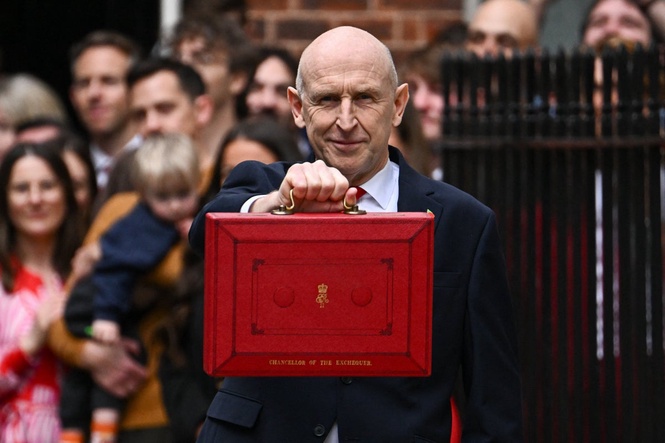
John Rentoul, chief political commentator – 6 marks out of 10: ‘A shot in the arm for defence spending, a sticking plaster for the cost of living’
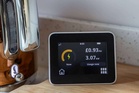
The decoy “rabbit” in the Budget was the £100 help with gas and electricity bills over this winter for households in lower council-tax bands. This will be paid for by a tax on banks – but one that was small enough to prompt a sigh of relief from the City and a rise in bank share prices.
But the real rabbit was the chancellor John Healey’s triumphant confirmation that defence spending would indeed rise to 3 per cent of national income by 2030. The details are all “to be confirmed”, but the target that prompted his resignation as defence secretary under Keir Starmer has now been affirmed as the official policy of what Healey called “this new government” led by a “new prime minister”.
This was the big spending commitment for the future – and it means that spending on other public services is going to be squeezed even more tightly than we already thought.
But this was, as Healey said in his repeated refrain during his speech, a Budget to provide “breathing space now and hope for the future”. In other words, a small sop on energy bills this winter and a wing and a prayer for the years to come.
Sean O’Grady, assistant editor – 7 marks out of 10: ‘Healey has sensibly kicked the big decisions into 2027’
Although Healey’s predecessor Rachel Reeves proved a disastrous communicator and made some regrettable choices on taxation, she did start to rebuild the public finances. In macro-economic terms, the new chancellor has picked up where she left off.
Had Reeves still been in charge, the same big decisions on welfare and defence would have been deferred until all the reviews and reports that Starmer commissioned were completed – which is exactly what Healey is doing now.
The difference is the sensitive political touch on the smaller stuff that both Burnham and Healey have demonstrated. That was entirely lacking in their predecessors.
In this respect, then, Budget 2027 will actually be the “real” first Budget of the Burnham government. With luck, by then the wars will be over, inflation and interest be down and growth will be up. If not, then the next few years will be as just as miserable as the recent past; real disposable household incomes up by a minute 3 per cent by 2029, and the national debt will peak higher, at 97 per cent of national income in 2029.
Millie Cooke, political correspondent – 4 marks out of 10: ‘A tinkering Budget that won’t touch the sides of real people’s problems’
Any hopes of John Healey delivering a ‘bold’ Budget to transform the country were clearly misplaced, as the only real surprise announcement in today’s statement was the £100 energy bill relief.
Granted, the policy will cover a massive 20 million households. But with fuel prices soaring at an unprecedented scale, many fear the £100 won't really touch the sides.
Indeed, as expected, the majority of today’s Budget was another episode of tinkering around the edges. And crucially, despite his credentials as a former defence secretary, the chancellor has failed to set out a timeline for when the country will hit the target of spending 3.5 per cent of GDP on defence.
Once again, he has kicked the can down the road to next year’s spending review, expected in the autumn. However, we did finally see the chancellor today commit to spending 3 per cent of GDP on defence by 2030 - a step in the right direction which sends the right signal.
The chancellor – who used the words “breathing space’”28 times across his Budget statement – also managed to keep his measures generally on theme and focused on making the cost of living crisis feel less like an emergency for as many people as possible. As a result - while there were no drastic measures - this Budget and its attempts to win ordinary households over is likely to be less unpopular than Rachel Reeves’ Budget before him.
David Maddox, political editor - 3 marks out of 10: ‘A damp squib of a Budget that hints an early election is inevitable’
This Budget sounded boring on the surface and appeared to me to be a series of tinkering measures. Not only that, but it has failed to deliver on Andy Burnham’s promise to undo 40 years of taking the wrong turn and is damned by its lack of ambition.
Much more concerning is kicking the big decisions on defence spending and welfare down the road to the spending review which we still do not have a firm date for.
I suppose Healey was faced with a near impossible situation, with the cost of debt interest payments rising by £14bn. His small measures like £100 off energy bills for the households on the four lowest council tax bands will look good on an election leaflet, but in the end will achieve little, given energy prices are about to soar.
All this does is look like a holding Budget adding to speculation that Burnham will want to have an election before making the big decisions that are necessary.
Read MoreStand and deliver, said our Robin Hood chancellor… and the banks did
Healey’s £15m ‘misogyny prevention fund’ won’t solve society’s real problem
It’s cheaper to bin food than feed hungry people with it. The Budget can fix that
Calling Andy Burnham a ‘left-wing Boris’ is not the insult Nigel Farage thinks it is
Now Britain knows the cost of Brexit, we can finally discuss it properly