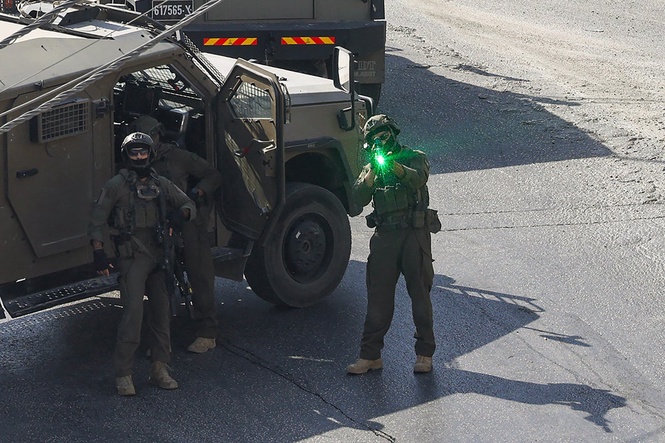
On Tuesday, Israelis will vote in their first election since Hamas’s deadly October 2023 attacks and the unprecedented wars on Gaza, Lebanon and Iran.
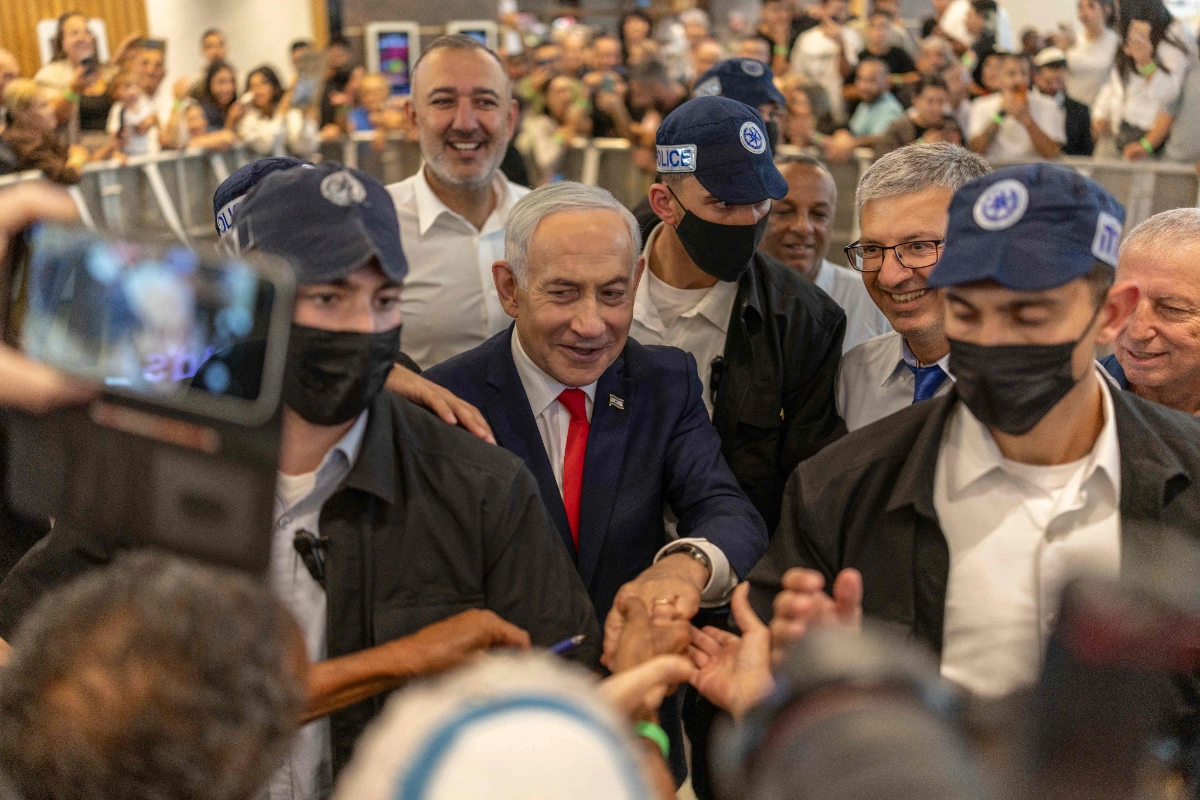
It has been billed as one of the most consequential elections in Israel’s history. Many see it as a referendum on Benjamin Netanyahu, Israel’s longest-serving prime minister.
Unseating Netanyahu is a very real possibility: most polls show the bloc of his main challenger, ex-army chief Gadi Eisenkot, securing a razor-thin lead.
But even with that outcome, the reality is very little fundamental change.
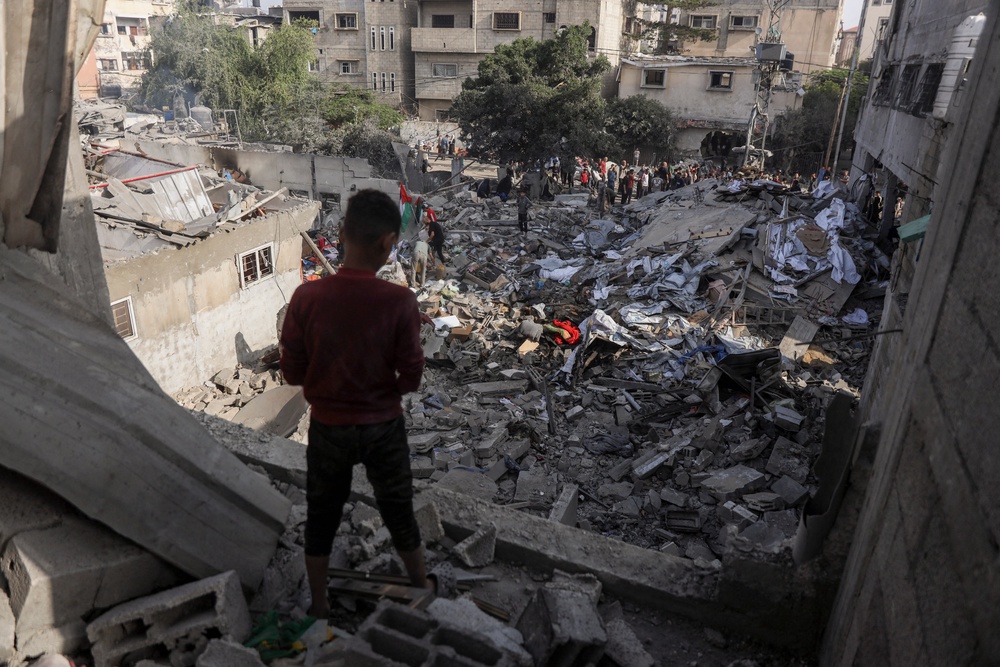
Very little will be different for the millions of Palestinians crammed into a destroyed Gaza, where, despite Israeli denials, a UN Commission of Inquiry found Israel is committing genocide.
Or for the millions of Palestinians in the occupied West Bank, surrounded by ever-growing settlements that are illegal under international law, where there is an unprecedented surge in settler violence and massive military operations.
Whatever happens, there is unlikely to be a speedy resolution to the numerous wars Israel is engaged in, including with Iran, that have killed thousands and caused the largest energy crisis ever recorded, impacting us all.
Israel’s parliament, the Knesset, has 120 seats. To govern, you need 61. No party has ever won that alone, so governments are formed through a Tetris-like game of coalition building. If no one gets there, more elections are likely.
Netanyahu is running with his extreme right-wing bloc while on trial in Israel for corruption (charges he denies) and while facing heat from the Israeli public over the 7 October security failures. Three years on, his government has yet to form a state commission of inquiry, sparking fury.
His main challenger is Gadi Eisenkot, a former army chief whose son and nephew were killed fighting in Gaza. In his bloc are former prime ministers Naftali Bennett and Yair Lapid, who briefly unseated Netanyahu in 2021.
Most polls show Eisenkot’s bloc slightly ahead of Netanyahu’s. As Dahlia Scheindlin, a prominent Tel Aviv-based pollster and journalist, points out, this tracks what most polls have consistently shown for the last three and a half years: “the majority of Israel is against this current government,” she explains.
Still, neither bloc looks able to reach the critical 61 seats to rule. Deadlock, and possible further elections, are a real possibility.
But whichever of the largest blocs wins, major fundamentals won’t change.
The key point to keep in mind is that more than 60 per cent of Jewish Israelis, and a clear majority of Israelis as a whole, self-identify as right-wing, Scheindlin continues.
“So regardless of the government, it’s very clear that the Knesset will be dominated by clearly ideological right-wing parties.”
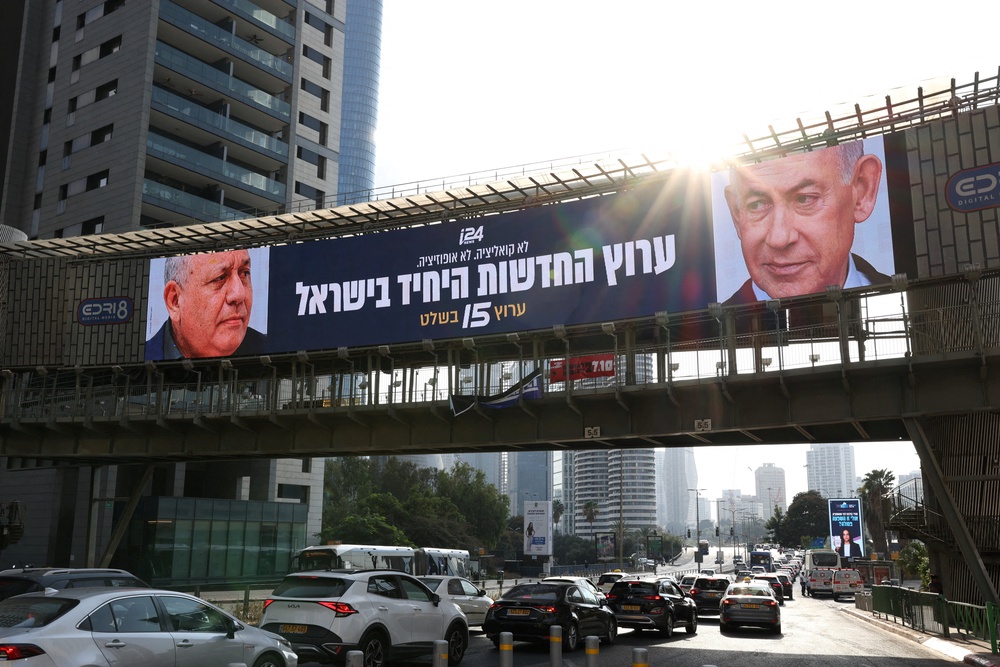
The Netanyahu and Eisenkot blocs do differ on domestic issues such as draft exemptions for ultra-Orthodox religious students. Netanyahu, who is in a coalition with ultra-Orthodox parties, has supported this. His opponents have vehemently campaigned against it.
The other major sticking point is judicial reform. Netanyahu’s determination to severely curb the Supreme Court’s powers in favour of the executive has already sparked mass protests. Eisenkot’s party has said publicly it would oppose a Supreme Court override law.
But on everything else, there is not much daylight between either side.
On the wider Middle East region, Netanyahu has promised more war. Under his rule, Israeli forces have pushed deeper into occupied Lebanese and southern Syrian territory.
Eisenkot is widely seen as even more hawkish. He has repeatedly emphasised his security credentials on the campaign trail, citing his “Dahiyeh doctrine” of smashing enemies with disproportionate force. On Iran, Eisenkot and his coalition partners have talked of scaling up the response.
On Palestine, Netanyahu and Eisenkot also largely agree.
Both oppose an independent Palestinian state and insist Israel must maintain security control over all the land between the Jordan River and the Mediterranean.
In Gaza, Israeli troops still control around two-thirds of the besieged territory, a year into a so-called ceasefire during which Israeli strikes have killed 1,000 people. Both Netanyahu and Eisenkot say troops won’t leave until the Hamas militant group disarms, and both are ready to restart a full-scale offensive.
There are some differences over the occupied West Bank. Netanyahu’s partners, the sanctioned ministers Itamar Ben-Gvir and Bezalel Smotrich, who are settlers themselves, have publicly demanded full formal annexation. There have been unprecedented levels of settler violence and forced displacement of Palestinians under their rule, according to the United Nations.
Eisenkot has rejected full annexation of the West Bank and promised to reduce settler violence. That said, he favours settlement in principle, despite settlements being illegal under international law. Under the 2021 government of his coalition partners, Bennett and Lapid, saw a significant increase in settlement expansion and demolitions of Palestinian houses, according to Israeli monitoring group Peace Now.
That is why Palestinians just aren’t following the Israeli elections, despite the fact that their lives and futures are determined by Israel, explains Zainah El-Haroun, a spokesperson for Palestinian human rights organisation al-Haq.
“It doesn’t make a difference to us, other than that it could get and probably will get worse,” she tells me bluntly.
“Our central concern isn’t really who’s forming Israel’s next government, but the continued policies of occupation, annexation, apartheid and continued genocide against the Palestinian that our people are enduring.”
(In 2024, the International Court of Justice found Israel responsible for apartheid, which Israel rejected).
“The fact [is] that Israel has pursued these policies across every single government, whether they’re left-wing, right-wing, supposed moderate centrist coalitions,” she adds.
Case in point is Al-Haq, she continues. The respected Palestinian human rights group was designated as a terrorist organisation by Israel, along with five other Palestinian civil society groups, in 2021, under Lapid and Bennett’s centrist “government of change”. That sparked international condemnation, including by UN experts, as “a frontal attack on the Palestinian human rights movement, and on human rights everywhere”.
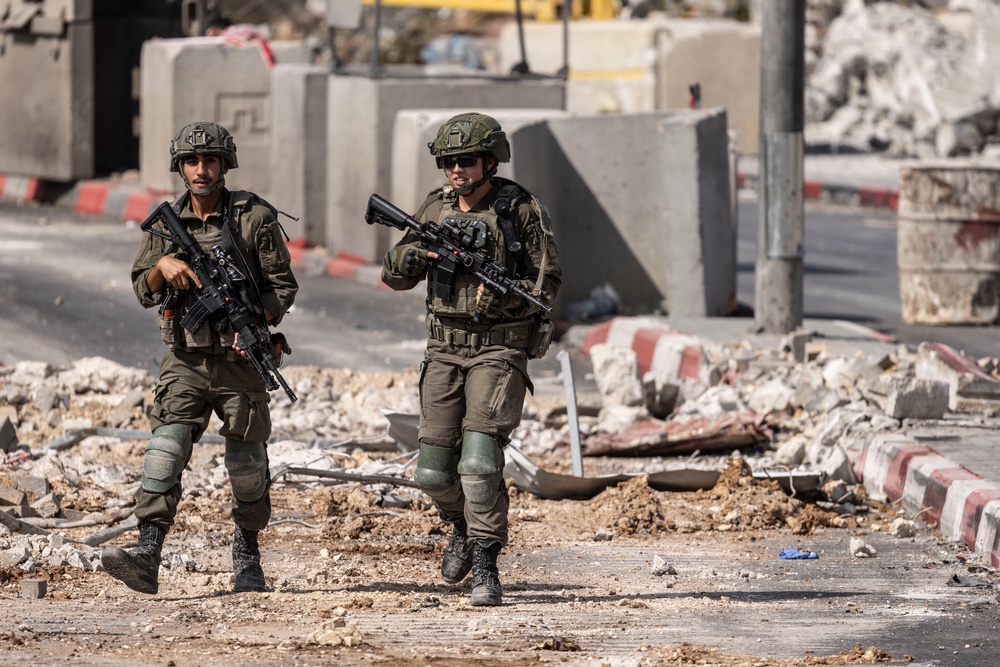
Right now the situation is already bleaker in the occupied West Bank.
Just days before Tuesday’s election, Netanyahu ordered a full lockdown and a major military operation in Hebron, after reports that two Palestinian gunmen killed two Israeli soldiers at a checkpoint near the city on Friday. In a fiery speech, he vowed to “destroy this place, to change it completely”.
Hebron has been sealed off, Israeli bulldozers have begun demolishing homes, and the city’s mayor says thousands are already forced to flee their homes. Netanyahu’s rivals have not challenged this response.
This election may remove Netanyahu. But the alternatives are not massively different.
The fear is that nothing will change and further bloodshed is on the horizon.
Read MoreYou can’t eat in these Michelin-starred restaurants. Has the guide lost the plot?
We have to teach antisemitism, because so many people have forgotten what it is
Palestinian poppies are a sign that Britain’s wars are still mainly performative
The woman who comforted me in an Iranian jail was hiding her own torture
We cannot fight until the last Ukrainian – it’s time to call Putin’s bluff
Andy Burnham is a magician: he hasn’t really done anything and yet he is popular