

A year ago, when I was investigating a piece on the inequality of UK schools, I stepped out my metropolitan bubble and went to visit schools in coastal towns, and cities in the Midlands, ex-industrial towns in the North as well as the more deprived areas around London. With all due acknowledgment that there are some fantastic schools in these places, the scale and extent of deprivation in many schools was truly shocking.
It wasn’t just the lack of teachers, wretchedly inadequate resources and buildings that didn’t look like they would pass any official inspection, but the frozen-out nature of these schools. They were places both the media and government had seemed to forget or deem not worth covering, and some of the stories were shocking.
A boy who called Matt who came from one of the most deprived neighbourhoods in Oldham, who was then studying for his GCSEs and was one of the 17 per cent – the school’s GCSE pass rate – who, against all odds, got good grades, cheerfully told me how they hadn’t had school on Fridays all year. There wasn’t enough money to keep the lights on, not enough teachers for a five-day week and, in theory, they were supposed to remote learn, but that rarely happened.
He also pointed out he usually learnt more on Fridays by watching YouTube videos on his subjects because, when they were in schools, they all had lessons in one hall with just a flimsy partition separating the year groups. This was in no way unique to his school: many across the country have been reduced to no or half-days on Fridays. This never gets close to the coverage given to the VAT on private schools’ fees debate that seems to be covered daily in the mainstream press.
The inequality of schools in the UK is set to get worse with a growing teacher shortage crisis, slashed budgets and a new crisis blooming – a shortage of children, which puts many schools and the kids attending them in an even more precarious position.
Of the thousands of young people and parents I talk to – even those who live in more affluent areas – there is widespread anxiety about the conditions in their schools, with complaints about teachers leaving with frightening frequency, unsafe buildings and facilities and beloved subjects just being cut all together. Long-term and persistent absence (where the child misses more than 10 per cent of school) are at record highs, with “school anxiety” being a major factor, and heads, teachers and teaching unions all feel like school has been sacrificed on the altar of a shrinking economy.
These are the exact same complaints that thousands of students across France have been protesting about – and their demands mirror what so many UK kids say they need: better, fairer schools, more teachers, safer buildings, more funding. While British schools are, on average, faring better than those in Western Europe, according to 2025 PISA records, school inequality is pronounced and school quality declining in many parts of the country, mostly due to underfunding.
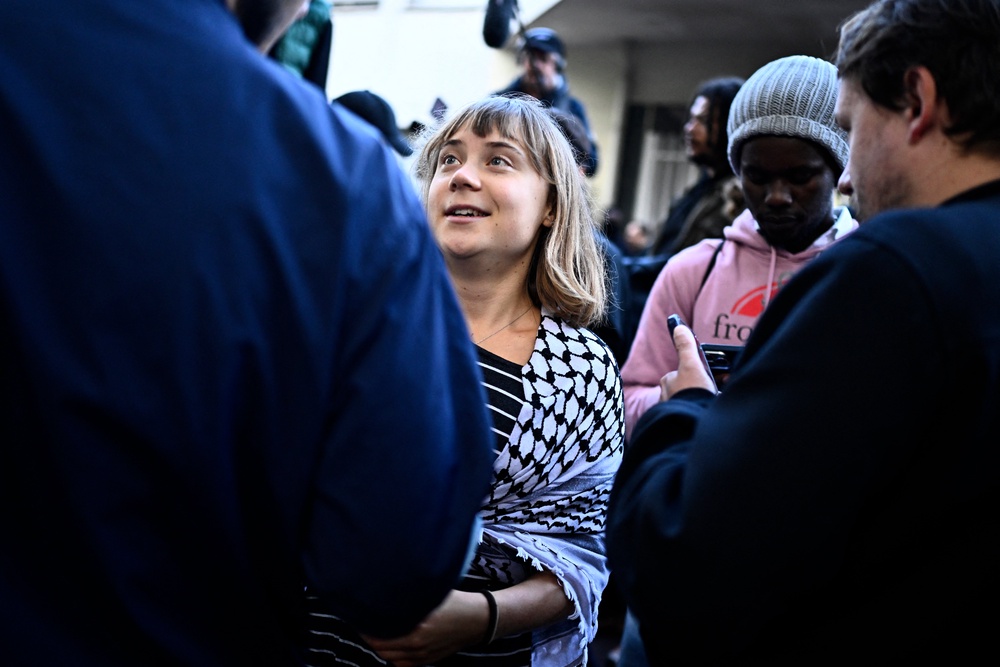
What is impressive about the ‘gilets jaune’ protests, which have now spread to Belgium, no doubt feeding off the Gen Z “cockroach” protests in India, is that they’re working. In France, students have already been promised 2,000 more teachers and fairer funding by the Macron government, and though the incidental violence – such as the looting of trainer shops and, even more seriously, the shooting of two teachers – has little to do with education standards, they’ve also been, in the majority, well-organised and laser-focused in their demands. Talking to kids on the ground, they are impressively articulate in their case for why better schools are so important. As Marius points out: “A good education is the great social and economic equaliser.”
But despite a growing global movement of Gen Z and Gen A (children born between 2010 and 2025) starting to mobilise against shocking economic, educational and generational inequality, any signs of a similar movement here are dead. In the UK, there is not even a spark of interest in protesting.
I did wonder if the success of the protests would motivate UK students, but the general consensus is “Nah, can’t be bothered” (said Jude, 16), and “What’s the point?” (Xavier, 17).
Why are young British people so different and so apathetic, even over things they are genuinely worried about and which will affect every part of their future? Many commentators have rushed to blame the opiating effects of social media and short-form videos – but that doesn’t make much sense when you consider French and Belgian teens also all have smartphones and watch tonnes of social media, too.
What you find in UK teens in contrast to their European counterparts is a bone-weary apathy that nothing they will do will make any difference, coupled with an unhealthy cynicism you see in lots (but by no means all) of young people that caring about things is a bit lame.
This youthful ennui is dangerous because, while no one is advocating for riots or violence, a galvanised youth does exist as a firewall against an overreaching or ineffective government. Parents and carers have spent so much time telling Gen Z and Gen A kids to ‘be careful’ – perhaps that message has been a little too successful?
Read MoreThe ghost of Rachel Reeves has delivered one last boost for Britain’s economy
Crackdown on journalists covering protests sets a dangerous precedent in India
Inside the ‘gilet jeunes’ protests that have brought France’s schools to a standstill
As France riots, where on earth is Emmanuel Macron?
Is AI really going to kill us in the next 40 years?
Andrew Marr: An independent view matters more now than when I edited The Independent

