_1652931074_9592.jpg)
The Supervisory Board of Volkswagen Group has formally approved Future Plan 2030, setting in motion one of the most drastic corporate turnaround and restructuring drives in modern automotive history.
Volkswagen Group is in dire straits and they need some big changes in order to survive. That’s where ‘Future Plan 2030‘ comes in. It was designed to defend the German industrial giant against declining European market demand, intense domestic Chinese competition, and escalating production costs, the program slashes operational overhead across every level of the business. The strategy targets deep cuts to global headcount, trims managerial layers, dramatically simplifies vehicle configuration options, and restructures vehicle assembly infrastructure across Europe.
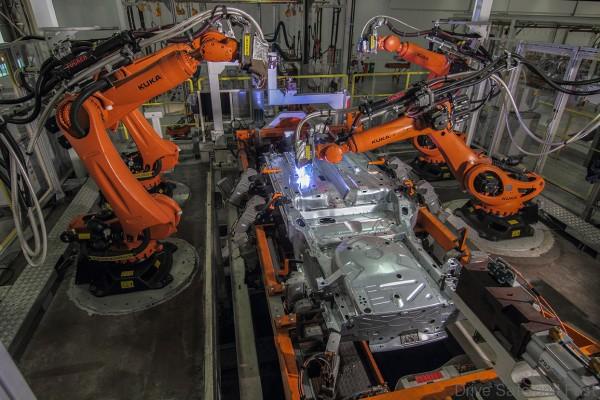
100,000 Workforce Reduction: 15% of Global Headcount Affected
The newly ratified plan calls for approximately 50,000 additional job cuts worldwide.
When combined with previously negotiated retirement and efficiency initiatives, total workforce reductions across the group will reach roughly 100,000 personnel.
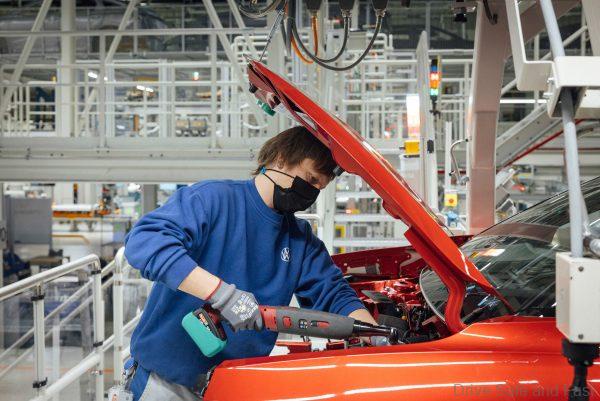
Against Volkswagen’s current global workforce of approximately 650,000 employees, this represents an approximate 15% downsizing upon full implementation. The cuts will affect both administrative and shop-floor positions, as well as management layers, aiming to create flatter corporate hierarchies and faster decision-making cycles.
Four German Assembly Plants Face Production Phase-Out
At the center of the structural overhaul is a major consolidation of domestic manufacturing capacity in Germany.
Volkswagen will fundamentally restructure four primary automotive production sites:
- Emden
- Zwickau
- Hanover
- Audi’s Neckarsulm facility
Current vehicle production allocations for the models assembled at these four plants are scheduled to run out between 2031 and 2034. Volkswagen confirmed that it has neither designated next-generation successor vehicles nor secured competitively viable future production allocations for these sites.
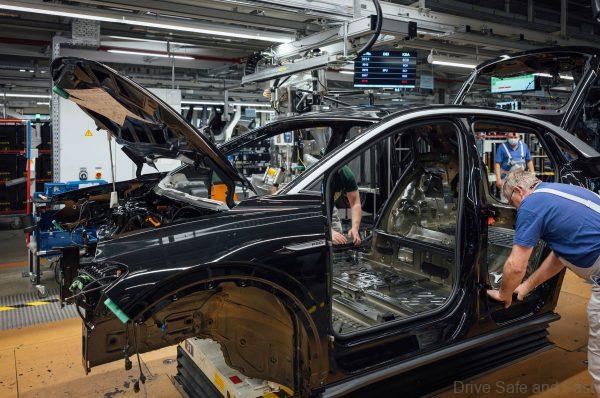
While the board emphasized that formal plant closures have not yet been decided, it acknowledged that vehicle manufacturing could cease entirely at all four locations if economically viable alternatives or industrial repurposing plans cannot be established. This is worse than what was reported in 2024 when the rumours were that 3 plants would be shut down.
Volkswagen disclosed that its European assembly network is currently burdened with excess capacity of more than 500,000 vehicles annually compared to real market demand. To address this structural mismatch, management will formulate and finalize a definitive production roadmap for its European manufacturing footprint by end-June 2027.
Halving the Model Range and Slashing Build Complexity by 75%
To combat runaway development and engineering costs, Volkswagen will radically streamline its sprawling vehicle catalog:
- 50% Model Reduction: The group intends to eliminate approximately half of its global passenger car and commercial portfolio by 2035, focusing resources on high-volume, high-margin nameplates.
- 75% Less Complexity: Configuration variants, trim permutations, and derivative packages will be reduced by about 75%, vastly simplifying parts supply chains and factory tooling.
- Standardized Architectures: Development will focus on uniform global platforms, shared software stacks, consolidated electrical/electronic (E/E) architectures, and unified driver-assistance systems tailored for Western and Eastern markets.
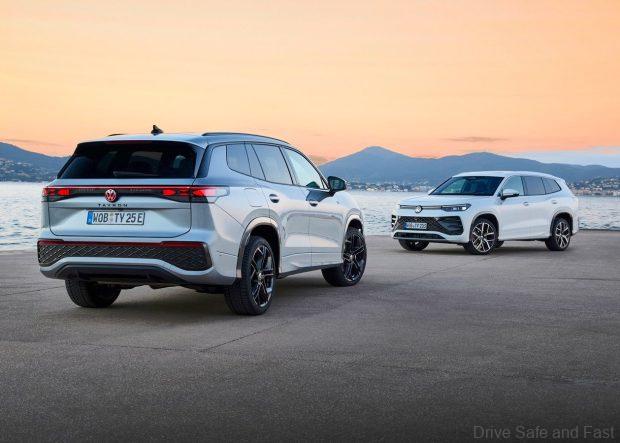
In tandem with vehicle portfolio rationalization, Volkswagen will scale back its broader corporate footprint by approximately one-third, divesting non-core business holdings and restructuring underperforming assets.
€135 Billion Investment Drive Toward 2030 Financial Targets
Despite sweeping cost reductions, the group will channel significant capital into next-generation propulsion, software, and battery manufacturing.
Volkswagen has committed €135 billion between 2027 and 2031 toward research, development (R&D), and capital expenditures.
Financially, Future Plan 2030 establishes clear benchmark targets:
- Annual Global Sales: 9 million vehicles by 2030.
- Operating Profit Margin: 9% by 2030, a substantial recovery from the 3.8% operating margin recorded in the first half of 2026.
- Operating Profit: An targeted operating profit of approximately €31 billion annually.
By realigning its factory footprint, downsizing administrative overhead, and eliminating low-margin complexity, Volkswagen Group is attempting to fundamentally reset its cost base to weather an era of unprecedented industry disruption.
The post Volkswagen Approves “Future Plan 2030”: 100,000 Total Job Cuts, 4 German Plants at Risk, Lineup Halved first appeared on DSF.my.


.png?width=1200&auto=webp&trim=0%2C0%2C0%2C0)